
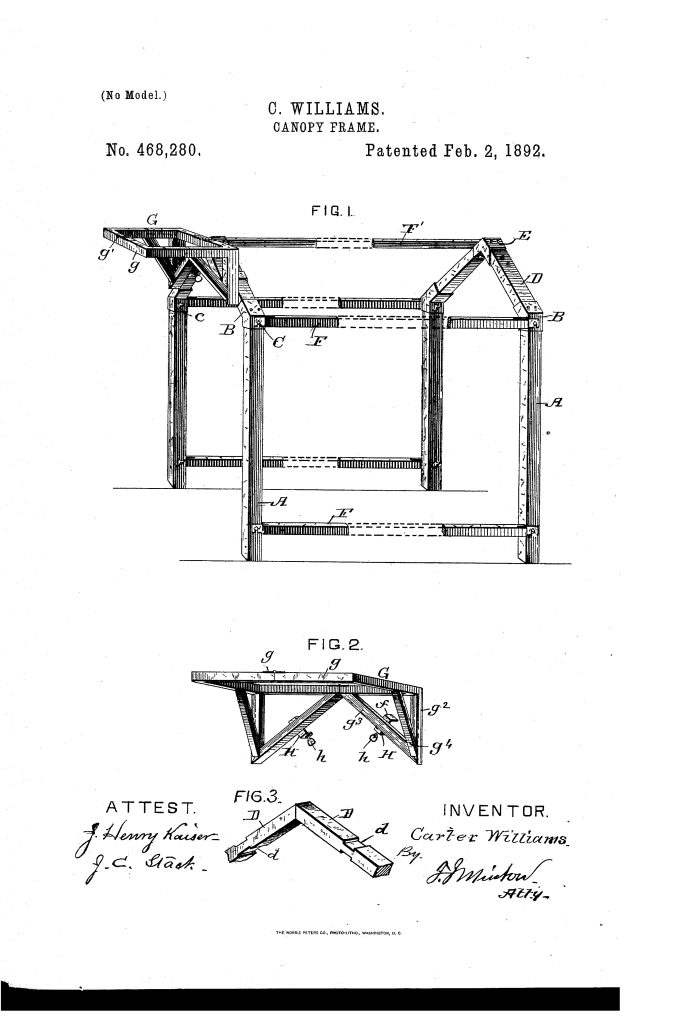
Carter Williams was granted patent 468,280 on February 2, 1892, for a Canopy Frame. The invention was a portable, sectional shelter designed to provide cover from the curb of a sidewalk to the entrance of a building. The frame was made of wooden uprights, rafters, and rails that could be assembled and disassembled quickly using elbows and thumb-nuts. The unique feature was a hinged hood that clamped onto the main frame, protecting the area where people would exit a vehicle. The entire structure was designed to be easily packed into a small, transportable package, making it convenient for caterers, funeral directors, or others who needed to set up temporary, weather-proof entrances.
Societal Impact and Legacy
Williams’s invention was a practical response to a specific need in a society where horse-drawn carriages and, later, early automobiles were the primary modes of private transport.
- Improved Convenience and Service: The invention provided a simple, elegant solution for hosts and event planners who wanted to offer a dry, sheltered entrance for guests. This was a valuable service, especially during inclement weather, and it contributed to the growing professionalization of event services.
- The Rise of Urban Services: As cities grew and social events became more elaborate, a market emerged for specialized services and equipment. Williams’s canopy frame is an example of the kind of innovation that catered to this new demand for convenience and comfort.
- The Inventor’s Legacy: The provided information does not contain details about Carter Williams’s life beyond his residence in Philadelphia. However, his work stands as an example of the thousands of inventors who created devices that, while not world-changing, made a direct and tangible improvement to the quality of life and commerce of their time.
