
Bread-Crumbing Machine (1895)
U.S. Patent No. 540,553, granted on June 4, 1895, to Joseph Lee, describes a mechanical apparatus designed to automate and perfect the process of reducing bread into fine crumbs. Joseph Lee, a successful hotelier, restaurateur, and inventor from Auburndale, Massachusetts, created this machine to solve a major source of waste and inefficiency in large-scale food service.
This invention solved a specific, frustrating problem in 19th-century commercial kitchens: how to crumb bread evenly when it was fresh. While stale bread crumbles relatively easily, fresh or “new” bread has a high moisture content and a tendency to roll up into gummy dough balls rather than break apart when crushed. Lee’s machine used a precise mechanical tearing action to cleanly crumb both fresh and stale bread to a uniform fineness.
The Core Design: The Intermeshing Agitator System
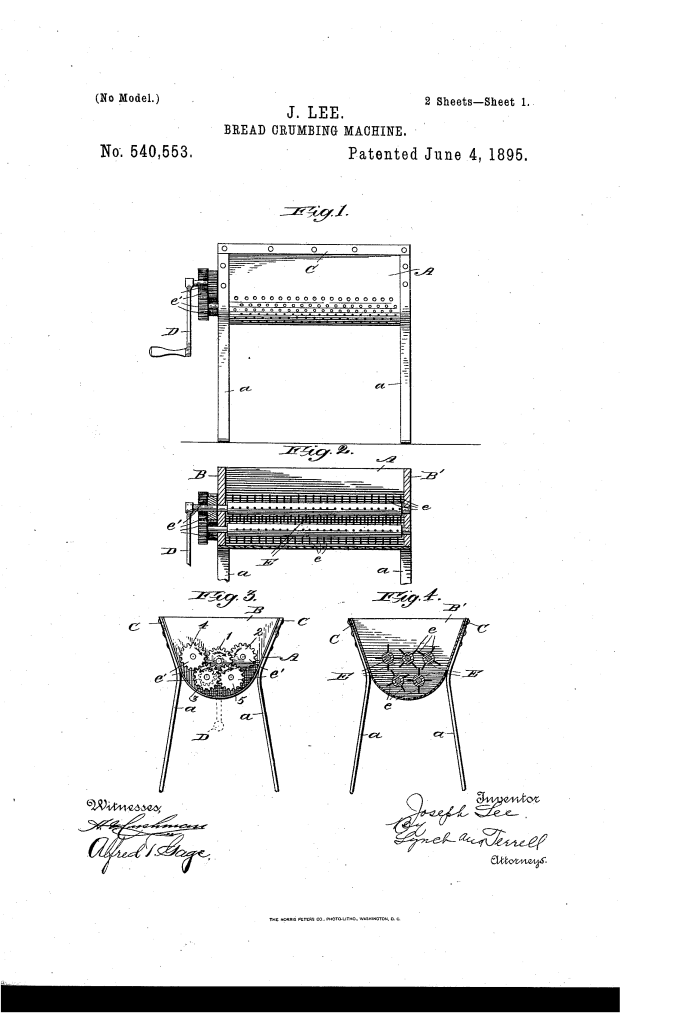
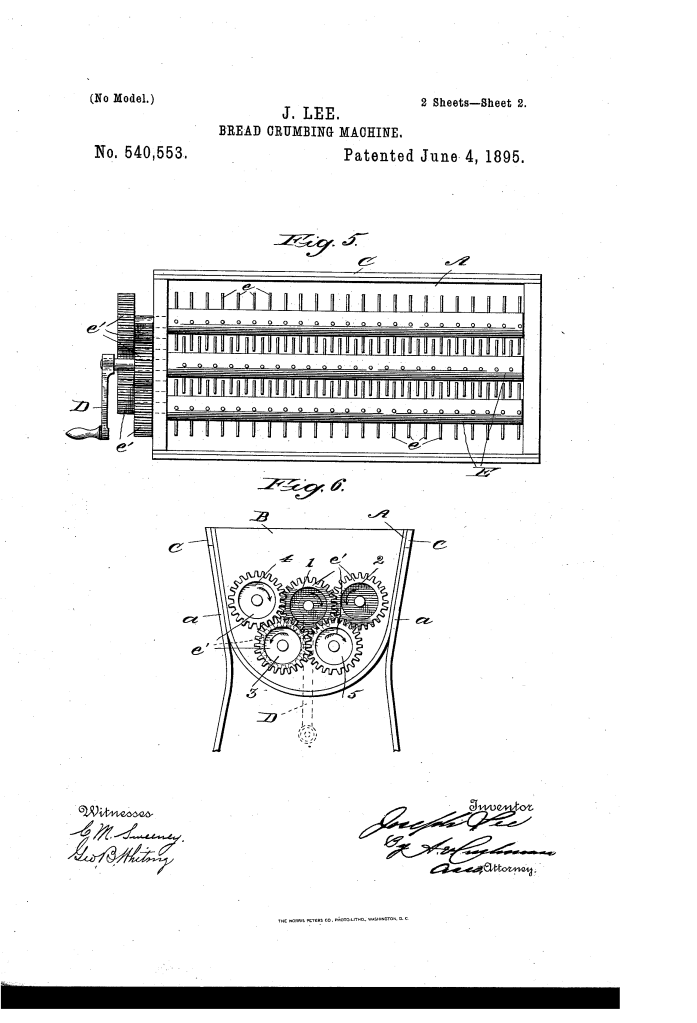
The brilliance of Lee’s apparatus lies in its inverted cone-shaped metal trough (A) containing five carefully synchronized, parallel shafts (E) split into two horizontal rows: an upper tier of three shafts and a lower tier of two shafts.
Instead of grinding or smashing the bread, the machine processes it using:
- Radial Tearing Fingers (e): Each shaft is outfitted with a series of protruding, radial metal fingers. The fingers on adjacent shafts intermesh perfectly with one another as they spin.
- The Inverted Cone Trough (A): The sheet metal sides of the trough flare outward at the top, naturally guiding bulky pieces of bread down into the path of the rotating fingers.
- The Perforated Floor: The bottom of the trough is curved and entirely perforated with small holes. This acts as a built-in mechanical sieve.
How the Apparatus Functions
The machine utilizes a highly specific, cyclical movement pattern to ensure no piece of bread escapes processing:
| Step | Action | Mechanical Purpose |
| 1. Feeding | Large chunks of bread are thrown into the wide top opening of the trough. | The flaring sides guide the material toward the center. |
| 2. Drawing & Tearing | The two outer shafts of the upper tier rotate outwardly, drawing the bread down into the intermeshing fingers. | The opposing motion tears the bread apart rather than compressing it. |
| 3. Sifting | The two lower shafts seize the material and force it against the curved, perforated bottom. | Finished crumbs immediately drop through the perforations into a receptacle below. |
| 4. Recycling | Coarse pieces too large to fit through the holes are swept upward by the lower shafts and thrown back into the central upper shaft. | Recycles the material back to the top for a second pass until optimal fineness is reached. |
The Gearing Logic (Pinions 1–5)
To achieve this intricate recycling loop, Lee designed a complex interlocking gear train at the outer end of the shafts. When a operator turns the primary driving crank (D), power transfers through a sequence of five intermeshing pinions:
- Opposing Upper Motion: Pinions 1, 2, and 3 control the upper tier. The gearing ensures the two outer shafts rotate away from each other, pulling food down along the outer walls.
- Synchronized Lower Motion: Pinions 4 and 5 control the bottom row, rotating in tandem with the upper outer shafts to keep material flowing smoothly toward the perforated discharge area.
About the Inventor: Joseph Lee
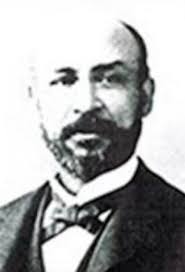
Joseph Lee was a prominent African American inventor, hotel owner, and master caterer in the Boston area during the late 19th and early 20th centuries.
- Industry Expertise: As the operator of the prestigious Woodland Park Hotel in Auburndale, Lee was deeply attuned to kitchen efficiency and food waste. He originally conceived the bread-crumbing machine to utilize day-old bread productively, turning it into coatings for fried foods and binders for stuffing.
- Subsequent Innovation: Lee’s work with bread didn’t stop here. In 1902, he received another landmark patent (U.S. Patent No. 701,290) for an automatic bread-kneading machine that could perform the work of multiple bakers, improving hygiene and speed.
- Legacy: Lee was a highly respected entrepreneur whose food automation devices were widely adopted by major hotels, restaurants, and industrial bakeries across the United States, proving that commercial kitchen operations could be revolutionized through targeted engineering.
Summary of Claims
The patent explicitly claims:
- The combination of a perforated trough with a series of parallel shafts arranged in upper and lower horizontal tiers, featuring radially disposed intermeshing crumbing fingers.
- A driving pinion framework arranged so that the outer shafts on opposite sides of the horizontal series revolve in opposite directions to draw material downward.
- The structural addition of longitudinal stiffening side strips (C) riveted to the upper edges of the diverging sheet metal walls to provide operational stability under load.
