
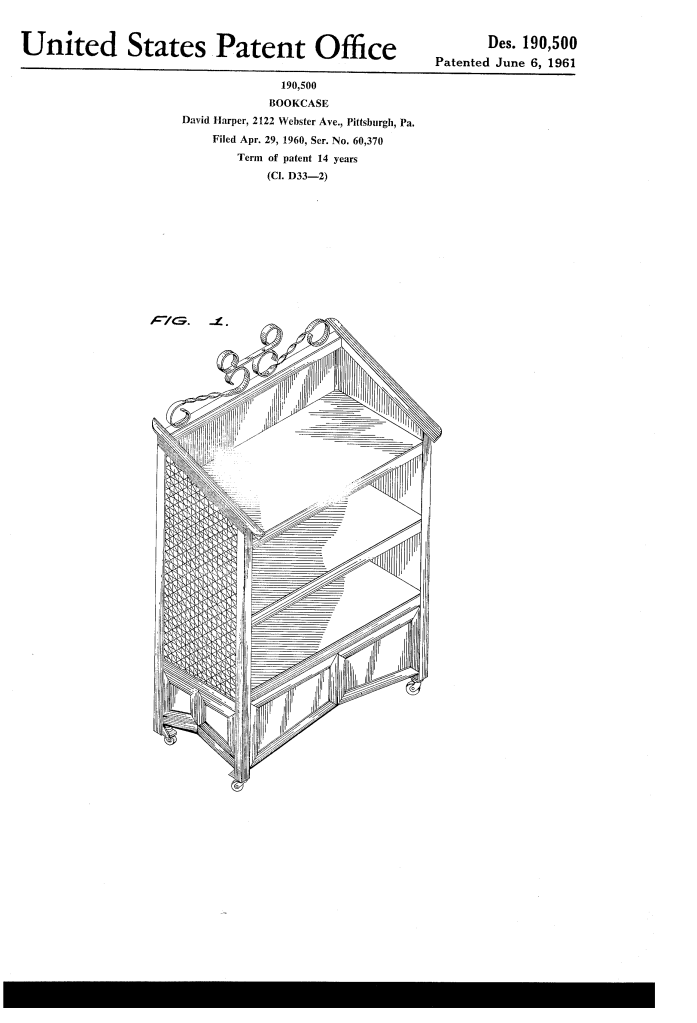
Designer Bookcase (1961)
U.S. Design Patent No. Des. 190,500, granted on June 6, 1961, to David Harper of Pittsburgh, Pennsylvania, protects the aesthetic appearance of a mid-century modern bookcase. Unlike a utility patent, which protects how an invention works, a design patent protects the unique ornamental appearance—the “look and feel”—of an object.
The term of this patent was set for 14 years, a standard duration for design protections at the time, ensuring that Harper’s specific visual style could not be legally copied by other furniture manufacturers during the height of the mid-century furniture boom.
Design Characteristics
Mid-century modern design in 1961 was characterized by clean lines, functionalism, and a departure from the heavy, ornate carvings of the Victorian and Edwardian eras. Based on the patent filing, the Harper bookcase likely featured:
- Geometric Simplicity: A focus on rectangular forms and balanced proportions.
- Minimalist Detailing: The “ornamental design” cited in the claim suggests a specific arrangement of shelving or a unique leg structure (common in that era were “tapered dowel” or “hairpin” legs).
- Space-Age Influence: During the early 60s, even stationary furniture often adopted sleek, “aerodynamic” silhouettes influenced by the burgeoning Space Race.
Context and References
Design patents often cite “Prior Art” to show how the new design differs from what already exists. In Harper’s case, the patent office reviewed:
- Sears, Roebuck and Company Catalog (1955): The examiner compared Harper’s design to a mass-produced bookcase sold by Sears (Item 1DM4001). By referencing this, the Patent Office established that Harper’s design was “novel” and distinct from the common consumer furniture of the mid-1950s.
- Previous Harper Patent (April 12, 1960): David Harper was likely an active furniture designer, as he had another patent granted just a year prior.
The Importance of Design Patents in Furniture
In the 1960s, the furniture market was highly competitive. Designers like David Harper used patents to:
- Brand Protection: Ensure that their “signature look” stayed exclusive to their brand.
- Licensing: Allow manufacturers to produce the design in exchange for royalties.
- Market Differentiation: Distinguish high-end designer pieces from the more generic options found in catalogs like Sears.
