
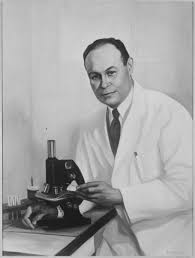
“Banked Blood”: Dr. Charles Richard Drew (Doctoral Thesis, 1940)
The doctoral research by Dr. Charles Richard Drew of Washington, D.C. (submitted to Columbia University) describes the logistical and biological framework for “Banked Blood”. While not a single mechanical patent, this work functioned as the “Master Blueprint” for the world’s first mass-scale blood plasma banks. This innovation is a systematic protocol for the preservation, separation, and transport of human blood components.
The “Why”
Before Dr. Drew’s intervention, blood transfusions were “arm-to-arm”—the donor and recipient had to be in the same room. Whole blood spoiled within days due to bacterial growth and the breakdown of red blood cells (hemolysis). During the lead-up to World War II, the “pain point” was distance: soldiers were bleeding out on battlefields while the blood supplies were stuck in distant cities. Dr. Drew sought to solve shelf-life instability and transportability to ensure life-saving fluid could reach the “point of injury.”
Inventor Section: Dr. Charles Richard Drew
Dr. Charles Drew was a surgeon and medical researcher whose engineering philosophy was rooted in standardization and systems-scaling. As a Black man navigating the deeply segregated medical landscape of the 1930s and 40s, Drew faced the profound irony of creating the system that saved thousands of lives while the Red Cross initially insisted on segregating blood by race—a practice Drew vocally condemned as having no scientific basis. His “Pathology of the Bank” focused on the transition from “blood as a tissue” to “blood as a storable industrial resource.”+1
Key Systems Section
1. Differential Centrifugation (Component Separation)
Drew perfected the method of spinning whole blood at high speeds to separate the heavy red blood cells from the liquid plasma.
- Modern Translation: Fluid Phase Separation.
- Function: By removing the red cells (which spoil quickly), Drew isolated the plasma, which could be preserved far longer and administered to anyone regardless of blood type in an emergency.
2. The “Blood for Britain” Logistics Chain
Drew didn’t just study blood; he engineered the Cold Chain. He designed standardized glass containers, sterile “closed” processing rooms, and refrigerated transport protocols.
- Modern Translation: Integrated Supply Chain Management.
- Function: This eliminated contamination (sepsis) during the “banking” process, ensuring that blood collected in New York remained viable upon arrival in London.
3. Citrate-Dextrose Preservation
Drew refined the chemical “cocktail” used to prevent clotting (anticoagulants) and provide nutrients to cells.
- Modern Translation: Biochemical Stabilization.
- Function: He utilized sodium citrate to inhibit the coagulation cascade, effectively “pausing” the blood’s natural tendency to solidify once it leaves the body.
Comparison Table
| Feature | Pre-1930s Transfusion | Drew’s “Banked Blood” System |
| Storage Life | 2–7 days (Whole Blood) | Months to years (as dried or frozen plasma). |
| Matching | Strict Type-Matching required. | Plasma is universal for emergency shock treatment. |
| Mobility | Stationary (Hospital only). | Mobile (Battlefield/Frontline compatible). |
| Scalability | Individual donor-to-patient. | Mass-pooling: Thousands of units processed at once. |
Significance Section
- Father of the Modern Blood Bank: Every blood drive and hospital “blood bank” operates on the fundamental separation and storage principles Drew established in 1940.
- Emergency Medicine Protocol: His focus on plasma revolutionized the treatment of “shock,” a leading cause of death in trauma victims.
- Standardization of Sterile Procedure: He pioneered the “closed system” of blood collection, which is the direct ancestor to the vacuum-sealed bags used today.
