
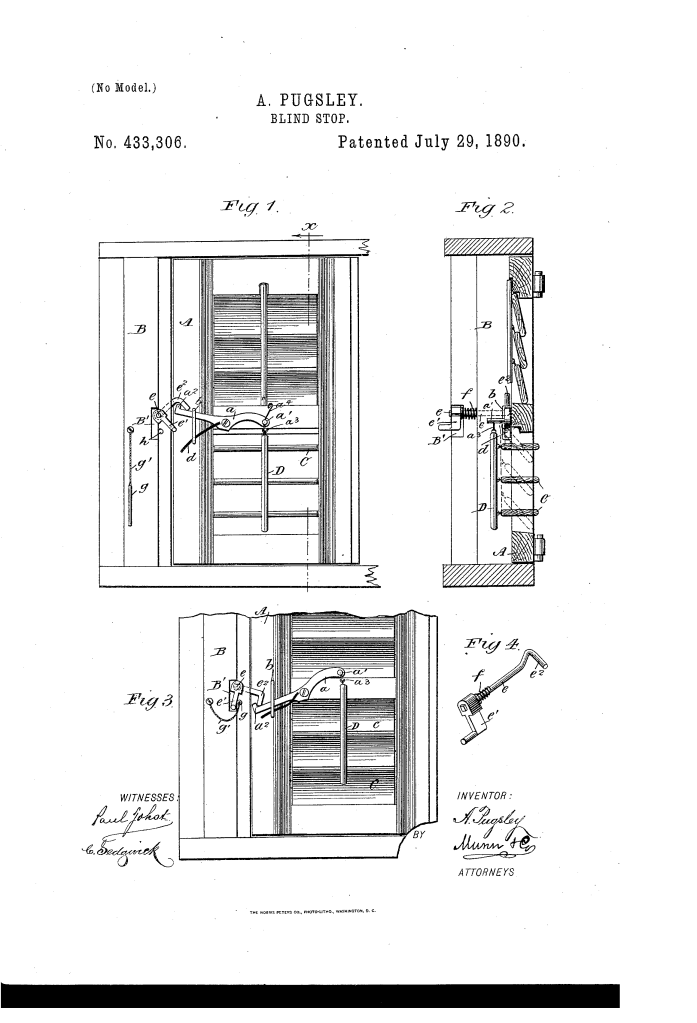
Abraham Pugsley’s patent for a Blind Stop, No. 433,306, describes a device that allows the slats of a window blind to be operated and locked from inside a building. Patented on July 29, 1890, the invention was a system of levers and a shaft that went through the window frame.
Key Features
- Internal Operation: A horizontal shaft with a crank on the inside of the window frame was connected to an external latch. Turning the crank would depress a lever on the blind, which in turn operated the vertical rod connected to the blind’s slats, causing them to open or close.
- Locking Mechanism: Once the slats were closed, a simple pin could be inserted into a hole in the window frame to lock the crank in position. This prevented anyone from operating the blind from the outside, enhancing home security.
- Spring-Loaded Action: The device was spring-loaded, so the slats would be held in an open position by default, and the latch on the outside would be held away from the blind to avoid interference.
Societal Impact
Pugsley, a resident of Jamestown, Rhode Island, invention addressed a practical need for security and convenience in the late 19th century. By allowing for complete operation and locking of blind slats from inside, it provided an extra layer of home security and made a common household task much easier, especially for windows on upper floors.
