
Automobile Seat Cape, William S. Hawkins, Patent No. 1,900,000
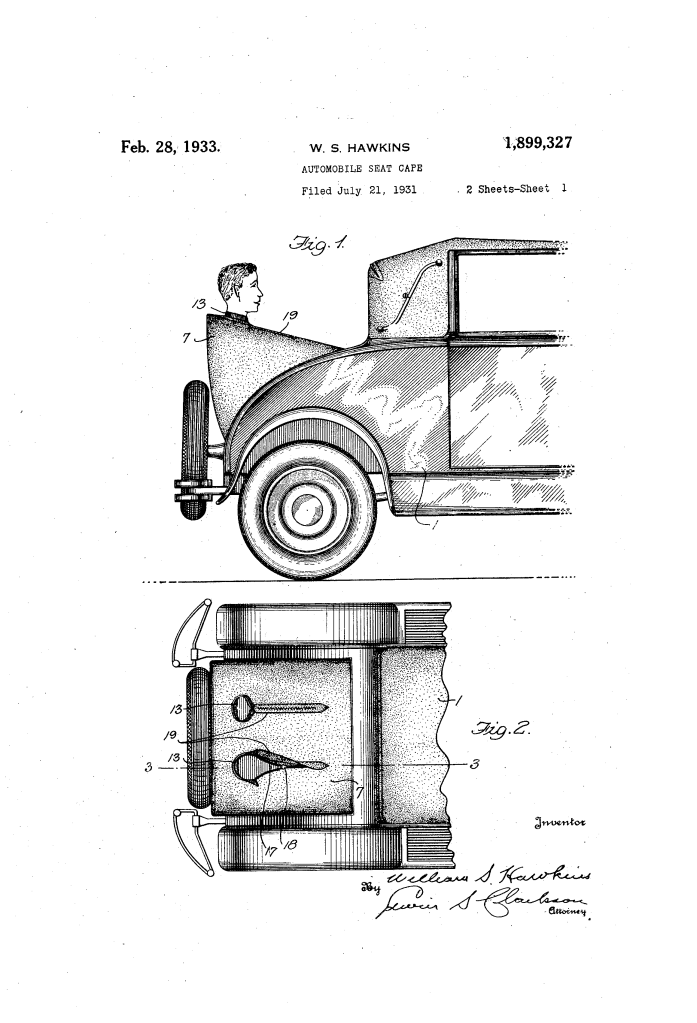
The patent by William S. Hawkins of Washington, District of Columbia describes an Automobile Seat Cape (Patent No. 1,899,258). This invention is a weatherproof protective enclosure specifically engineered for rumble seats (open-air rear seats of early coupes). It transforms the exposed rear compartment into a wind, snow, and rain-proof cabin for passengers while integrating directly with the vehicle’s existing drainage architecture.
The “Why”
During the early 20th century, rumble seat passengers were famously at the mercy of the elements. While the driver and front passenger enjoyed the shelter of the main cabin, those in the “mother-in-law seat” were often drenched by rain or buffeted by freezing winds. Hawkins sought to provide a solution that allowed for four-passenger touring regardless of weather conditions. His primary challenge was creating a cover that was secure enough to withstand wind at driving speeds but simple enough to be assembled quickly and stored in a small package.
Inventor Section: William S. Hawkins
William Hawkins was an inventor based in the nation’s capital during the peak of the automotive revolution. His engineering philosophy was rooted in adaptive utility—creating aftermarket solutions that felt like factory-integrated parts. Living in the “Jim Crow” era, Black inventors like Hawkins often focused on practical, commercial innovations that addressed the growing mobility of the American public. His “Seat Cape” is a masterpiece of early automotive ergonomics, prioritizing passenger comfort and vehicle protection.
Key Systems Section
1. Integrated Gutter-Clip Fastening
The most innovative feature of the cape is how it attaches to the car without permanent modifications.
- Modern Engineering Term: Substrate-clamping interface.
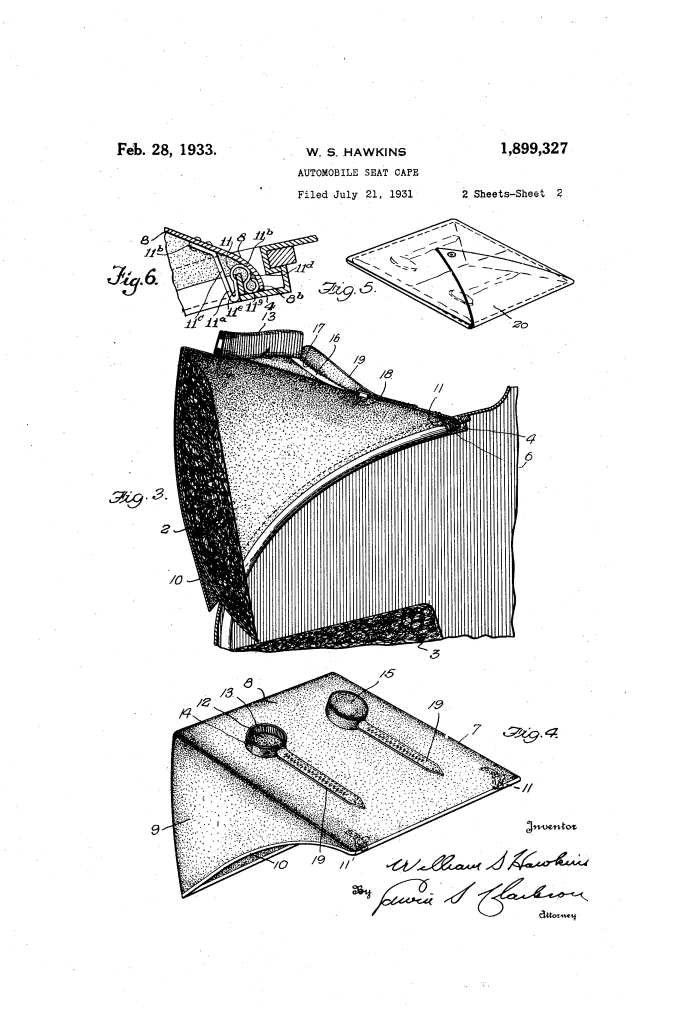
- Hawkins designed custom spring clips (11) made of a single piece of spring metal. These clips snap onto the inner flange (6) of the car’s existing rain gutter. By setting the attachment point back from the edge of the fabric, he created a drain flap (8a) that hangs over the clip and into the gutter.
2. Twin-Opening Closure System
The cape is designed for one or two passengers, featuring “head holes” with protective neck gear.
- Modern Engineering Term: Variable-occupancy aperture control.
- Each opening (12) features a pliable collar (13). To prevent rain from entering an empty seat, Hawkins provided a detachable cap (15) that uses snap fasteners to seal the unused opening, maintaining the “envelope” of dry air inside the compartment.
3. Dual-Seal Entry Mechanism
To allow passengers to enter and exit easily while wearing the cape, Hawkins utilized a tiered sealing system.
- Modern Engineering Term: Redundant weather stripping.
- The cape features a forward-facing slit (16) equipped with a slide (Zipper) fastener (17). To ensure no water leaks through the zipper’s teeth, a secondary protective flap (19) folds over the zipper, creating a waterproof shingle effect.
4. Hydrodynamic Drainage Panels
The cape does not just block water; it manages it.
- Modern Engineering Term: Passive fluid diversion.
- The side panels (9) and rear panel (10) are cut to hang into the vehicle’s gutters (4). This ensures that instead of water pooling on the fabric or seeping into the seat cushions, it is gravity-fed directly into the car’s factory drainage channels.
Comparison: Standard Rumble Seat vs. Hawkins’ Cape
| Feature | Standard Rumble Seat (Open) | Hawkins’ Automobile Cape |
| Weather Protection | None; passengers exposed to rain/snow. | Total enclosure; wind and waterproof. |
| Installation | N/A | Tool-less assembly using spring clips. |
| Storage | N/A | Folds into a package (20) used as a cushion. |
| Drainage | Water enters the compartment. | Redirects water into car’s rain gutters. |
Significance
- Early Automotive “Soft Tops”: This design influenced the development of modern removable convertible covers and “tonneau” covers used on pickup trucks today.
- Integrated Accessory Design: Hawkins’ use of existing car parts (the rain gutter) as a mounting point is a foundational concept in OEM-style accessory engineering.
- Portable Comfort: The idea of a protective device that doubles as a comfort item (the cushion package) reflects early trends in multi-purpose travel gear.
