
Automatic Safety Cut-Out for Electric Circuits, Granville T. Woods, Patent No. 395,538
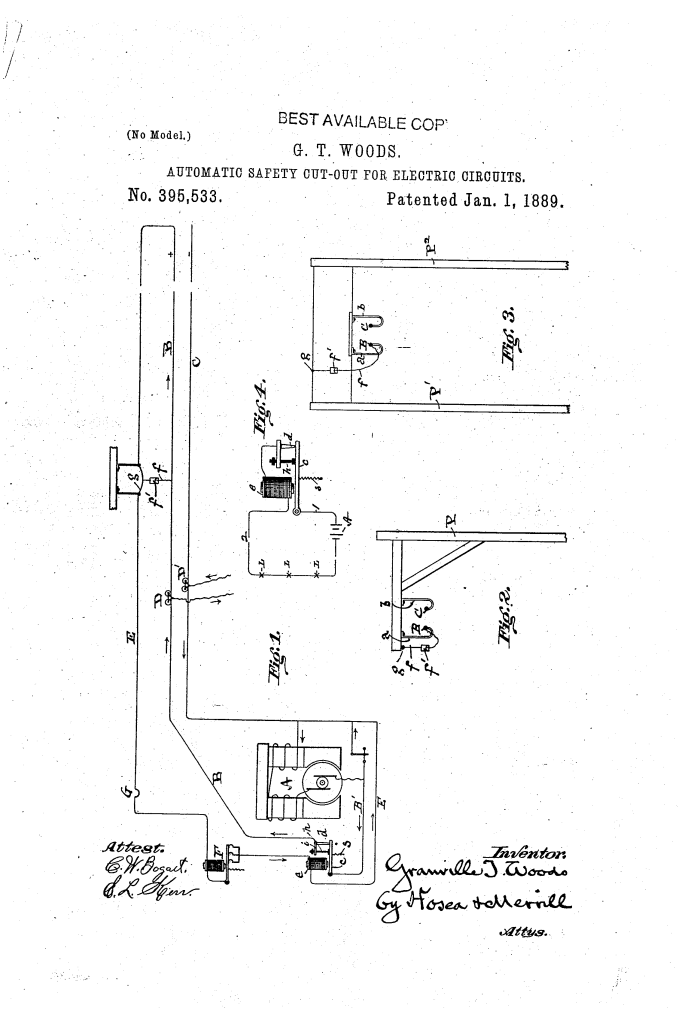
The patent by Granville T. Woods, an inventor born in Columbus, Ohio, describes an Automatic Safety Cut-Out for Electric Circuits (Patent No. 395,538), granted on January 1, 1889. This invention is a sophisticated electrical protection system designed to immediately disconnect a power generator from its circuit if the main conductor breaks, sags, or malfunctions, thereby preventing fires, electrocution, and equipment damage.
The “Why”
During the late 19th century, the “War of Currents” was in full swing. Rapidly expanding electrical grids were plagued by dangerous “live” wires that, when snapped by storms or accidents, remained energized on the ground, posing a lethal threat to pedestrians and property. Woods sought to solve the lack of an automated fail-safe; he wanted a system that could “sense” a breach in the line and kill the power at the source before a tragedy occurred.
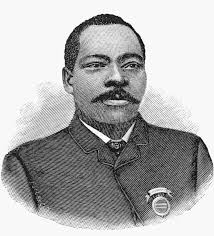
Inventor Section: Granville T. Woods
Often referred to as “The Black Edison,” Granville T. Woods was a self-taught engineering prodigy who attended night school and worked in railroad shops to master his craft. His engineering philosophy was rooted in systemic reliability. Unlike many contemporaries who focused solely on generation, Woods obsessed over the control and safety of energy. Operating during the Jim Crow era, Woods faced constant legal challenges to his patents (including two successful defenses against Thomas Edison himself). His work was a defiant testament to Black intellectual excellence in a period designed to suppress it.
Key Systems Section
1. The Electromagnetic Armature (Pivoted Actuator)
- Function: Acts as the primary “gatekeeper” of the circuit.
- Modern Translation: This is a Normally Open (NO) Relay.
- The armature is held closed against a “retractile spring” by the magnetic pull of the circuit’s own current. If the current is interrupted, the magnetic field collapses, and the spring physically yanks the contact open, breaking the circuit.
2. The Auxiliary Return Wire (Sense Line)
- Function: A secondary, parallel wire that monitors the integrity of the main line.
- Modern Translation: A Signal or Feedback Loop.
- By running a parallel line, Woods ensured that any physical displacement of the main power cable would be mechanically communicated to the safety switch at the generator.
3. Variable Resistance and Fusible Cut-Out
- Function: Regulates the “sensitivity” of the safety response to prevent nuisance tripping.
- Modern Translation: Load Balancing and Overcurrent Protection.
- Woods utilized an electro-magnet that would add or remove resistance based on current strength, ensuring the coils of his safety device wouldn’t burn out during a standard power surge.
4. The Carbon Pencil Arc-Suppressor
- Function: Prevents the “sparking” or “arcing” that occurs when high-voltage metal contacts separate.
- Modern Translation: Arc Chute or Arc Flash Mitigation.
- A carbon pencil follows the metal contact as it drops. Since carbon has higher resistance than metal, it “bleeds” the remaining current off slowly, preventing a dangerous electrical arc from jumping across the gap.
Comparison Table
| Feature | Standard Methods (Pre-1889) | Woods’ Innovation |
| Response Speed | Manual shutdown or slow thermal fuses. | Instantaneous electromagnetic reaction. |
| Line Monitoring | No detection for sagging or “live” broken wires. | Mechanical links trigger a shutdown if the wire sags. |
| Arc Management | Destructive sparking at the switch points. | Carbon contacts to safely dissipate the arc. |
| Current Regulation | Static resistance (prone to failure). | Dynamic Variable Resistance based on load. |
Significance Section
- Precursor to the Circuit Breaker: This patent is one of the foundational steps toward the modern residential and industrial circuit breaker found in every building today.
- Dead-Man Switch Concept: Woods’ use of a “normally open” system (where energy is required to keep the circuit closed) is the basis for modern “fail-safe” engineering.
- Infrastructure Safety: His method of using “insulating-blocks” and “suspending-links” influenced how overhead trolley and train wires were rigged for the next century.
- Arc Flash Protection: The use of sacrificial carbon elements remains a concept used in high-voltage switchgear to protect primary metal contacts.
