
Aromatic Pressure Cooker and Smoker (1959)
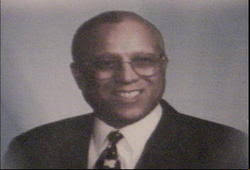
U.S. Patent No. 2,906,191, granted on September 29, 1959, to Maurice Wm. Lee, Sr., addresses a unique culinary challenge: how to infuse foods with authentic wood-smoke flavor while cooking them rapidly under pressure.
Maurice Lee, Sr., an inventor from Boley, Oklahoma, developed this apparatus to combine the speed of a pressure cooker with the aromatic results of a traditional smokehouse. Traditionally, smoking and pressure cooking were separate processes; Lee’s design integrated them into a single, efficient unit that preserved food juices while deeply impregnating the meat with aromatic flavors.
The Innovation: The “Dual-Element” Heat System
Most pressure cookers at the time used a single heating element to create steam. However, to char wood and generate smoke, temperatures must reach approximately 750°F—far hotter than what is needed to maintain safe cooking pressure. Lee’s breakthrough was the use of two independent heating elements to manage these conflicting requirements without expensive control switches.
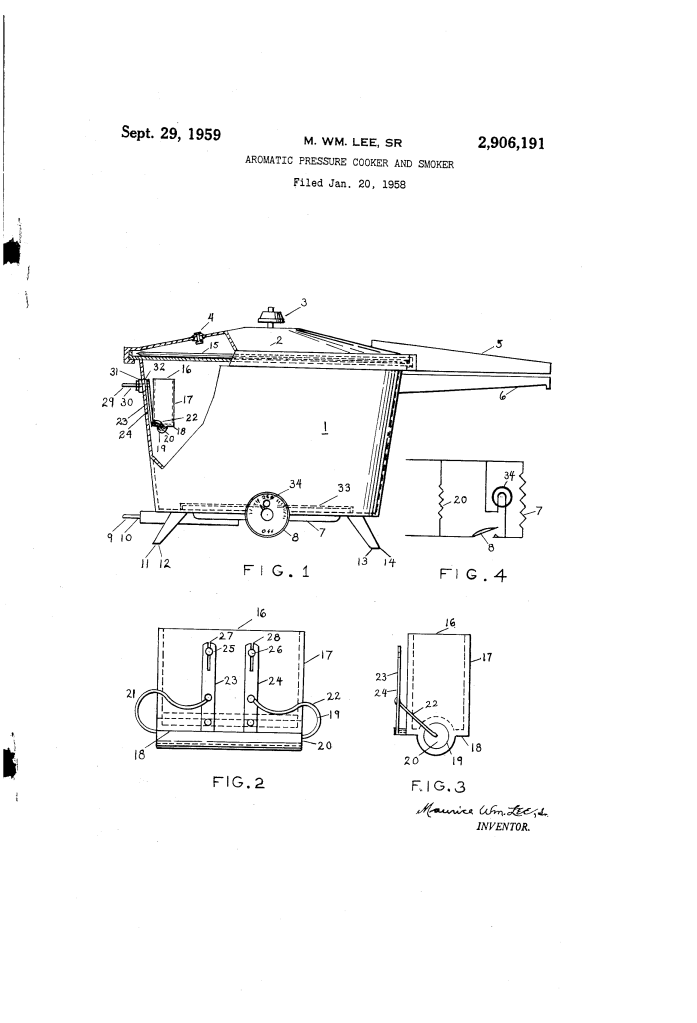
1. The Internal Smoke and Steam Generator (16)
This is a small, rectangular chamber mounted inside the main cooker.
- It contains its own high-intensity tubular heating element (20).
- This element is designed to boil water into steam first, and then, once the water is gone, rise to 750°F to pyrolyze hickory shavings or other aromatics into smoke.
2. The Base Heating Element (7)
Located at the bottom of the main vessel, this element is controlled by a variable thermostat (8).
- Its sole job is to maintain the walls of the cooker at a constant 250°F.
- This prevents the steam and aromatic vapors from condensing into liquid, ensuring the food is cooked by “active” steam and smoke rather than being boiled in water.
How the Apparatus Functions
The process follows a specific sequence to ensure the food is both tenderized by pressure and flavored by smoke:
| Step | Action | Purpose |
| 1. Charging | Food is placed on a trivet (33); the internal generator is filled with water and wood shavings. | Prepares the flavor source and the moisture for pressure. |
| 2. Primary Heating | Both elements are turned on; the base element maintains the chamber at 250°F. | Prevents condensation and prepares the environment. |
| 3. Steam Generation | The internal generator boils its water, filling the sealed chamber with high-pressure steam. | Rapidly cooks the food and forces moisture into the fibers. |
| 4. Pyrolyzing | Once the water boils off, the internal generator hits 750°F, charring the wood shavings. | Releases the “aromatic smoke” that permeates the food under pressure. |
| 5. Depressurization | The pressure weight (3) is lifted after the cooking time elapses. | Safely releases steam before opening the lid. |
Technical Components
- Pressure Chamber (1): A vapor-tight vessel with a heavy lid (2) and a gasket to contain the intense pressure and smoke.
- Terminal Rods and Strips (23, 29): A clever “spring-tight” connection that allows the internal smoke generator to be easily removed for cleaning and reloading.
- Trivet (33): Keeps the food raised off the bottom of the cooker to ensure it is cooked by steam and smoke convection rather than direct conduction/burning.
- Pilot Light (34): A visual indicator in the thermostat dial that tells the operator when the main heating element is maintaining the chamber temperature.
Historical and Scientific Impact
Maurice Wm. Lee, Sr.’s invention was a significant advancement in domestic and commercial food technology during the late 1950s.
- Flavor Retention: By cooking with steam rather than boiling water, the device prevented flavor juices from being “leached out,” a common complaint with early pressure cookers.
- Controlled Pyrolysis: The invention provided a safe way to reach the high temperatures necessary for wood distillation (charring) inside a pressurized environment without risking an over-pressure explosion.
- Boley, Oklahoma Legacy: Lee was a prominent figure in Boley, one of the most famous and historically significant all-Black towns in the United States. His success as an inventor and entrepreneur contributed to the town’s legacy of self-sufficiency and innovation.
About the Inventor: Maurice Wm. Lee, Sr.
Maurice Wm. Lee, Sr. was a visionary entrepreneur and inventor based in Boley, Oklahoma. His work focused on improving the efficiency of everyday appliances and creating specialized tools for the food industry. He is best known for founding the Lee-Ma-Nator company, which produced commercial-grade versions of his aromatic smokers. His inventions were widely used in restaurants across the Midwest, bringing the “Boley-style” hickory-smoked flavor to a broader market.
Summary of Claims
The patent explicitly claims:
- A dual-element heating system consisting of a base heater and a separate internal generator heater.
- An upwardly open rectangular chamber (the generator) designed to hold both water and flavoring substances.
- A removable mounting system using bifurcated terminal strips for resilient electrical contact.
- The method of pyrolyzing aromatics within a pressure vessel after a steam-generation phase to permeate food with flavor.
