
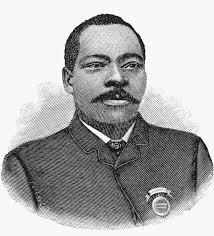
Granville T. Woods was a brilliant African American inventor who significantly impacted the fields of electrical engineering, particularly in communication and railway safety. He is often referred to as the “Black Thomas Edison” due to his prolific inventive output, securing nearly 60 patents during his lifetime.
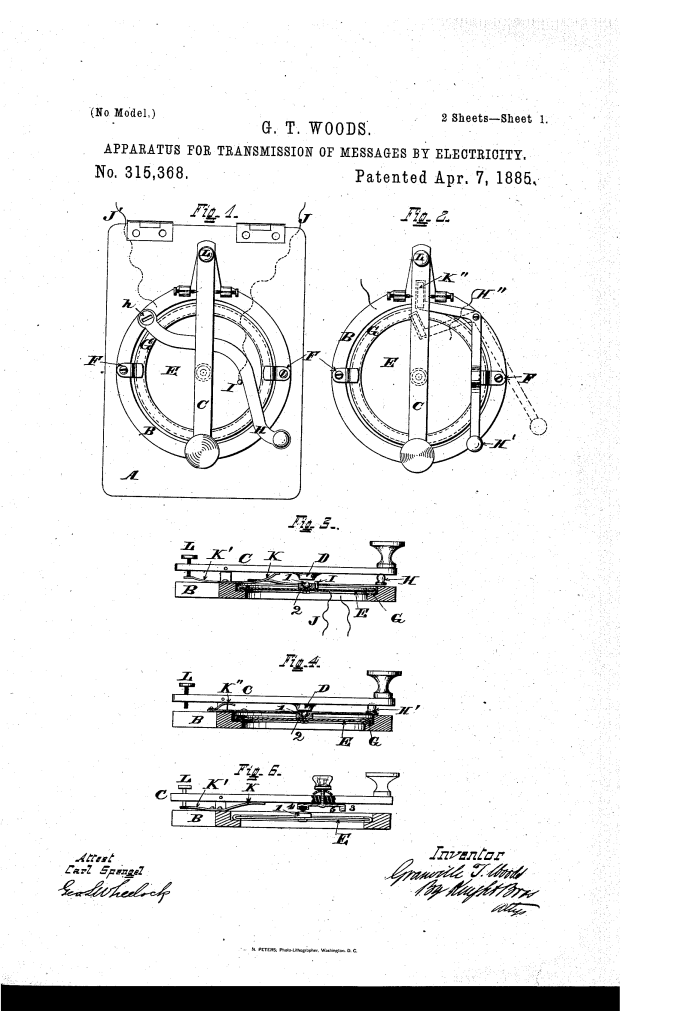
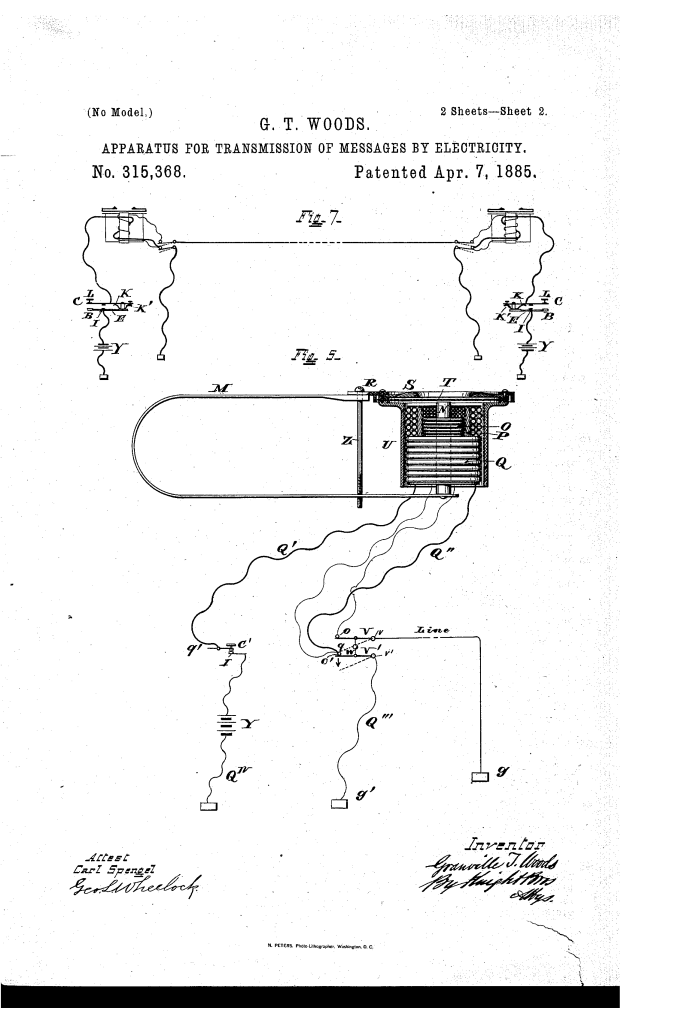
Patent Details: US315368A – “APPARATUS FOR TRANSMITTING MESSAGES BY ELECTRICITY”
- Inventor: Granville T. Woods
- Assignee: (Not explicitly stated in typical summary, but he later sold the rights to American Bell Telephone Company)
- Patent Number: US315368A
- Filing Date: March 2, 1885
- Issue Date (Patented): April 7, 1885
- Description: This patent describes an apparatus that allowed for the transmission of messages using both Morse code (telegraphy) and articulate speech (telephony) over a single wire. It was a significant step in combining these two communication methods, making telecommunication more versatile and efficient. The invention focused on the practical means of achieving this combined transmission and reception.
Significance of the Inventor and the Invention on Society:
Granville T. Woods (the Inventor):
- Trailblazer for African Americans: Born in 1856, Woods faced immense racial barriers in a segregated America. Despite limited formal education, he was largely self-taught in electrical and mechanical engineering, demonstrating extraordinary intellect and perseverance. His success as an inventor, overcoming such obstacles, made him an inspiring figure and a pioneer for African Americans in science and engineering.
- Prolific and Diverse Inventor: Woods’s nearly 60 patents covered a wide range of technologies, including:
- Railway Safety and Communication: This was his most impactful area. His inventions dramatically improved communication between moving trains and stations, preventing countless collisions and significantly enhancing railway safety. His “synchronous multiplex railway telegraph” (also known as the induction telegraph) was revolutionary, allowing for two-way communication between moving trains and stations, and even between trains.
- Power Transmission: He developed the “troller,” a grooved metal wheel that allowed streetcars to collect electric power from overhead wires, and critically, the third rail system, which is still used today on many electric subway and rail lines to deliver power to trains.
- Other Innovations: He also invented improvements for automatic air brakes, electric railway systems, and even a steam boiler furnace.
- “Black Thomas Edison”: This nickname highlights his inventive prowess and his ability to hold his own against industry giants. Notably, he successfully defended his patents against challenges from Thomas Edison, winning several lawsuits brought by Edison’s company. This demonstrated not only his technical brilliance but also his determination and legal acumen.
- Entrepreneurship: Woods established the “Woods Electric Company” in Cincinnati with his brother, Lyates Woods, to develop, manufacture, and sell electrical equipment based on their inventions.
The “Apparatus for Transmissions of Messages by Electricity” (US315368A) and related inventions:
- “Telegraphony” – Merging Communication Technologies: This invention was a crucial step in the evolution of telecommunication. By allowing both voice and Morse code to be transmitted over the same line, it offered greater flexibility and efficiency than separate telegraph and telephone lines. While the telephone would eventually dominate voice communication, this invention showed an early understanding of integrated communication systems.
- Foundation for the Induction Telegraph: This patent laid the groundwork for his most famous invention, the “synchronous multiplex railway telegraph” (US Patent 373,915, 1887). This later invention truly revolutionized railway operations by enabling wireless communication between moving trains and telegraph stations. Before this, communication with moving trains was virtually impossible, leading to frequent and often fatal accidents. Woods’s system allowed dispatchers to track trains and train crews to report hazards or communicate with other trains, drastically improving safety and efficiency.
- Paving the Way for Wireless Communication: Woods’s work on induction telegraphy was a significant precursor to modern wireless communication technologies. His understanding of electromagnetic induction for transmitting signals without direct physical contact was far ahead of its time and can be seen as an early form of local area networking (LAN) for trains.
- Economic and Social Impact: By making railway travel safer and more efficient, Woods’s inventions had a profound economic and social impact. They facilitated the growth of the railroad industry, enabled faster and more reliable transportation of goods and people, and ultimately saved countless lives. His patents were eventually purchased by major companies like General Electric and Westinghouse, underscoring the commercial value and technological importance of his contributions.
Granville T. Woods’s genius not only led to critical technological advancements that shaped modern communication and transportation but also serves as a powerful testament to human ingenuity in the face of systemic adversity. His legacy continues to inspire innovators and engineers globally.
