
Meat Curing Antioxidant (1956)
U.S. Patent No. 2,772,169, granted on November 27, 1956, to Lloyd A. Hall, introduces a specialized antioxidant composition designed to stabilize the color and freshness of cured meats. Hall, serving as the technical director of The Griffith Laboratories, was a pioneer in food chemistry whose work addressed the aesthetic and chemical stability of mass-produced food.
This invention solved a critical marketing problem for the burgeoning pre-packaged meat industry: the tendency for sliced bacon and sausage to lose their appealing red color and turn gray when exposed to light and air in grocery displays.
The Innovation: The “Phospholipoid Carrier”
While curing salts (nitrites) create the desirable red color in meat, they can also act as oxidizing agents that eventually destroy that same color. Standard antioxidants were often ineffective because they couldn’t stay soluble in the complex environment of meat fats and water. Hall’s breakthrough was the use of a phospholipoid (such as lecithin) to act as a “solubilizer.”
Why Phospholipoid?
- Solubility: It makes ascorbic acid (Vitamin C) soluble in fats, allowing it to penetrate the lean and fatty portions of the meat equally.
- Retention: It prevents the antioxidant from being washed away by water or moisture during the curing process.
- Synergy: It allows gallic esters (like propyl gallate) and ascorbic acid to work together in a single, stable liquid concentrate.
Key Chemical Components
The composition is a precise blend of four primary ingredients, each serving a tactical purpose in the curing process:
| Component | Function |
| Ascorbic Acid (Vitamin C) | The primary color stabilizer. It reacts with nitrites to produce nitric oxide, which locks in the “red” nitroso-compounds. |
| Gallic Ester (e.g., Propyl Gallate) | A powerful antioxidant that prevents the fats in the meat from turning rancid. |
| Phospholipoid (Lecithin) | The “carrier” that bridges the gap between water-soluble and fat-soluble ingredients. |
| Edible Oil (e.g., Corn Oil) | The base liquid; preferred for its natural tocopherols (Vitamin E), which provide additional antioxidant protection. |
Performance: Color Retention and Freshness
Hall’s patent emphasizes that the loss of red color in meat isn’t just simple oxidation—it’s a breakdown of nitrosohemoglobin. His composition acts as a shield:
- Visual Appeal: Meat treated with this blend retains its “consumer appeal” much longer under fluorescent grocery store lights.
- Stability: The formulation is strictly moisture-free, preventing the chemicals from reacting with each other before they are applied to the meat.
- Concentration: Hall found that adding as little as 0.01% to 0.175% of this mixture by weight was sufficient to protect a large batch of meat.
The Manufacturing Process
Hall developed a specific temperature-controlled method to blend these sensitive chemicals without causing them to “break” or degrade:
- Heat the edible oil and phospholipoid (lecithin) to roughly 180°F.
- Agitate the mixture for 15 minutes to ensure a uniform base.
- Add anhydrous ascorbic acid and stir for 30 minutes at 175–185°F.
- Dissolve the propyl gallate into the mixture for an additional 90 minutes.
- Cool the batch rapidly (within one hour) to 100°F to lock in the chemical stability.
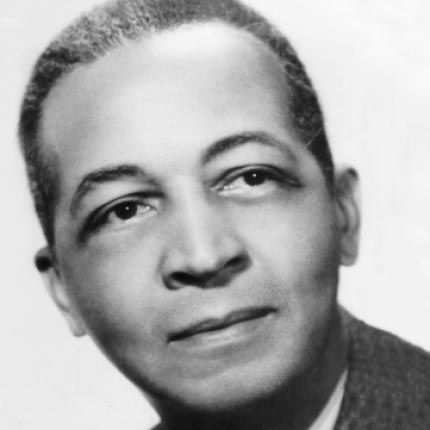
About the Inventor: Lloyd A. Hall
Lloyd Augustus Hall was one of the most prolific and influential chemists of the 20th century.
- HBCU Roots: Hall’s academic journey and professional success as an African American in the 1920s-50s paved the way for generations of minority scientists.
- The Griffith Laboratories: As Chief Chemist, he revolutionized how the world preserves food, moving the industry away from crude salting methods toward sophisticated chemical engineering.
- Legacy: By the time of this patent in 1956, Hall had mastered the science of “synergistic antioxidants”—the idea that multiple chemicals working together provide better protection than any single ingredient alone.
Summary of Claims
The patent explicitly claims:
- An antioxidant composition comprising 1.5 to 7.5 parts gallic ester, 1.5 to 7 parts ascorbic acid, and 12 to 40 parts phospholipoid.
- The use of lecithin as a specific carrier to solubilize the acids and esters.
- A method for curing meat in the presence of nitrite salts using this specific blend to maintain nitroso-pigment stability.
