
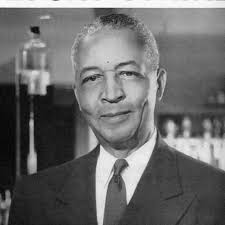
Synergistic Antioxidant, Lloyd A. Hall and Leon Lee Gershbein (1945)
Patented in June 1945, this invention by Lloyd A. Hall and Leon Lee Gershbein (U.S. Patent No. 2,464,754) provided a breakthrough in food preservation. While previous scientists had found individual chemicals that could slow down food spoilage, Hall and Gershbein discovered a synergistic combination that was far more powerful than the sum of its parts.
This antioxidant “cocktail” became the gold standard for stabilizing animal fats (like lard), vegetable oils, and even powdered milk and eggs—essential items for both the civilian market and military rations during and after World War II.
The “Why”
Fats and oils are chemically unstable; they react with oxygen to form peroxides, which then break down into smelly aldehydes and ketones. This process, known as rancidity, makes food taste “off” and eventually renders it toxic.
- The Problem: Many existing antioxidants were either too expensive, toxic, or required harsh chemical solvents that small-scale food producers couldn’t handle.
- The Solution: A “synergistic” blend using a natural vegetable oil carrier. By combining small amounts of tocopherols (Vitamin E), lecithin, and propyl gallate, the inventors created a shield that lasted significantly longer than any single ingredient used alone.
Inventor Section: Engineering Philosophy
Lloyd A. Hall’s philosophy was Molecular Cooperation. He realized that different antioxidants attack oxidation at different stages. Some prevent the initial “spark” of a peroxide forming, while others stop the “chain reaction” once it starts. By blending these molecules, he ensured that if one line of defense was breached, the second and third were already in place. This “multi-layered” chemical approach is what defines a synergistic effect.
Key Systems Section
1. The Synergistic “Cocktail”
The power of this patent lies in the specific ratio of three to four key components:
- Carrier Oil (Crude Corn Oil): This acts as the base. Hall chose “crude” oil because it naturally contains tocopherols (Vitamin E), nature’s own antioxidant.
- Propyl Gallate (PG): An ester of gallic acid that acts as a potent oxygen scavenger.
- Lecithin: Derived from soybeans or eggs, it acts as a “synergist” that boosts the effectiveness of the other ingredients.
- Ascorbyl Palmitate (Optional): A fat-soluble version of Vitamin C that provides an extra layer of protection against heat.
2. The A.O.M. (Active Oxygen Method) Test
To prove their invention worked, Hall and Gershbein used the Swift Stability Test (A.O.M.).
- The Process: Bubbling air through hot fat (208F) until it turns rancid.
- The Scale: Every hour the fat survives in this “torture chamber” is roughly equal to 16 days of shelf life at room temperature (98F).
- The Results: Untreated lard (Control) lasted only 3 hours. Hall’s synergistic mixture (Example B) increased that stability to 49 hours—multiplying the shelf life by over 16 times.
3. Industrial Incorporation
Hall designed the antioxidant to be “user-friendly” for food processors.
- Direct Dissolution: Because the antioxidant is carried in corn oil, it can be poured directly into a vat of hot lard (150F) at the end of the rendering process.
- No Special Equipment: It only required “rapid manual stirring with wooden paddles.” This allowed even small-scale farmers and local rendering plants to produce professional-grade, long-lasting lard without expensive chemical labs.
Comparison of Performance (Lard Stability at $208^\circ\text{F}$)
| Treatment | A.O.M. Hours (Survival) | Estimated Shelf Life |
| Plain Lard (Control) | 3 Hours | ~48 Days |
| Lard + Lecithin & Corn Oil | 5 Hours | ~80 Days |
| Lard + Propyl Gallate (0.01%) | 53 Hours | ~848 Days |
| Lard + Hall’s Synergistic Mix | 66+ Hours | Over 1,000 Days |
Significance
Lloyd A. Hall’s antioxidant work transformed the global food supply chain:
- Global Shipping: Foods could now be shipped across oceans without the fear of them arriving rancid.
- Vitamin Preservation: This mixture was also used to stabilize Vitamins A and D, which are highly susceptible to oxidation.
- Economic Efficiency: By using crude vegetable oils as a carrier, Hall avoided the “uneconomical” process of refining oils only to add the natural antioxidants back in later.
Final Insight: Hall’s definition of “Synergy” is the heart of this patent: 1 + 1 = 5. He proved that in the world of chemistry, a well-chosen team of molecules can accomplish far more than a “superstar” molecule working alone.
