
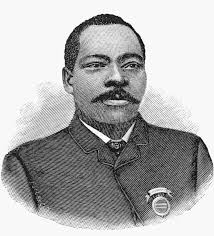

The patent by Granville T. Woods of New York, N.Y., describes an Amusement Apparatus (Patent No. 639,692, 1899) involving race-tracks. The object is to provide a novel and interesting form of amusement apparatus, capable of use at resorts or fairs, that uses motor-driven vehicles on tracks and incorporates a challenging element of blind, non-indicative speed control.
Inventor Background: Granville T. Woods
Granville T. Woods (1856–1910) was an incredibly prolific and important African-American inventor who held over 50 patents, primarily in the fields of electrical systems, railways, and communications. He is often known as the “Black Edison.” His inventions included the Synchronous Multiplex Railway Telegraph and various electrical motors and control systems. This patent demonstrates his broad application of electrical engineering principles to the entertainment and consumer sectors.
Invention and Mechanism
The apparatus is a competitive racing game using motor-driven cars on complex, overlapping tracks, controlled by deceptive electrical systems.
1. Track Design
- Form: Two or more race-tracks are shown, preferably in the shape of the figure 8 .
- Layout: Each track lies partly outside and partly inside the other, ensuring that all tracks are of substantially the same length for fair competition, even though they cover different areas.
- Crossovers: The tracks cross themselves and each other, preferably at different levels, though same-level crossings with frogs are an option.
2. Blind Speed Controller (Key Innovation)
- Principle: The system uses an independently-operated speed controller for each motor (preferably electric). The crucial feature is that the speed controller is blind or non-indicative—the operator cannot see the actual condition or position of the working parts.
- Irregular Action: The electrical resistance sections are arranged so that the action of the controller arm is irregular or changeable as it is moved.
- Function: Starting from one end, moving the handle progressively might first accelerate the car (throwing out resistance), but if the operator continues past a certain point, the controller might suddenly start retarding the car (throwing in resistance).
- Result: The operator must rely entirely on judgment and observation of the car’s speed to determine the correct controller position, adding an element of uncertainty and difficulty to the race.
3. Safety and Fail-Safe
- Automatic Brake/Cut-Off (Key Innovation): The motor circuit and the brake are linked, and the controller is provided with a bias (spring 14).
- Function: If the hand ceases to govern the car (i.e., the operator lets go of the controller handle while power is on), the bias spring automatically forces the controller back to the position where power is cut off, and the brake is automatically applied, stopping the car.
Concepts Influenced by This Invention
Woods’s amusement apparatus influenced subsequent mechanical and electrical systems by pioneering deceptive feedback and fail-safe automation in human-machine interaction.
- Deceptive/Blind Feedback Systems: The core concept of using a non-indicative, irregularly calibrated speed controller influenced the design of various interactive devices (e.g., skill games, training simulators) where the relationship between the control input and the system output is deliberately complex, requiring the user to rely on observation rather than simple prediction.
- Fail-Safe Automatic Braking: The mechanism that automatically cuts power and applies the brake (via spring bias) when the operator releases the control is a fundamental safety principle used in all critical manual-control systems today:
- “Dead Man’s Switch”: The safety control on modern trains and machinery that requires the operator to maintain active pressure on a handle; if pressure is released, the machine stops.
- Synchronous Track Design: The geometry of the figure-8, overlapping tracks to ensure equal travel distance influenced the design of large-scale amusement park rides and competitive racing games, where fairness and compact layout are crucial.
- Electrically-Propelled Amusement Rides: This patent is an early example of applying electric motor control and sophisticated track layouts to the amusement industry, influencing the development of electrically driven car rides and roller coasters.
