
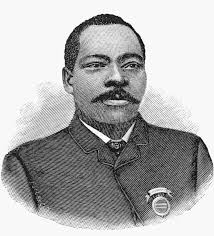

Inventor: Granville T. Woods
Patent Number: 308,817 (US-0308817-A)
Date of Patent: December 2, 1884
Invention: Telephone-Transmitter
Description of the Invention (from the Patent Document): Granville T. Woods’s 1884 patent for a “Telephone-Transmitter” was a significant improvement in early telephone technology, particularly in how sound waves were converted into electrical signals. At the time, early telephone transmitters often suffered from issues like weak signals, distortion, and a lack of clarity. Woods’s invention aimed to provide a more efficient and reliable method for transmitting speech.
Key features and components of his design:
- Vibrating Diaphragm (C): A crucial element that receives the sound waves from the speaker’s voice.
- Carbon Electrodes (E, H): The core of the transmitting mechanism. The invention specifically describes the use of carbon, which was known for its variable resistance properties when subjected to pressure, making it ideal for converting sound vibrations into electrical current fluctuations.
- Insulating Block (D): A non-conductive material used to hold the carbon electrodes in place and insulate them from each other.
- Springs (F): Used to ensure proper contact and pressure between the carbon electrodes and the diaphragm, allowing for sensitive response to vibrations.
- Adjusting Screws: Likely included to fine-tune the tension and contact pressure, optimizing performance.
- Sound Chamber (A): The mouthpiece area where the speaker’s voice enters.
Principle of Operation: When sound waves strike the diaphragm (C), they cause it to vibrate. These vibrations, in turn, alter the contact pressure between the carbon electrodes (E and H). This change in pressure varies the electrical resistance of the carbon, causing the electrical current flowing through the circuit to fluctuate in proportion to the sound waves. These electrical fluctuations are then sent over the telephone line to the receiver, where they are converted back into audible sound. Woods’s design aimed for greater sensitivity and clarity in this conversion process.
Personal Significance (Granville T. Woods): Granville T. Woods (1856-1910) was an extraordinarily prolific and influential African American inventor, often referred to as the “Black Edison.” Born in Columbus, Ohio, he had limited formal schooling but an insatiable curiosity and brilliant mechanical mind. He held over 50 patents, primarily in electrical and railway systems, including:
- Multiplex Telegraph (1887): Allowed communication between moving trains and stations, preventing collisions. This led to legal challenges from Thomas Edison, which Woods won.
- Induction Telegraph (1887): Further improved railway communication.
- Automatic Cut-off for Electrical Circuits (1889): An early circuit breaker.
- Electric Railway System (1888): A system for powering streetcars.
- Third Rail System: Improvements to electric railway power delivery.
- Telephone and Telegraph apparatus: Numerous patents in this field, including the transmitter.
Woods often developed his inventions independently, forming his own companies like the Woods Electric Company. Despite facing significant racial discrimination, he was a relentless innovator whose patents were ultimately acquired by major companies like General Electric, Westinghouse, American Bell Telephone Company (later AT&T), and others. His genius fundamentally shaped modern electrical and communication systems.
Historical Significance: Granville T. Woods’s “Telephone Transmitter” (Patent 308,817) holds significant historical importance within the context of early telecommunications and African American contributions to technology:
- Advancement in Telephony: In the early years of the telephone, the transmitter was a critical component limiting sound quality and range. Woods’s improvements to carbon transmitters directly contributed to clearer speech transmission and more reliable telephone communication, which was crucial for the burgeoning telephone industry.
- Competition and Innovation: The 1880s were a period of intense competition and rapid innovation in telephony following Bell’s initial patent. Inventors like Woods were constantly refining components to improve performance. His work stood out for its effectiveness.
- Laying the Groundwork for Modern Communication: By improving the fundamental process of converting sound to electrical signals, Woods’s transmitter played a role in the evolution of telephone technology that eventually led to the global communication networks we have today.
- African American Impact on Major Industries: This patent, like many of Woods’s inventions, demonstrates the profound impact of African American ingenuity on critical emerging industries of the late 19th and early 20th centuries. His work helped establish key technologies that underpinned modern electrical and communication infrastructure, despite facing immense racial barriers.
Woods’s inventive prowess in the field of electricity and communications solidifies his place as one of America’s most important unsung inventors.
