
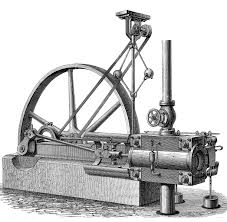
Steam Engine for Ships (1850)
While Benjamin Boardley (also known as Benjamin Bradley) was undeniably the mastermind behind the steam engine for warships, he was not granted a patent.
As an enslaved man in the 1850s, Boardley was legally barred from holding a patent. Under United States law at the time—specifically reinforced by an 1858 ruling by the U.S. Attorney General—enslaved individuals were not considered citizens and therefore could not enter into the legal contract required for a patent.
The History of Boardley’s Engine
- The Invention: While working as a helper at the U.S. Naval Academy in Annapolis, Boardley built a small-scale steam engine from scrap metal. He eventually scaled this up into a powerful engine capable of propelling a sloop-of-war at 16 knots.
- The Sale: Since he couldn’t protect his intellectual property with a patent, he was forced to sell the engine. He sold the model to a midshipman at the Academy and used the proceeds, along with savings his master allowed him to keep, to fund his ultimate goal.
- Purchasing Freedom: Boardley famously used the $1,000 earned from his engineering brilliance to purchase his own freedom. Records show he was manumitted from his owner, John T. Hammond, on September 30, 1859.
- Post-Freedom: After gaining his liberty, he continued to work at the Naval Academy and eventually became an instructor—a testament to his undeniable expertise despite the legal barriers he faced.
Boardley’s invention focused on optimizing the power-to-weight ratio and the mechanical “footprint” of engines used in ships, where space is limited and stability is paramount.
The invention addressed a major hurdle in mid-19th-century maritime engineering: how to transmit power from a vertical piston to a horizontal paddle-wheel or propeller shaft without using heavy, space-consuming “walking beams.”
The Innovation: The Compact Transverse Engine
Boardley’s primary contribution was an improved arrangement of the cylinder and the working parts of the engine to make it more compact and balanced for a ship’s hull.
1. The Direct-Action Mechanism
Traditional steam engines of the time often relied on a massive overhead “walking beam” to connect the piston to the crank. This raised the ship’s center of gravity and took up valuable deck space. Boardley’s design utilized a direct-action approach.
- Lower Center of Gravity: By rearranging the valves and the crosshead, Boardley kept the bulk of the heavy iron machinery lower in the hull, improving the ship’s stability in rough seas.
- Efficient Stroke: The patent details a specific arrangement of the steam ports and valves that allowed for a smoother, more immediate transfer of pressure to the piston, reducing “dead spots” in the engine’s rotation.
2. Improved Valve Gearing
Boardley’s engine featured a unique method of operating the slide valves.
- The Eccentric Drive: He refined the way the engine’s own rotation controlled the timing of the steam entry.
- Reversibility: For ships, the ability to quickly reverse the engine is critical for docking and avoiding collisions. Boardley’s gear arrangement made the transition from “forward” to “reverse” more reliable and less prone to mechanical jamming.
Key Mechanical Components
The Boardley engine was designed for durability in the high-moisture, high-salt environment of a steamship.
| Component | Function |
| Steam Cylinder | The “heart” of the engine where high-pressure steam drives the piston. |
| Piston Rod & Crosshead | The sliding assembly that converts the internal pressure into external mechanical movement. |
| Slide Valve | Regulates the entry and exit of steam to the cylinder; Boardley’s design reduced the friction on this moving part. |
| Connecting Rod | Attached directly to the crank of the paddle-wheel or propeller shaft, bypassing the need for a beam. |
Performance: Power and Stability
Boardley’s modifications were aimed at making steamships faster and more seaworthy.
- Space Saving: By eliminating the walking beam, shipbuilders could dedicate more room to cargo or passengers.
- Vibration Reduction: The balanced nature of Boardley’s transverse design reduced the heavy vibration that often shook the wooden hulls of early steamships apart.
- Efficiency: The shortened path from the cylinder to the shaft meant less energy was lost through mechanical friction, allowing the ship to maintain higher speeds with less coal.
About the Inventor: Benjamin Boardley
Benjamin Boardley’s work reflects the peak of the “Steam Age” in America, where inventors were racing to perfect the technology that was shrinking the world.
- Marine Specialization: Unlike many inventors who created general-purpose stationary engines, Boardley’s focus was specifically on the maritime application, showing a deep understanding of the unique stresses (rolling, pitching, and moisture) that a ship’s engine must endure.
- Industrial Context: His 1850 patent came at a time when steam was rapidly replacing sails for transatlantic travel, making any improvement in engine efficiency a high-value industrial asset.
