
Table of Contents
- Introduction: The Missing Pantheon …………………………………….. 1
- The Living Death: Leprosy Through the Ages …………………………. 2
- The Seattle Prodigy and the Chemical Riddle …………………………. 3
- The Proof in the Numbers: 30 Years of Global Dominance ………. 4
- The “Parole” of 1918……………………………………………………………………….. 5
- The Great Theft and the 90-Year Silence ………………………………. 6
- My Two Cents: A Legacy Restored ………………………………………… 7
- Glossary of Terms ……………………………………………………………….. 8
- Bibliography ……………………………………………………………………….. 9
Introduction: The Missing Pantheon
In the annals of medical history, we are taught to revere names like Louis Pasteur, who saved us from the invisible terror of rabies and anthrax, and Jonas Salk, who liberated a generation from the suffocating grip of paralytic polio. Their names are synonymous with the triumph of human intellect over biological decay. Yet, there is a name missing from that pantheon—a name that belongs alongside them not just for the complexity of her science, but for the sheer scale of the human suffering she ended.
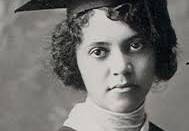
That name is Alice Augusta Ball.
At just 23 years old, Alice Ball did what doctors, priests, and scientists had failed to do since the time of the Pharaohs: she developed a successful, injectable cure for leprosy. To understand the magnitude of her achievement, we must first understand the horror of the enemy she faced. Leprosy, or Hansen’s Disease, was not just a medical condition; for most of human history, it was a social death sentence.
The Living Death: Leprosy Through the Ages
Before the “Ball Method” changed the world in 1915, leprosy was the most feared word in the human language. It is one of the oldest recorded diseases in history, mentioned in the Ebers Papyrus of ancient Egypt and throughout the Old and New Testaments. But the “leprosy” of history was more than a skin ailment; it was a slow, agonizing descent into physical and social annihilation.
The disease attacks the peripheral nerves, leading to a loss of sensation. Because patients could not feel pain, they would inadvertently burn themselves, cut themselves, or allow infections to rot their limbs. Contrary to popular myth, leprosy doesn’t make limbs “fall off”—rather; the body reabsorbs the bone in the extremities, leading to the clawing of hands and the shortening of toes and fingers. It attacks the cartilage of the nose, causing the face to collapse into a “leonine” (lion-like) appearance. It causes blindness, prevents the eyelids from closing, and destroys the vocal cords until the sufferer’s voice is reduced to a raspy whisper.
But the physical pain was secondary to the loss of humanity. For thousands of years, the “solution” to leprosy was isolation. In the Middle Ages, “leper masses” were held for the living; a person diagnosed with the disease was forced to stand in an open grave while a priest declared them dead to the world. They were given a bell to ring so that “clean” people would know to flee their path.
In Hawaii, where Alice Ball did her work, the situation was a modern nightmare. The government forcibly exiled thousands of people—men, women, and children—to the isolated peninsula of Kalaupapa on the island of Molokai. Once you were sent to the “leper colony,” you were forbidden from ever seeing your family again. You were a ghost among the living.
The Seattle Prodigy and the Chemical Riddle
Alice Ball was born in 1892 into a family of African American excellence in Seattle. Her grandfather, James Presley Ball, was a master of the daguerreotype—an early form of photography that required a sophisticated understanding of how chemicals like iodine and mercury interacted with silver. This was Alice’s “home-schooling.” She grew up in an environment where chemistry wasn’t a dry textbook subject; it was the tool her family used to capture the image of the world.
She excelled with a brilliance that was undeniable. She earned two degrees from the University of Washington before moving to Hawaii for her Master’s. As the first African American and the first woman to graduate with a Master’s in Chemistry from the College of Hawaii, she was already a pioneer. But it was her work with Chaulmoogra oil that would cement her legacy.
Scientists had known for centuries that oil from the seeds of the Hydnocarpus wightianus tree could fight leprosy. But the oil was a chemical “locked door.” It was too thick to inject (it stayed under the skin in painful, rock-hard lumps), and it was too nauseating to swallow.
Alice Ball, using her pharmaceutical background, looked at the oil’s fatty acids and saw a solution others missed. She figured out how to chemically break down the oil into ethyl esters. By doing this, she created a water-soluble substance that the human body could actually circulate through the bloodstream.
She had turned a raw, unusable plant extract into a precision medicine. For the first time in human history, the “unclean” could be made clean. Because of her, the first groups of patients were actually discharged from the hospitals in Hawaii. She had broken the chains of Kalaupapa.
The Proof in the Numbers: 30 Years of Global Dominance
To understand why her breakthrough was so massive, we have to look at the data. Before Alice, a diagnosis in Hawaii was a one-way trip to a graveyard. But almost immediately after her method was implemented, the statistics shifted from death to life.
In 1918, just two years after her passing, the Journal of the American Medical Association (JAMA) reported that 78 patients at Kalihi Hospital were successfully treated and released to their families. By 1920, nearly 100 more were discharged in a single year. These weren’t just “improvements”—these were people returning to their lives, their children, and their homes.
More importantly, the “Ball Method” was not a fleeting success. It remained the global gold standard for 30 years. From 1916 until the mid-1940s—when sulfone drugs like Promin were finally developed—Alice Ball’s ethyl esters were the world’s only effective defense. Her work was exported to clinics in China, India, and across Africa. For three decades, she was the silent architect of survival for millions, the bridge between ancient herbalism and modern synthetic medicine.
The “Parole” of 1918
One of the most moving accounts isn’t a single quote, but the description of the “Parole” day. In 1918, a board of physicians examined the first group of 78 patients who had been treated with Alice’s ethyl esters.
“They were found to be ‘bacteriologically negative.’ For the first time in Hawaiian history, a large group was not being sent to the ‘grave’ of Molokai, but was being given a certificate of health and a ticket home. The atmosphere was described not as a medical discharge, but as a resurrection.”
Dr. Hollmann’s Reflection
Dr. Hollmann, who remained Alice’s most loyal advocate, wrote about the shift in patient morale. Before her method, patients would hide their symptoms for years to avoid exile. After her method, he noted:
“The news that there was a ‘cure’ spread through the islands like wildfire. People who had been hiding in the mountains and in the valleys began to come forward voluntarily. They were no longer afraid of the doctor; they were seeking the ‘Ball Method’ by name.”
The Great Theft and the 90-Year Silence
Tragedy struck in 1916. While teaching a class, Alice was likely exposed to chlorine gas in a lab accident. She returned to Seattle and died at the age of 24.
In the vacuum left by her death, a man named Arthur L. Dean, the President of the University, saw an opportunity. He took Alice’s records and her methodology, conducted further trials, and published the findings. He didn’t just fail to credit her; he actively erased her. He called it the “Dean Method.”
For the next several decades, as thousands of people were cured and returned to their families, they thanked Arthur Dean. He was the hero of the medical journals. Meanwhile, Alice Ball lay in an unmarked grave in Seattle, her name scrubbed from the very breakthrough that was saving lives across the globe.
It took until the 1970s for the truth to begin to leak out. It took the investigative work of Black historians and researchers who refused to believe that the “Dean Method” had appeared out of thin air. They found the original lab notes. They found the 1922 paper by Dr. Harry Hollmann, who had worked with Alice and tried—unsuccessfully at the time—to tell the world that the credit belonged to “Miss Ball.”
It was not until the year 2000—84 years after her death—that the University of Hawaii finally placed a plaque in her honor under the only Chaulmoogra tree on campus.
My Two Cents: A Legacy Restored
When we talk about the African American legacy, we often focus on the struggle for civil rights. But Alice Ball reminds us that our legacy is also one of scientific supremacy.
If Alice Ball had been a white man, she would have been a global icon. Her death at 24 would have been mourned as the loss of a second Newton or a second Pasteur. Instead, she was treated as a resource to be mined—her intellect stolen by a man who had the “right” skin color and the “right” title to claim her genius as his own.
But the truth is a stubborn thing. Today, we know that Alice Ball didn’t just solve a chemical problem; she solved a human rights crisis. She ended the “living death” for millions.
As an engineer, I am moved by her technical precision. As a Black man, I am inspired by her resilience. And as a student of history, I am committed to ensuring that when we speak of the giants who saved humanity from the plagues of the past, we start with the name of a 24-year-old Black woman from Seattle who changed the world.
That is my two cents.
Glossary
- Chaulmoogra Oil: A vegetable oil obtained from the seeds of the Hydnocarpus wightianus tree, used in traditional Indian and Chinese medicine for skin diseases.
- Daguerreotype: The first publicly available photographic process, widely used during the 1840s and 1850s, employing silver-plated copper sheets and chemical vapors.
- Ethyl Esters: Chemical compounds produced by the reaction of an acid (in this case, the fatty acids of Chaulmoogra oil) with ethanol, making the substance more soluble and injectable.
- Hansen’s Disease: The clinical name for leprosy, named after Gerhard Armauer Hansen, the physician who identified the bacterium Mycobacterium leprae.
- Leonine Facies: A characteristic symptom of advanced leprosy where the face develops deep ridges and lumps, resembling the appearance of a lion.
- Water-Soluble: The property of a substance that allows it to be dissolved in water, a critical factor for medicines intended to circulate in the human bloodstream.
Bibliography
- Brown, M. (2022). Alice Ball: The Chemist who Cured Leprosy. Emerging Infectious Diseases, CDC.
- Hollmann, H. T. (1922). “The Fatty Acids of Chaulmoogra Oil in the Treatment of Leprosy and the Role played by Alice B. Ball in their Preparation.” Archives of Dermatology and Syphilology.
- University of Hawaii at Mānoa. (2000). Alice Augusta Ball: The First African American Graduate and Female Professor. University Archives.
- Wermuth, M. E. (2015). “Alice Ball and the Quest for the Cure for Leprosy.” Journal of Chemical Education.
- U.S. National Park Service. Kalaupapa National Historical Park: A History of Forced Isolation. [Government Resource].
