
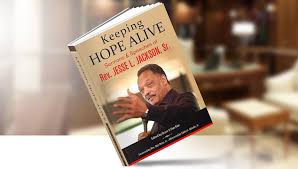
The world recently gathered in Chicago to bid a final farewell to the Reverend Jesse Lewis Jackson Sr., a man whose life was a testament to the power of resilience and the audacity of hope. From the grand “People’s Celebration” at the House of Hope to an intimate private service at the Rainbow PUSH headquarters, the services were not merely a mourning of a loss but a profound tribute to a “country preacher” who rose from the humble red clay of South Carolina to the global stage, forever changing the landscape of American democracy.
Table of Contents
- From Nazareth to the World
- The Call to Movement
- The Rainbow Coalition and the Run for the Presidency
- “I Am Somebody” and the Power of Rhetoric
- A Global Citizen and Influence
- The Final Private Tribute: A Capstone at Rainbow PUSH
- A Message for Today: Hope Amidst Upheaval
- Glossary of Terms
- Bibliography
From Nazareth to the World
To understand the magnitude of Jesse Jackson’s impact, one must look back at his beginnings. Born in 1941 in Greenville, South Carolina, Jackson’s upbringing was defined by the harsh realities of the Jim Crow South. He was born out of wedlock to a teenage mother, Helen Burns, and grew up in substandard housing under the oppressive cloud of segregation.
During the service, speakers reflected on the “Nazareth” of his youth. Referencing the biblical question, “Can anything good come out of Nazareth?” the eulogies answered with a resounding yes. Growing up poor with a single mother, Jackson faced a world designed to tell him he could only go so far. President Barack Obama recalled how Jackson’s mother would return home on Thanksgiving with leftovers from a dinner she had cooked for someone else. Yet, young Jesse refused to accept the verdict that he was a “nobody.” He was a star quarterback and student body president, instinctively understanding that individual success was hollow unless the entire community was free.
The Call to Movement
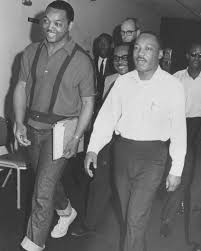
The 1960s were the forge that tempered Jackson’s spirit. After attending North Carolina A&T, he joined the “Joshua generation” of civil rights leaders, inspired by the bus boycotts and the revolutionary call of the Reverend Dr. Martin Luther King Jr. Jackson famously led seven students into a “whites-only” library to sit down and read—getting arrested for the simple act of seeking knowledge.
His partnership with Dr. King led him to Chicago to lead Operation Breadbasket. Here, he bridged the gap between civil rights and economic justice, challenging corporations on their hiring practices and insisting that the “least of these” deserved a seat at the table. Jackson recognized that civil rights without economic opportunity was an “empty promise”.
The Rainbow Coalition and the Run for the Presidency
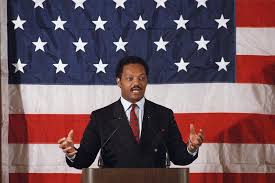
One of Jackson’s most enduring legacies is the formation of the Rainbow Coalition. Long before diversity and inclusion were corporate buzzwords, Jackson was building a “mosaic” of the marginalized. His vision brought together African Americans, Latinos, Asian Americans, family farmers, environmentalists, and gay rights activists at a time when nobody was speaking for them.
His 1984 and 1988 presidential campaigns were seismic shifts in American politics. President Obama reflected on watching Jackson in the televised presidential debates against the “powers that be.” He noted that while many dismissed Jackson’s chances at the time, his performance in those debates proved that he hadn’t just held his own—he had “owned the stage”.
Obama explained that this performance sent a powerful message to his own 22-year-old self. As a child of a single mother with a “funny name” and an outsider status, Obama felt that Jackson’s audacity proved that he, too, belonged in the highest halls of power. By owning that stage, Jackson paved the way for a future where a young black senator from Chicago’s South Side could be taken seriously as a candidate for the presidency.
“I Am Somebody” and the Power of Rhetoric
Reverend Jackson was a master of the spoken word, a “rhetorical genius” whose oral dexterity could reshape notions of the possible. His famous call-and-response, “I am somebody,” became a psychological lifeline for millions. It was a credo that bestowed dignity upon the disinherited, reminding them that they were respect-worthy and protected by God.
Speakers shared personal stories of how Jackson would kneel to look a child in the eye and demand they repeat those words until they believed them. Whether he was telling students to “open your brains, not your veins” or chanting “Keep Hope Alive,” his words were designed to sustain the spirit through the “stormy days.”
A Global Citizen and Influence
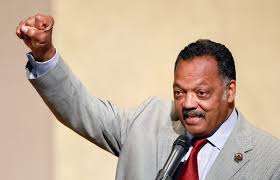
Jackson’s influence knew no borders. He was a “deal maker for the disenfranchised” who negotiated the release of hostages in Syria, Cuba, and Kosovo. James Zogby recalled how Jackson walked through military lines in Jerusalem to encourage peace, demonstrating a power that made even the soldiers want to be near him.
President Bill Clinton shared a deeply personal story of Jackson’s influence, noting that during the darkest hours of his own impeachment, Jackson called to pray with Clinton’s daughter, Chelsea, to ensure her head was “in the game”. This balance of “head and heart” defined his life.
The Final Private Tribute: A Capstone at Rainbow PUSH
Following the public celebration, the family gathered at the Rainbow PUSH headquarters for an intimate final homegoing. This service served as a capstone, focusing on the man the children simply called “dad.” His son, Yusef Jackson, noted that his father’s influence was so vast that no single service could capture it.
U.S. Rep. Jonathan Jackson shared a poignant reflection on growing up as the son of an icon. He admitted that, as a child, he was sometimes embarrassed by his father’s constant protesting because he didn’t yet understand the fight for economic inclusion. He declared his father his hero and pastor, reminding those gathered that his father’s activism was rooted in a Christian call to service: “Any society that will not support the many who are poor will never be able to save the few who are rich.”
A Message for Today: Hope Amidst Upheaval
In our current era, marked by economic uncertainty and social unrest, it is easy to succumb to a sense of hopelessness. For those who find themselves at odds with the current administration or feel the weight of global conflict, Jesse Jackson’s life offers a foundational blueprint for perseverance.
Even in his final year, Jackson remained deeply involved in the struggles of 2024 and 2025. He actively supported resolutions for global peace, proving that the work of a peacemaker is never finished. His son, Yusef Jackson, reminded us that for Reverend Jackson, the goal was never about the “left wing or the right wing,” but about finding the “moral center”.
Jackson understood government upheaval firsthand. Yet, his response was never cynicism; it was deeper organization. He taught us that “it takes two wings to fly” and that even when the debris of falling walls scars you, the mission remains to keep moving forward so others behind you can run through.
Glossary of Terms
- Jim Crow South: The era of state and local laws that enforced racial segregation in the Southern United States.
- Joshua Generation: A term often used to describe the leaders who came after the “Moses” figures (like MLK) to lead the next stage of the civil rights movement.
- Operation Breadbasket: An organization founded by the SCLC in 1962 to improve the economic conditions of black communities.
- Rainbow Coalition: A diverse political alliance formed by Jesse Jackson to include various racial, ethnic, and social groups.
- SCLC (Southern Christian Leadership Conference): A civil rights organization closely associated with Dr. Martin Luther King Jr.
Bibliography
- ABC News. (2026, March 6). LIVE: Funeral service for Rev. Jesse Jackson in Chicago. [Video]. YouTube. https://www.youtube.com/watch?v=LZQ2CD6UEZE
- Rainbow PUSH Coalition. (2026, March 7). Rev. Jesse Jackson: Private Homegoing Service at Rainbow PUSH Headquarters. [Video]. YouTube. https://www.youtube.com/watch?v=knyDc-goO14
- Thurman, H. (1979). With Head and Heart: The Autobiography of Howard Thurman. Harcourt Brace Jovanovich. (Cited in eulogies).
- Zogby, J. (2026, March 6). Reflections on Global Diplomacy and Rev. Jesse Jackson. [Speech transcript]. House of Hope, Chicago.
