
Table of Contents
- Introduction: The Myth of the Resource Drain
- The 2026 Morning Audit
- Age I: The Agricultural Foundation (Mechanizing the Soil)
- Age II: The Industrial Engine (Mastering the Machine)
- Age III: The Technological Frontier (The Ghost in the Machine)
- The Lifeblood of the Nation: Dr. Charles Drew
- The Selective Acknowledgement: Entertainment vs. Power
- The Active Erasure: A Systemic Failure
- The Dependency Audit: A Technical Rebuttal
- My Two Cents: The Structural Integrity Argument
- CPC Quick Reference Gallery
- Glossary of Terms
- Bibliography & Primary Sources
1. Introduction: The Myth of the Resource Drain
For over a century, a persistent and corrosive narrative has been woven into the fabric of the American psyche: the myth of the “resource drain.” It is a story told in hushed tones and loud policy debates, suggesting that Black Americans have been mere consumers of the national bounty—recipients of a progress they did not author.
As an engineer who spends my days developing solutions that ensure the reliability and integrity of the systems my clients depend on every day, I find this narrative to be more than just a moral failing; it is a clinical, technical delusion. In engineering, we don’t look at feelings; we look at inputs, outputs, and the code that runs the system. To understand the truth of the American experiment, we must move beyond rhetoric and look at the “code” of American progress: the Cooperative Patent Classification (CPC).
The CPC is the global standard used by the U.S. Patent Office to categorize every invention that moves humanity forward. If you perform a technical audit of the three great developmental ages of this country—the Agricultural, the Industrial, and the Technological—you find that the “load-bearing walls” of our society were designed, patented, and built by Black minds.
2. The 2026 Morning Audit
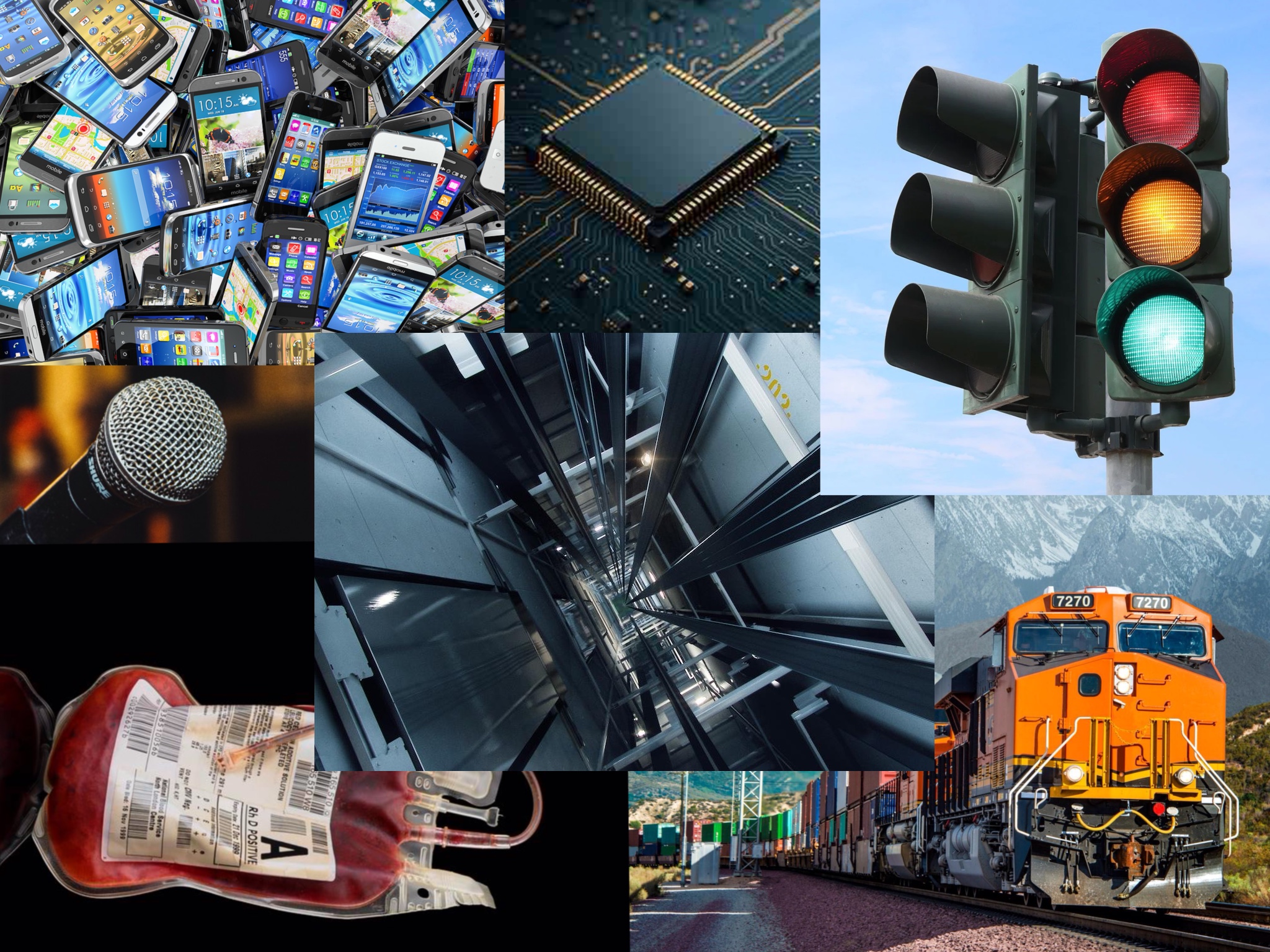
To see this architecture in action, imagine it is tomorrow morning. You wake up in your smart home, the temperature perfectly regulated by a system descending from Alice Parker’s central heat design (CPC Section F). You glance at your phone—a device that only functions because Jesse Russell architected the digital cellular base station (CPC Section H) and Mark Dean revolutionized the chip architecture inside it (CPC Section G).
Before you’ve even had your coffee, you’ve relied on the intellectual property of a community that the “drain” narrative tries to erase. As you join a virtual meeting, your voice is captured by an electret microphone designed by James E. West and transmitted via VoIP protocols pioneered by Dr. Marian Croak (CPC Section H).
The technical audit of your first thirty minutes of wakefulness proves the point: America is a system running on a Black-authored operating system.
3. Age I: The Agricultural Foundation (Mechanizing the Soil)
The first age of American success was built on the soil. For far too long, the story has been limited to Black labor—the physical “muscle” of the South. The real room for historical truth lies in the Black logic that moved the nation from survival to surplus.
Before the mid-19th century, agriculture was a game of grueling manual repetition. Innovation in this sector was an act of resistance. Consider Henry Blair, one of the only inventors in U.S. history whose patent was officially marked with the words “a colored man.” His seed planters (Patents 8447X and 15A) did for the soil what the assembly line later did for the car: they turned a chaotic manual process into a precise, mechanized system. To Blair, the patent wasn’t just a document; it was a deed of intellectual property ownership in a world that tried to deny his personhood.
At the same time, Norbert Rillieux was revolutionizing the very chemistry of industry. His “Multiple Effect Evaporator” (Patent 3,237) took the deadly, inefficient “Jamaica Train” method of sugar refining and replaced it with a vacuum-sealed system that recycled heat. It was a masterpiece of thermodynamics. If you enjoy the efficiency of modern industrial food processing—from condensed milk to petroleum refining—you are living in a system designed by Rillieux.
Technical Note: The Physics of the Vacuum Norbert Rillieux’s “Multiple Effect Evaporator” is a masterclass in Thermodynamics. In a standard open-air system, water boils at 212°F (100°C), requiring massive amounts of fuel and creating dangerous conditions. Rillieux realized that by lowering the atmospheric pressure inside a sealed container (creating a vacuum), he could lower the boiling point of the liquid.
This allowed him to “recycle” the latent heat—using the steam from one vat to boil the next. In engineering terms, he maximized Thermal Efficiency and created a closed-loop system that is still the “load-bearing” logic used in modern desalination, medicine manufacturing, and oil refining today.
4. Age II: The Industrial Engine (Mastering the Machine)
As America moved from the farm to the factory, the challenge changed. High-speed machinery brought a new technical enemy: friction. Without constant lubrication, the engines of the Industrial Revolution would seize, overheat, and fail.
Enter Elijah McCoy. We use the phrase “The Real McCoy” to denote quality, but we forget its origin. McCoy’s automatic lubricator (Patent US129843A) allowed locomotives and factory engines to oil themselves while in motion. Before McCoy, the American machine had to stop every few miles to be manually serviced. He provided the “uptime” that made the Industrial Age profitable.
While McCoy mastered the engine, Granville T. Woods mastered the signal. His Induction Telegraph system (Patent US373915A) allowed moving trains to communicate with stations, preventing the horrific collisions that were common in the late 1800s. Woods didn’t just build a tool; he built a communication protocol that stabilized American commerce.
We must also look at Jan Ernst Matzeliger, whose shoe-lasting machine (Patent US274207A) mechanized a process that was previously only possible by hand. His genius cut the cost of footwear in America by 50%. He took a luxury item and turned it into a “human necessity” (CPC Section A) for the masses.
5. Age III: The Technological Frontier (The Ghost in the Machine)
In the 21st century, the “Invisible Architecture” is no longer made of steam; it is made of spectrum and silicon. Every morning, when you wake up and check your smartphone, you are interacting with a Black-authored operating system.
Dr. Mark Dean holds three of IBM’s original nine PC patents. He is the reason your monitor has color and your computer can “talk” to your printer. He didn’t just work on computers; he architected the foundational model of personal computing (CPC Section G).
When you join a conference call or send a “text to donate,” you are using the gateway built by Dr. Marian Croak. Her 200+ patents in VoIP (Voice over IP) are the reason we can speak across the globe for pennies. And when you speak, your voice is captured by a microphone designed by James E. West (Patent US3118022A). His electret transducer is found in 90% of all microphones on the planet.
Technical Note: Spectrum and Silicon When we speak of the architecture of the 21st century, we are talking about the two primary “materials” of the digital age. Silicon refers to the semiconductor material used to create the integrated circuits (chips) that process data. Spectrum refers to the Electromagnetic Spectrum—specifically the radio frequencies that carry wireless data through the air.
Just as 19th-century engineers had to master the physics of steam to move a train, the Black inventors profiled here had to master the physics of the spectrum to move the digital world. Without their logic, the “air” around us would be silent, and the “silicon” in our pockets would be useless.
6. The Lifeblood of the Nation: Dr. Charles Drew
The preservation of life in this age goes back to the foundational work of Dr. Charles Drew. In a nation that often denied him a seat at the table, Drew provided the lifeblood for its survival. His doctoral thesis, “Banked Blood,” and his development of plasma preservation techniques created the modern blood bank system. During World War II, his work for the Red Cross saved countless American lives. When we speak of “Human Necessities,” there is no greater debt than the one owed to the man who made sure we didn’t bleed out on the battlefields of history.
7. The Selective Acknowledgement: Entertainment vs. Power
It is fascinating to observe what society chooses to remember and what it chooses to bury. American society has never had a problem acknowledging Black creativity when it comes to entertainment. The global “American” culture was built on our songs, our music, and our dances. We are celebrated for our prowess in athletics and our mastery in cooking and the arts.
Society has long been comfortable with Black creativity when it serves as a source of inspiration or entertainment. These are ‘front-facing’ gifts that are easy to consume. But when we look at patents and foundational physics, we are looking at the ‘back-end’ power that runs the nation. Moving from acknowledging the entertainer to acknowledging the inventor requires a fundamental shift in mindset—a willingness to see Black Americans not just as participants in the culture, but as the architects of the infrastructure itself.
But intellectual property represents a deeper, more permanent level of authority. In our modern world, patent ownership is the ultimate seat of power—it dictates who controls the standards, the systems, and the future. Acknowledging that the critical infrastructure of our daily lives—from the traffic lights to the cellular base stations—is a product of Black genius requires more than just a history lesson; it requires a total shift in mindset. It is a transition from seeing a community as a contributor to seeing them as a primary stakeholder in the American machine. It is one thing to appreciate the performer who enriches our culture; it is another to recognize the engineer who holds the patent for the foundation you stand on.
8. The Active Erasure: A Systemic Failure
As I write this, there is an active, aggressive movement to excise these truths from our schools and museums. Books are being banned, and displays are being removed from the halls of national institutions. The goal of this revisionism is clear: to maintain the myth of the “resource drain” by hiding the “debt.”
But here is the engineering truth: You cannot hide innovation that is functional. As we celebrate Black History Month, we must realize that the evidence isn’t just in a book; it is in the traffic light at your corner. It is in the thermostat on your wall. It is in the fiber optic lines buried beneath your feet. You can remove the name from the plaque, but you cannot remove the genius from the machine.
9. The Dependency Audit: A Technical Rebuttal
In my writing, I often encounter detractors who attempt to deny the validity of Black American ingenuity through statistical deflection. I can already anticipate the comment: “Ed, there are millions of patents filed in the U.S. system. Black Americans only hold a few thousand. How can you claim their work represents the ‘load-bearing walls’?”
As an engineer, my response is simple: In any complex system, components are not created equal. You measure integrity by the steel I-beams, not the ceiling tiles. Using Dependency Mapping, we find that Black innovation consistently provides the “structural core” of American progress. Trace the ancestry of the “millions” of modern devices, and the trail leads back to the same support beams. Without the foundational physics of James West or the standardized architecture of Mark Dean, the “millions” of peripheral patents have no platform on which to function.
10. My Two Cents: The Structural Integrity Argument
In engineering, if you misidentify the load-bearing walls, the building falls. You can remodel the kitchen and paint the facade, but if you compromise the structural members holding up the roof, the entire system reaches a point of catastrophic failure.
We treat Black history like a decorative facade—something to look at once a year. But the CPC codes show us that Black ingenuity is a load-bearing wall. In engineering and systems design, the most important parts of a structure are often the ones the end-user never sees.
When you denigrate the community that provided the ‘caution’ light to your traffic (Garrett Morgan) and the ‘banked blood’ to your hospitals (Dr. Charles Drew), you aren’t just being biased; you are being clinically delusional about what keeps your country standing.
My two cents? It is time for an intellectual audit. America isn’t just the land of the free; it is a house built by Black ingenuity. It’s time we acknowledged the true owners of the architecture.
11. CPC Quick Reference Gallery
| CPC Section | Field | Inventor | Primary Patent / Invention Name | Portfolio Count |
| A: Human Necessities | Agriculture | Henry Blair | 8447X Cotton Planter | |
| Medicine | Dr. Charles Drew | Banked Blood Plasma Preservation | ||
| Domestic | Lonnie Johnson | US5074437 High-Pressure Water Gun | 140+ Patents | |
| B: Operations | Manufactor. | Jan Matzeliger | US274207A Shoe Lasting Machine | |
| Transport | Garrett Morgan | US1475024 3-Position Traffic Signal | ||
| F: Mech. Eng. | Lubrication | Elijah McCoy | US129843A Automatic Lubricator | 57+ Patents |
| Heating/ Cooling | Alice Parker | US1325905A Gas Heating Furnace | ||
| David Crosthwait | 1986391 Vacuum Heating System | 39+ Patents | ||
| G: Physics | Computing | Mark Dean | US4528626 ISA Bus / PC Architecture | 20+ Patents |
| Geodesy | Dr. Gladys West | The Blueprint for GPS Satellite Math | ||
| H: Electricity | Acoustics | James E. West | US3118022A Electret Microphone | 250+ Patents |
| Mobile Tech | Jesse Russell | US5084869Digital Cellular Base Station | 100+ Patents | |
| VoIP | Marian Croak | US7599359 Internet-based Voice | 200+ Patents |
12. Glossary of Terms
- CPC (Cooperative Patent Classification): A hierarchical patent classification system jointly developed by the USPTO and the EPO to organize technical documents.
- Latent Heat: The energy absorbed or released by a substance during a change in its physical state (e.g., boiling) that occurs without changing its temperature. Rillieux mastered the recycling of this energy.
- Load-Bearing Wall: In engineering, a wall that supports the weight of the elements above it, conducted to the foundation.
- Multiple Effect Evaporator: An apparatus for efficiently using the heat from steam to evaporate water.
- Silicon: A chemical element that is the primary substrate for semiconductors. It is the physical material used to build the “logic gates” of modern computing.
- Spectrum: The Electromagnetic Spectrum; specifically the range of radio frequencies used to transmit data wirelessly between devices and base stations.
- Thermal Efficiency: A performance measure of a device that uses thermal energy, such as an internal combustion engine or an evaporator. It represents the ratio of useful work performed to the total energy input.
- VoIP (Voice over Internet Protocol): A technology that allows you to make voice calls using a broadband Internet connection instead of a regular phone line.
- Electret Transducer: A type of electrostatic capacitor-based microphone that eliminates the need for a polarizing power supply.
13. Bibliography & Primary Sources
- Odom, Edward. “Celebrating Black Inventions: A Rich Legacy.” My Two Cents, 8 June 2025, https://mytwocents.press/2025/06/08/celebrating-black-inventions-a-rich-legacy/.
- U.S. Patent and Trademark Office (USPTO). Historical Patent Index 1790-Present.
- Baker, Henry E. The Colored Inventor: A Record of Fifty Years. Crisis Publishing Company, 1913.
- Drew, Charles Richard. Banked Blood: A Study in Blood Preservation. Columbia University, 1940.
- James, Portia P. The Real McCoy: African-American Invention and Innovation, 1619-1930. Smithsonian Institution Press, 1989.
- Sluby, Patricia Carter. The Inventive Spirit of African Americans: Patented Ingenuity. Praeger, 2004.
