

Table of Contents
- Introduction: The Theater of the Net
- The Anatomy of Enforcement: Surgical vs. The Net
- The Technical Divide: Removals vs. Returns
- Obama’s “Surgical” Discipline
- Biden’s “Revolving Door” and the Title 42 Paradox
- The Strategic Pivot: Using Failure to Fuel “Zero Tolerance”
- Trump’s “Universal Net”
- The Ancestry Paradox: The Myth of the “Native”
- The Historical Incision: Lessons from the 1850s, 1880s, and 1930s
- Economic Vitals: Case Studies in Systemic Failure
- Agriculture, Construction, and the Housing Deficit
- Academic Atrophy and the Brain Drain
- Professional Paralysis: The Healthcare and Tech Gaps
- The Collateral Toll: Names Beyond the Ledger
- The Mortality Gap: Detention vs. The Interior
- The Demographic Cliff: A Fading Patient
- The Cure: From Extraction to Integration
- Glossary of Terms
- Bibliography
I. Introduction: The Theater of the Net
The air in America’s largest cities has changed. Since the start of 2025, the “universal priority” of the second Trump administration has moved enforcement from the remote scrublands of the Rio Grande into the heart of American cities. We are no longer just a nation debating a border; we are like a patient performing radical surgery on our own vital organs without anesthesia.
To the supporter at a rally, the $170 billion investment surge in enforcement—codified in the One Big Beautiful Bill Act (OBBBA)—represents a long-awaited “restoration of order.” But to the historian and the economist, this is something far more dangerous. We are attempting to cut out a population that has become the marrow of our workforce, the blood of our Social Security system, and the muscle of our infrastructure.
II. The Anatomy of Enforcement: Surgical vs. The Net
To understand why today’s climate feels so distinctive, we must look at the “machinery” of the last three administrations. The difference isn’t just in the numbers; it’s in the target and the underlying philosophy of the law.
The Technical Divide: Removals vs. Returns
To decipher the statistics used by politicians, we must first define the two primary ways a person is sent away.
- Formal Removals (The “Legal Hammer”): A removal is a compulsory, court-ordered movement of an individual out of the country. It carries a heavy “reentry bar”—a legal ban on returning to the U.S. for a minimum of five years, and often up to twenty. If a removed individual tries to re-enter, they face felony criminal charges.
- Returns (The “Revolving Door”): A return (often called a “voluntary departure” or “informal return”) is the movement of an individual out of the country without a formal order of removal. Critically, returns carry no legal penalty or reentry bar. An individual can be returned to Mexico in the morning and legally apply for a visa (or try to cross again) that same afternoon without facing criminal prosecution.
Obama’s “Surgical” Discipline and the Failed “DACA” Grand Bargain
Barack Obama oversaw 5.2 million repatriations, earning him the title “Deporter-in-Chief.” However, his system was built on a calculated “Grand Bargain” strategy. Central to this was his “DACA” (Deferred Action for Childhood Arrivals) initiative, which sought to lift the shadow of deportation for those brought here as children.
Statistically, the Obama administration holds the record for the highest number of formal removals in U.S. history. This was largely due to a well-funded enforcement machine inherited from the post-9/11 era and a policy shift that prioritized formal legal consequences for border crossers.
His legacy was defined by a deliberate shift toward Formal Removals. By using the “legal hammer,” he ensured that when someone was sent back, they stayed back. This was the “toughness” required for his legislative vehicle: the 2013 “Gang of Eight” bill. It was a trade-off: he would prove to immigration restrictionists that the government could be “tough” on enforcement—specifically targeting felons—in exchange for a permanent path to citizenship for “Dreamers” and millions of others born or raised here. While it passed the Senate with a bipartisan 68-32 vote, it died in the House. Obama was left with the “stick” of high-consequence deportations but without the “carrot” of reform, creating a surgical enforcement machine that removed millions without ever fixing the legal status of the very people he sought to protect.
Biden’s “Revolving Door” and the Title 42 Paradox
The 11 million “encounters” cited during Joe Biden’s term became a political lightning rod because they relied on Returns and Expulsions, not Removals. By comparison, Trump’s 2016 administration had a total of 3 million encounters.
An encounter is any interaction where U.S. Customs and Border Protection (CBP) officials meet a non-citizen attempting to cross the border without authorization or seeking entry at a port of entry but being deemed inadmissible. Biden’s encounter numbers were a statistical mirage driven by Title 42, a once-obscure 1944 public health law. Initially invoked in March 2020 by the Trump administration to address the COVID-19 pandemic, Biden found himself trapped by its “no-consequence” loophole.
Because Title 42 was a “health” expulsion rather than a “legal” removal, migrants were often returned to Mexico within hours without a criminal record or a 5-year ban. This removed the “cost” of getting caught, allowing a single individual to be caught five times in one week—counting as five “encounters” in Biden’s stats. This border “recidivism” reached as high as 27%, creating an distortion of a massive surge that was, in reality, a high-volume revolving door. Title 42 had no effect on Trump’s 2016 numbers because it wasn’t in effect until the very end of that administration.
The increase to 11 million encounters was driven by a “perfect storm” of factors:
- Post-Pandemic Recovery: The U.S. economy recovered faster than Latin American countries, creating an “unprecedented labor demand.”
- Regional Crisis: Violence and instability in Venezuela, Cuba, Nicaragua, Honduras, and Guatemala reached new heights. By late 2024, there were over 7 million Venezuelan refugees in the Americas.
- Perceived Policy Shifts: Smugglers marketed Biden’s early executive orders (like halting wall construction) to suggest “now is the time,” regardless of legal reality.
Removing the inflated encounter numbers, it is estimated that approximately 5.5 million illegal immigrants entered during the Biden administration, but he also returned 4 million—more than the previous Trump administration.
The Strategic Pivot: Using the perception of Failure to Fuel “Zero Tolerance”
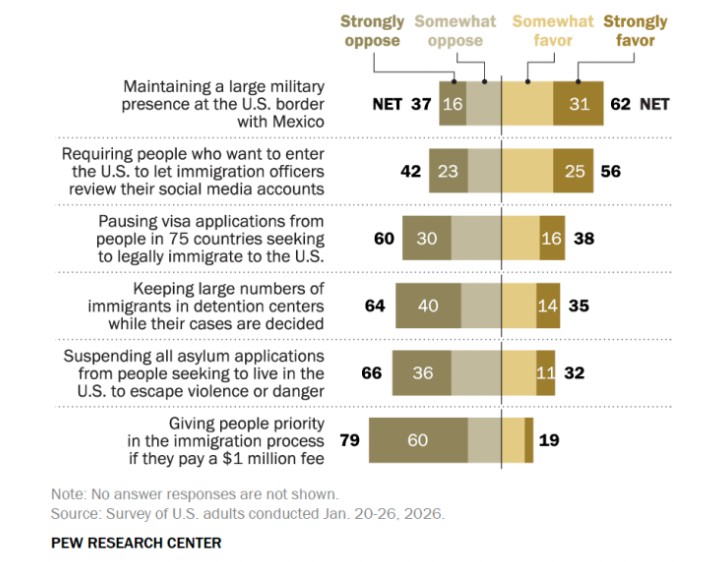
Many disagree with Trump’s no tolerance policy being applied to inner cities
The Trump administration effectively weaponized these inflated “encounter” numbers. By labeling the 11 million encounters a “historic failure” and an “invasion,” they built the public and political mandate for the current Zero Tolerance policies.
The argument was simple: because Biden’s “revolving door” didn’t stop the flow, the only solution was to replace the scalpel with a giant net. This narrative allowed the administration to move away from “Surgical Discipline” (targeting only criminals) and justify the “Universal Priority” status for all 11 million people living in our interior.
Trump’s “Universal Net” and the Return of the Legal Hammer
In 2026, the scalpel has been replaced by a giant net. Supported by the OBBBA’s $45 billion allocation for detention centers, the focus is now on the 11 million immigrants living in our neighborhoods.
While both Trump and Obama both operated using the legal hammer of formal removals, their methods differ in prioritization, transparency, and legal philosophy. The most notable shift is from Obama’s “surgical” approach (focusing on high-priority groups) to Trump’s “zero-tolerance” approach (treating all undocumented status as a priority).

1. Enforcement Priorities
- Obama (Tiered Priorities): Utilized a strict hierarchy. Priority 1 was national security threats and felons; Priority 2 was those with multiple misdemeanors; Priority 3 was those with older removal orders. Those with community ties and no records were “deprioritized.”
- Trump (Universal Priority): Effectively abolished these tiers under Executive Order 13768. Any person in the country illegally is a priority. This led to “collateral arrests,” where agents detaining a target also arrest any other undocumented individuals nearby.
2. Border Methods vs. Interior Arrests
- Obama’s Formal Removals: High numbers were driven by turning “voluntary returns” at the border into “formal removals” to ensure federal felony charges for those who tried to return.
- Trump’s Criminal Prosecution: Shifted toward criminalizing the act of crossing itself. By prosecuting 100% of adults for “illegal entry” (8 U.S.C. § 1325), the administration moved cases from civil to criminal courts. Because children cannot be held in criminal jails, this maneuver was the mechanical “root” of family separations.
3. The Use of “Prosecutorial Discretion”
- Obama (Systemic Discretion): Used discretion to protect broad groups (like DACA), arguing that limited resources should protect the “least dangerous.”
- Trump (Restricted Discretion): Explicitly directed agents not to use discretion, arguing that any selective enforcement was a failure to follow the law.
4. Public Optics and Deterrence
- Obama: Generally avoided high-profile workplace raids in his second term, preferring “silent audits” of I-9 forms.
- Trump: Embraces high-profile raids and courthouse arrests as a deliberate “deterrent” to encourage “self-deportation.”
By applying the “legal hammer” to the interior—where 74% of individuals have no criminal conviction—the administration is ensuring removals are permanent. We are seeing a theater designed to encourage “self-deportation” through state-sponsored fear.
The Cauterized Path: Why Legalization is a Statistical Impossibility
Critics often ask: “Why don’t they just get legal?” The reality is that for the majority of the 11 million, there is no “line” to stand in. The “extraction” is happening because the legal pathways have been systematically cauterized.
- The Labor Lockout: There is no permanent legal visa for the “low-skilled” workers—the pickers and builders—who form the marrow of the economy. Unless you are a high-level executive or have a direct immediate-family sponsor, there is no application to file.
- The 20-Year Wait: Even for those with valid sponsors, country caps mean a person from Mexico can wait 25 years just to have their application looked at.
- The “Ten-Year Bar” Trap: If an undocumented person tries to “get right” with the law, they are often required to leave the U.S. for an interview. However, the moment they leave, a federal law triggers a 10-year ban on their return, effectively forcing a choice between living in the shadows or losing their children for a decade.
- The 2026 Barrier: Under the OBBBA, legal fees and new digital-only filing requirements have increased the cost of naturalization to over $15,000, pricing out the very “cells” that keep the economy moving.
III. The Ancestry Paradox: The Myth of the “Native”
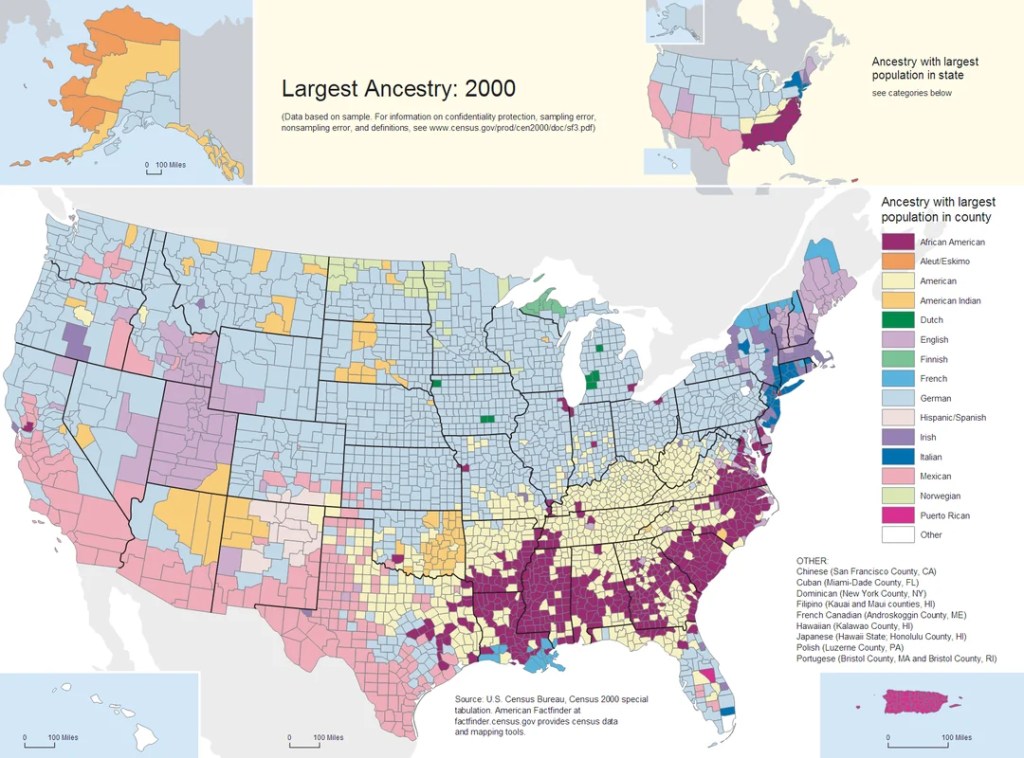
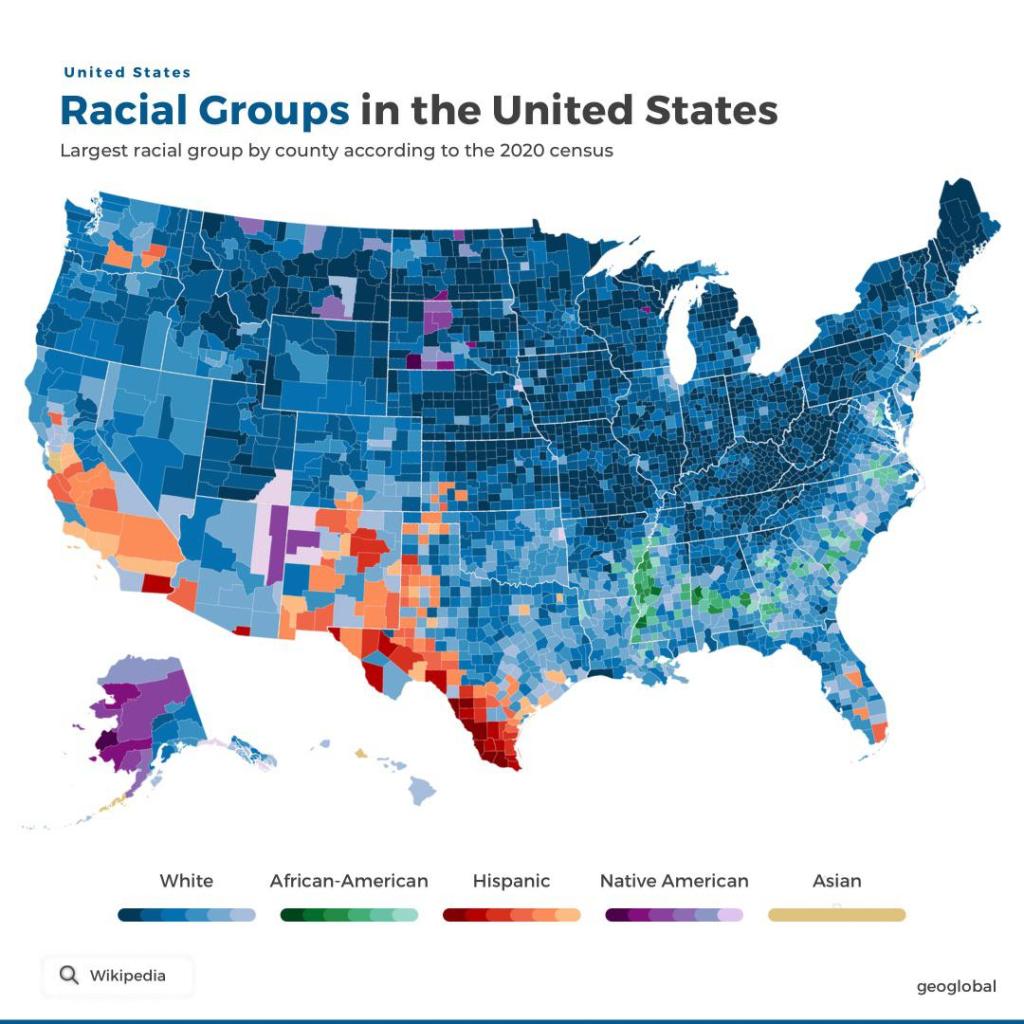
This theater relies on a psychological “baseline” of who belongs. 2020 Census data reveals a fascinating Ancestry Paradox. In Appalachia and the Upland South, a massive swath of residents identify simply as “American.” These are primarily the descendants of Scots-Irish pioneers whose roots go back to the original colonies. They have “divorced” their European roots so completely they view themselves as the only true “Americans,” despite being a part of a “nation of immigrants.” This regional identity creates a psychological wall that views the growth of Hispanic communities for example, as an “invasion” rather than a continuation of the American story.
IV. The Historical Incision: Lessons from the 1850s, 1880s, and 1930s
- The Know-Nothing Fever (1850s): They argued foreign-born citizens were “poisoning” American institutions. The movement failed because it treated a “cultural fever” rather than addressing industrial shifts.
- The 1882 Chinese Exclusion Act: The first law to ban a specific ethnic group. In regions where Chinese labor was removed, manufacturing output dropped by 62%. Instead of native workers taking those jobs, businesses simply closed.
- The 1930s Mexican Repatriation: The government coerced nearly one million people—60% of whom were U.S. citizens—to leave. The result? Higher U.S. unemployment. The “negative multiplier effect” kicked in: local grocery stores and landlords collapsed, killing local jobs for in their wake.
V. Economic Vitals: Case Studies in Systemic Failure
The Fiscal Hemorrhage: $884 Billion in Lost “Bio-Revenue”
If Agriculture is the stomach and Construction is the skeleton, then the federal tax system is the blood. By extracting the very “cells” that replenish this blood without consuming it, the administration is inducing a self-inflicted fiscal hemorrhage. The Penn Wharton Budget Model (PWBM) projects this policy will increase the federal deficit by $884 billion over the next 30 years.
- The Social Security “Immune System”: Unauthorized workers are a net-positive demographic. In 2023, they contributed $26.2 billion into the Social Security Trust Fund—benefits they generally cannot collect. By 2026, mass extraction is projected to deplete the trust fund six months earlier than estimated.
- The GDP Wound: The CBO and PWBM estimate mass deportation will shrink U.S. GDP by as much as 6.2%. This is a $1.7 trillion “heart attack” to our productive capacity, slashing the payroll tax revenues needed to service the national debt.
Case Study A: The Stomach (Agriculture) and the 10% Inflation Hike
The sector is experiencing a “vascular collapse.” Because unauthorized workers account for nearly one-third of all harvesting and sorting roles nationally, their extraction has created a literal gap between the field and the fork.
- Crop Abandonment: In early 2026, major growers in California and Florida reported losing upwards of 20% of their specialty crops (including berries and leafy greens) simply because there were no hands to pick them.
- The Price of Labor: Labor alone accounts for over 60% of production costs for fresh fruits like apples and blueberries. As the “Universal Net” removes the workforce, the remaining labor costs have spiked, leading to a projected 14.5% increase in overall fruit and vegetable prices by mid-2026.
- The Sticker Shock: While beef and veal are projected to rise by 9.4%, everyday essentials are faring worse:
- Fresh Vegetables: Projected to rise by 2.0% to 8.7% depending on the region.
- Sugar and Sweets: Projected to spike by 6.7%.
- Dairy: Estimates suggest that without immigrant labor, the price of a gallon of milk could double.
The “extraction” of the workforce is being paid for at the checkout line, where the average American family’s weekly grocery bill is projected to rise by $30 by the end of the year.
Case Study B: The Skeleton (Construction) and the Housing Deficit
Undocumented laborers handle the high-intensity tasks that complement higher-skilled native electricians and architects. Without the “foundation” workers, the industry slows. The mass removal of construction workers is projected to leave a deficit of 1.5 million homes by late 2026, driving rents to historic highs.
Academic Atrophy: Universities as a Declining Export
By restricting immigration, we aren’t just losing “the shovel”; we are losing “the lab coat.”
- The Graduate Pipeline: In 2024, international students made up 45% of STEM graduate students. By 2026, visa denials and fear led to a 20% drop in international enrollment.
- Revenue Collapse: International students contributed $40 billion to the U.S. economy in 2022-2023. The current decrease leaves budget holes in state universities, leading to tuition hikes for “American” students.
- The Brain Drain: Graduates are taking American-acquired knowledge to Canada, the UK, or Germany, where “High-Potential Individual” visas are used to poach the talent we are pushing away.
Professional Paralysis: The “White Collar” Shortage
- Healthcare Vulnerability: As of late 2025, roughly 25% of practicing physicians and 15% of registered nurses were foreign-born. Stagnation in H-1B processing has created shortages in rural hospitals. This is the literal “heart attack” of American healthcare.
- The Tech Talent Gap: Immigrants co-founded 55% of U.S. “unicorns” (startups over $1B). By early 2026, the rate of new tech patent filings has slowed for the first time in a decade.
VI. The Collateral Toll: Names Beyond the Ledger
The “Universal Net” of 2026 is a high-pressure system of mass detention and street-level enforcement. To understand the cost of “extraction,” we must look at the human biometrics of those who did not survive the first month of 2026.
- Geraldo Lunas Campos: On January 3, 2026, the 55-year-old Cuban immigrant (U.S. resident for 30 years) died at Camp East Montana (Fort Bliss). While DHS cited “medical distress,” an autopsy ruled his death a homicide by asphyxia due to neck and torso compression. He was pinned by five guards during a mental health crisis.
- Renee Nicole Good: On January 7, 2026, the 37-year-old U.S. citizen, mother, and poet was fatally shot by an ICE officer in Minneapolis. She was a neighbor supporting her community during an enforcement operation. Videos showed her in a car filled with children’s stuffed animals, turning away as the officer fired.
- Alex Jeffrey Pretti: On January 24, 2026, the 37-year-old ICU nurse at a Minneapolis VA hospital was shot and killed by Border Patrol agents during a protest. Video evidence showed him recording with his phone, standing between an agent and a woman who had been pushed down. We are killing the very caregivers who keep our nation’s “vitals” stable.
VII. The Mortality Gap: Detention vs. The Interior
To be fair, we must distinguish between two types of tragedy:
- Detention Mortality (Institutional Failure): Deaths in custody—75 under Bush, 67 under Obama, 62 under Trump’s first term, and 35 under Biden—are systemic failures of medical neglect or suicide. Obama’s average of 8 per year remains the lowest.
- Operational Lethality (The Interior Chaos): Today’s protests are a response to a new, active lethality in our streets. We are seeing the killing of American citizens on American soil. One is a failure of care; the other is a direct assault on constitutional boundaries.
VIII. The Demographic Cliff: A Fading Patient
By 2030, according to the CBO, the U.S. will hit a historic “tipping point” where deaths outnumber births. Immigration is the only thing keeping the “body” young. In 2025, the U.S. saw “Zero Net Migration” for the first time in 50 years. This is not a victory; it is a sign that the body is losing its ability to regenerate.
Prognosis: If we don’t change the treatment. The patient won’t be getting cleansed—it will simply be getting older, poorer, and more fragile.
IX. The Cure: From Extraction to Integration
The $884 billion heart attack is preventable. To stabilize the patient, we must move away from the “Universal Net” and toward a policy of Earned Regularization. If an undocumented immigrant has been a tax-paying “cell” for years, they have already proven their value to the American body.
- The Taxpayer Bridge: We must establish a clear path where a history of tax payments (via ITIN or payroll) serves as the primary credential for legal documentation. We should not be spending billions to extract the very people who are currently subsidizing the Social Security of the “natives” demanding their removal.
- Opening the Cauterized Path: We must reopen the “clogged arteries” of our legal system. This means lowering the $15,000 financial barriers of the OBBBA, removing the 10-year ban “trap,” and creating a merit-based system that rewards work and community contribution over bureaucratic quotas.
If we continue to treat our life blood as a pathogen to be purged, the American Republic will not survive its own “purge.” The only way to save the patient is to let the marrow back into the bone.
IX. Glossary of Terms
- 8 U.S.C. § 1325: The federal statute that makes “illegal entry” into the United States a misdemeanor crime.
- Ancestry Paradox: The sociological phenomenon where long-assimilated groups view themselves as “native” and oppose newer immigration, despite their own immigrant history.
- DACA (Deferred Action for Childhood Arrivals): An Obama-era policy providing temporary protection from deportation for individuals brought to the U.S. as children.
- Encounter: Any interaction where CBP officials meet a non-citizen attempting to cross the border without authorization.
- Formal Removal: A court-ordered deportation that carries a 5-to-20-year legal ban on reentry and potential felony charges for return.
- Negative Multiplier Effect: A chain reaction where the loss of one worker leads to the loss of several other jobs due to decreased local spending and business collapse.
- OBBBA (One Big Beautiful Bill Act): 2025 legislation allocating $170 billion for immigration enforcement and detention.
- Return (Voluntary Departure): The informal movement of a person out of the country without a court order, carrying no legal penalty.
- Title 42: A 1944 public health law used to quickly expel migrants at the border during the pandemic without legal penalty.
- Universal Priority: An enforcement shift where all undocumented individuals are considered equal priorities for arrest, regardless of criminal history.
X. Bibliography
- American Immigration Council (2025). Visa Overstays vs. Illegal Entry: The 45% Reality.
- Congressional Budget Office (2026). The Demographic Outlook: 2026 to 2056.
- Department of Homeland Security (2019/2026 Update). Office of Homeland Security Statistics (OHSS) Table 39: Aliens Removed or Returned: Fiscal Years 1892 to 2025.
- Penn-Wharton Budget Model (2025). Mass Deportation of Unauthorized Immigrants: Fiscal and Economic Effects.
- Peri, G., Lee, J., & Yasenov, V. (2019/2025 Update). The Labor Market Effects of Mexican Repatriations: Evidence from the 1930s. UC Davis Department of Economics.
