
Table of Contents
- Introduction: The Spark of Incivility
- The Rhetorical Shield: The “Party of Lincoln” vs. The Reality of the Swap
- Wave 1: The Dixiecrat Foundation (1948)
- Wave 2: The Southern Strategy and the Mathematical Necessity
- Wave 3: The MAGA Infusion and the “Replacement” Engine
- Economic Populism: The Secondary Shield
- The Psychology of the Knot: Permission Structures
- The Shadow Bureaucracy: Bypassing the Vetting Lock
- Conclusion: The Locked Door
Introduction: The Spark of Incivility

In late 2025, a viral exchange on CNN between 23-year-old political commentator Adam Mockler and veteran GOP strategist Scott Jennings provided a stark window into the soul of the modern Republican Party. The debate centered on Paul Ingrassia, a Trump administration appointee whose nomination for Special Counsel was derailed not by a lack of credentials, but by a digital trail of incendiary remarks. Ingrassia’s leaked messages—admitting to a “Nazi streak,” describing the Martin Luther King Jr. holiday as the “seventh circle of hell,” and labeling Dr. King the “George Floyd of the 1960s”—were so radioactive that even a Republican-controlled Senate balked at his confirmation.
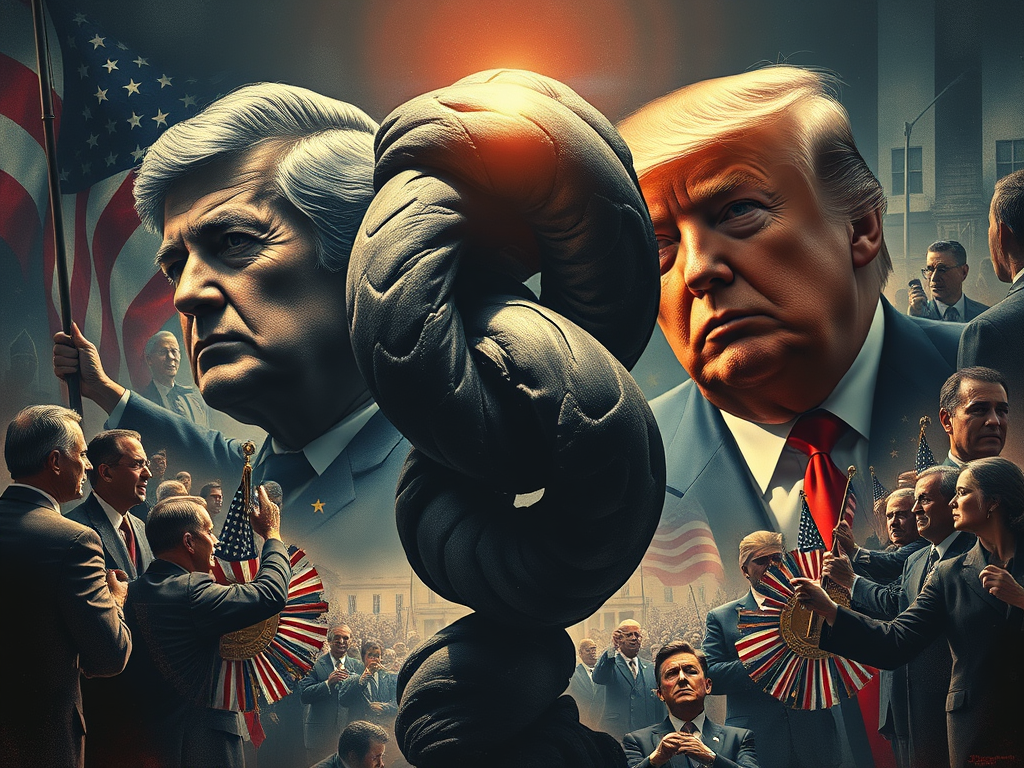
Yet, the true significance of the Ingrassia affair lies in what happened next: rather than being exiled from the movement, Ingrassia was quietly transitioned into a senior role as Acting General Counsel for the General Services Administration in November 2025. This “recycling” of controversial figures illustrates a profound shift in the GOP’s structural DNA. These positions are no longer fringe anomalies; they are part of a broader rhetorical landscape that includes describing the Civil Rights Act as a “mistake,” disparaging the intelligence of minority leaders, and framing immigration as an “invasion” from nations the president described as “s***hole countries”. Crucially, this classification was explicitly used to refer to majority non-white nations—such as Haiti and various African countries—while contrasting them with desired immigrants from majority-white nations like Norway. To understand why a major political party must now “twist itself in knots” to defend such elements, one must trace the 70-year evolution of a movement that traded the moral authority of the “Party of Lincoln” for the raw electoral power of racial and cultural grievance.
I. The Rhetorical Shield: The “Party of Lincoln” vs. The Reality of the Swap
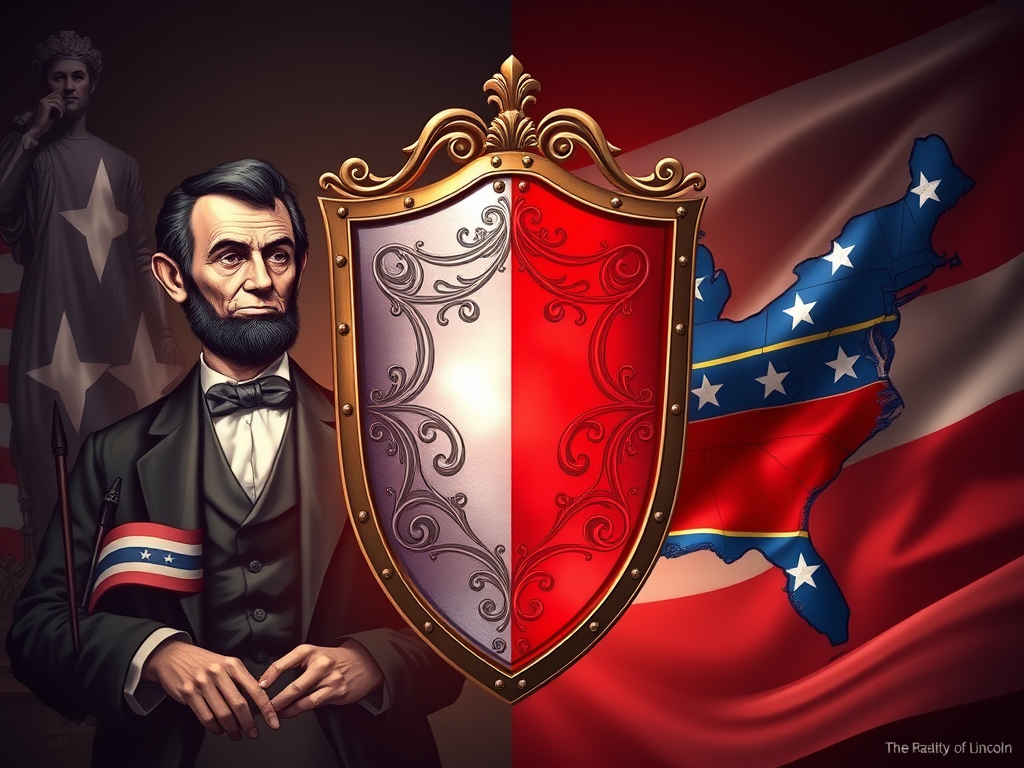
The most frequent retort used by modern Republicans to deflect charges of racial bias is a historical one: “We are the Party of Lincoln, the party that ended slavery, while the Democrats were the party of the KKK”. While historically factual in name, this defense is philosophically hollow. It ignores a century-long ideological migration—the “Great Swap”—that fundamentally inverted the two parties’ positions on federal power and race.
In the 19th century, the Republican Party was the champion of Federal Interventionism. Lincoln and his “Radical Republican” successors believed the national government had the moral authority to override “States’ Rights” to enforce human rights. Conversely, the 19th-century Democrats were the party of the “Solid South,” using the theory of state sovereignty as a legal shield for slavery and, later, Jim Crow. The inversion began in earnest in 1964. When Democratic President Lyndon B. Johnson signed the Civil Rights Act, he famously remarked that he had “delivered the South to the Republican Party for a long time to come”. By contrast, Republican nominee Barry Goldwater opposed the Act on the grounds of “States’ Rights”—the very philosophy Lincoln had fought a Civil War to defeat. This was the moment the “Party of Lincoln” began its transformation into the instrument of the South, adopting the constituency and the regional grievances of the people Lincoln had conquered.
II. Wave 1: The Dixiecrat Foundation (1948)

The modern “insurgent” spirit of the GOP was born in 1948, when the “Dixiecrats” (the States’ Rights Democratic Party) walked out of the Democratic National Convention. Led by Strom Thurmond, they were reacting to President Truman’s integration of the military. The Dixiecrats provided the blueprint for all future conservative rebellions. They realized that overt white supremacy was becoming a political liability on the world stage, so they pivoted to a “Constitutional” defense. They argued that they weren’t against Black Americans; they were against “Federal Tyranny”. This created the “Shield” of States’ Rights—a way to protect a specific racial and social hierarchy under the guise of defending the Tenth Amendment. This wave proved that a dedicated regional minority could use “identity politics” to threaten the math of a national party.
III. Wave 2: The Southern Strategy and the Mathematical Necessity

By the 1960s, the Republican Party establishment realized it was in a “hostage” situation. To reach the 270 electoral votes required for the presidency, they had to win over the white Southerners who had fled the Democratic Party. This birthed the Southern Strategy. Republican strategists like Lee Atwater famously explained the necessity of “Coded Language”. In a candid 1981 interview, Atwater noted that while one could no longer use racial slurs, one could talk about “forced busing,” “states’ rights,” and “tax cuts”. The genius of this strategy was its abstraction; it allowed the GOP to court the Dixiecrat base while maintaining a veneer of “respectability” for Northern moderates. This created the first “knot”: the party leadership had to balance its corporate, fiscal interests with a base whose primary motivator was the preservation of a traditional, racially-defined social order.
IV. Wave 3: The MAGA Infusion and the “Replacement” Engine
If the Southern Strategy was about “coded” dog whistles, the MAGA movement represents the moment the code was smashed. The shift from the Tea Party’s fiscal focus to MAGA’s nationalist focus was driven by the rise of the Great Replacement Theory. This theory—the belief that a “globalist elite” is intentionally using immigration and multiculturalism to “replace” the white, Christian electorate—has moved from the dark corners of the internet to the center of the Republican platform.
This fear serves as a powerful “Affective Hook”. It tells the constituency that they are not just losing a political debate; they are losing their country. This explains why Paul Ingrassia’s “unfiltered” remarks were not a deal-breaker for the base. In a “siege mentality,” incendiary speech is viewed as a sign of authenticity. To the MAGA supporter, a candidate who attacks MLK Day or calls for “eviscerating” Black history months is not being “racist”; they are being “brave” enough to name the perceived threat of replacement. The “traditionalists” like Scott Jennings find themselves “wrecked” in debates because they are trying to apply Wave 2 logic (politeness and code) to a Wave 3 reality (identity and survival).
V. Economic Populism: The Secondary Shield
While the “Knot” is tied with cultural and racial grievances, economic populism often provides the outer wrapping that makes these arguments palatable to a broader base.
- Abstraction of Elitism: Anti-elitism is frequently displaced from the “rich” onto “educational and expertise-based elites,” allowing the party to frame its defense of traditional hierarchies as a defense of the “working class”.
- Status Threat vs. Material Need: Research suggests that for many voters, the primary motivator is not economic hardship alone, but a “status threat” where economic changes are perceived as part of a larger loss of cultural dominance.
- The “Globalist” Hook: By framing trade and immigration through the lens of a “globalist” betrayal, the movement can bundle economic protectionism with the “Great Replacement Theory,” creating a unified narrative of national survival.
VI. The Psychology of the Knot: Permission Structures
How does a voter justify supporting a candidate who admits to a “Nazi streak”? They use a “Permission Structure”. This psychological framework allows supporters to bypass cognitive dissonance.
- Satire as Shield: As seen in Ingrassia’s legal defense, extreme comments are often reframed as “satire” or “trolling the libs”. This allows the supporter to feel “in on the joke” while the message of racial hierarchy is still delivered.
- Negative Partisanship: The fear of the “Other”—the “socialist Left” or the “migrant invasion”—is so potent that any Republican appointee, no matter how extreme, is viewed as a necessary weapon in a zero-sum war. The “knot” is thus a structural requirement. The GOP establishment cannot “fire” the Ingrassias of the world because the “Replacement” fear is what generates the 70 million votes they need to remain a national power.
VII. The Shadow Bureaucracy: Bypassing the Vetting Lock

When the “Permission Structure” fails to move a candidate through the traditional “Advice and Consent” process of the Senate, the movement utilizes a “Shadow Bureaucracy” to ensure loyalists remain in power, bypassing public scrutiny.
- Direct Reassignment: After Paul Ingrassia’s nomination for Special Counsel was withdrawn in October 2025, he was immediately installed as the Deputy General Counsel for the GSA. By November 2025, he was serving as the Acting General Counsel, overseeing over 100 attorneys despite having his formal nomination derailed by the Senate.
- The Vacancies Act as a Backdoor: The administration utilizes the Federal Vacancies Reform Act to place “Acting” officials in top roles. A withdrawn nomination (like Ingrassia’s) provides an additional 210 days of “acting” service, effectively turning a failed vetting process into a legal tool for long-term installation.
- Strategic Withdrawal and Rebranding: Figures like Matt Gaetz (Attorney General nominee) withdrew in late 2024 following scandals, yet remained prominent voices in the movement’s informal power structure. Others, like John Bartrum, saw initial nominations withdrawn only to be renominated and confirmed for higher-level roles, such as Under Secretary for Health at the VA.
- Ideological Enforcers: The withdrawal process is also used to purge those perceived as “disloyal,” such as Kathleen Sgamma, whose nomination for the BLM (Bureau of Land Management) was withdrawn in April 2025 after past private comments surfaced where she had expressed hope for a “resurgence of sanity” and congratulated the opposing party on their 2020 victory.
Conclusion: The Locked Door
The evolution from the Dixiecrats to MAGA is the story of a regional ghost becoming a nationalist spirit. The Republican Party today is trapped in a permanent knot of its own making. It continues to claim the mantle of Lincoln while defending the rhetoric and regional grievances of the very faction Lincoln defeated.
The Paul Ingrassia incident is the ultimate proof that the “guardrails” are gone. When Adam Mockler pointed out the hypocrisy of a party that only finds “moral clarity” when its own are attacked, he was highlighting the death of the “Party of Lincoln” and the birth of a party defined by Self-Preservation. The traditionalists cannot leave the knot because they no longer own the house; the base has moved in, changed the locks, and replaced the “Party of Lincoln” with the “Party of the Replacement Fear”. As long as that fear is the primary motivator, the Republican Party will remain a passenger to its most insurgent elements—not because they want to be, but because they have to be.
Footnotes
[^1]: Vaughn Hillyard et al., “Trump nominee withdraws from confirmation hearing after racist texts,” MSNBC, October 21, 2025.
[^2]: GSA Leadership Directory, “Acting General Counsel – Paul Ingrassia,” GSA.gov, December 2025; Senate HSGAC Inquiry, Letter regarding Ingrassia’s GSA appointment, December 2, 2025.
[^3]: FactCheck.org, “Trump Confirms His Disparaging Remark About s***hole Countries at Immigration Meeting,” December 11, 2025.
[^4]: “History of the Republican Party (United States),” Wikipedia, 2025; Britannica, “Republican Party History”.
[^5]: Eric Black and Merle Black, The Rise of Southern Republicans (Harvard University Press, 2002).
[^6]: Strom Thurmond, States’ Rights Democratic Party Platform (1948).
[^7]: Kevin P. Phillips, The Emerging Republican Majority (Arlington House, 1969).
[^8]: Lee Atwater, Interview with Alexander P. Lamis on the Southern Strategy (1981).
[^9]: Ashley Jardina, White Identity Politics (Cambridge University Press, 2019); National Immigration Forum, “The Great Replacement Theory, Explained”.
[^10]: Politico, “Trump nominee says MLK Jr. holiday belongs in ‘hell’ and that he has ‘Nazi’ streak,” October 20, 2025.
Bibliography
- Atwater, Lee. Interview on the Southern Strategy. Audio recording, 1981.
- Black, Eric, and Merle Black. The Rise of Southern Republicans. Harvard University Press, 2002.
- FactCheck.org. “Trump Confirms His Disparaging Remark About s***hole Countries at Immigration Meeting.” December 11, 2025.
- Jardina, Ashley. White Identity Politics. New York: Cambridge University Press, 2019.
- Mutz, Diana C. “Status threat, not economic hardship, explains the 2016 presidential vote.” Proceedings of the National Academy of Sciences (PNAS) 115, no. 19 (2018).
- Phillips, Kevin P. The Emerging Republican Majority. Arlington House, 1969.
- Politico. “Trump nominee says MLK Jr. holiday belongs in ‘hell’ and that he has ‘Nazi’ streak.” October 20, 2025.
- Raskin, Jamie. “Ranking Member Raskin Demands Trump Withdraw Ingrassia’s Nomination.” House Committee on the Judiciary, October 21, 2025.
This news report on Paul Ingrassia details the backlash and text message controversy that led to his initial nomination withdrawal.
