
Contents:
- I. Introduction
- II. The Social Price: The Psychological Toll of Censorship
- III. The Economic Price: The Role of Platforms and Commerce
- IV. The Civic Price: The Erosion of Institutions and Public Discourse
- V. The Breakdown of Checks and Balances
- VI. The One-Sided Application of Free Speech
- VII. Targeted Attacks on Specific Demographics
- VIII. The Digital Age and the Transformation of Free Speech
- IX. From Physical to Professional Harm: The Evolving Cost of Dissent
- X. Conclusion
I. Introduction
The right to free speech, a fundamental liberty enshrined in the Constitution, is not an abstract ideal. It is a vital and active component of American democracy, yet its existence is currently under a direct and unprecedented assault. The Founding Fathers enshrined free speech in the Constitution because they understood it as an essential tool for a self-governing people. After living under a monarchy where the king could suppress any criticism, they believed that citizens needed to be able to criticize the government without fear of punishment to ensure it remained accountable. This concept, often called the “marketplace of ideas,” holds that open debate is the best way to arrive at the truth and prevent tyranny.
As a society, we are witnessing a dangerous trend where individuals are losing their lives, their livelihoods, and their relationships for exercising this fundamental right. The indefinite suspension of late-night host Jimmy Kimmel’s show, after he made critical comments about a public figure, is not just a controversy; it is a clear example of how power is being used to silence dissent. This phenomenon is no longer a matter of historical precedent; it is a clear and present danger to the democratic foundation of the United States. The price of free speech is a grave and multifaceted burden, and the current administration’s actions are making that cost unbearable, challenging the very notion of a free and unburdened right.
II. The Social Price: The Psychological Toll of Censorship
The social cost of speech in this climate is the erosion of trust and the rise of a chilling effect on expression. The backlash against Jimmy Kimmel’s comments, which led to the indefinite removal of his show, demonstrates how speech can be leveraged to create a hostile social environment. The suspension of Kimmel’s show occurred alongside reports of other individuals, from journalists to academics and even everyday citizens, who were fired or disciplined for their views. This climate of retaliation creates a psychological phenomenon where individuals self-censor for fear of punishment. This constant self-policing leads to increased anxiety and emotional exhaustion. It fosters a “spiral of silence,” where citizens with dissenting views retreat, creating the illusion of a single, unified public opinion.
III. The Economic Price: The Role of Platforms and Commerce
In the modern media landscape, the economic price of free speech is paid by the institutions that host it. For companies like ABC, the decision to suspend “Jimmy Kimmel Live!” was not a choice but a capitulation to immense public and governmental pressure. The controversy surrounding Kimmel’s comments was fueled by an administration that publicly celebrated his suspension and hinted at further action against other critical voices. This situation proves that government officials can and do use their influence over regulatory bodies like the Federal Communications Commission (FCC) to pressure private entities. While direct censorship is often unconstitutional, the use of a “bully pulpit” and implicit threats of license revocation are equally effective. Corporations are now incentivized to censor speech to protect their financial interests, and the “advertiser’s dilemma”—where companies pull their ads from controversial platforms—is used as a weapon to suppress viewpoints. This creates a perverse incentive for media organizations to prioritize brand safety over unfettered expression.
IV. The Civic Price: The Erosion of Institutions and Public Discourse
The erosion of trust in public institutions is a grave civic price of the modern free speech landscape. The pressure exerted on a major media network to remove a popular show is a direct assault on the independence of the press. This is not a new phenomenon in American history, but its current form is particularly dangerous. Throughout the nation’s past, similar patterns of government censorship and suppression have emerged during times of national crisis. The Sedition Act of 1798 and the Espionage and Sedition Acts during World War I were used to imprison citizens for criticizing the government. While these acts were later challenged, leading to landmark Supreme Court decisions such as Near v. Minnesota (1931) which established a strong precedent against “prior restraints,” the current threat operates in a more subtle and insidious way. The government is not just legislating censorship, it is actively using its power to coerce and intimidate.
V. The Breakdown of Checks and Balances
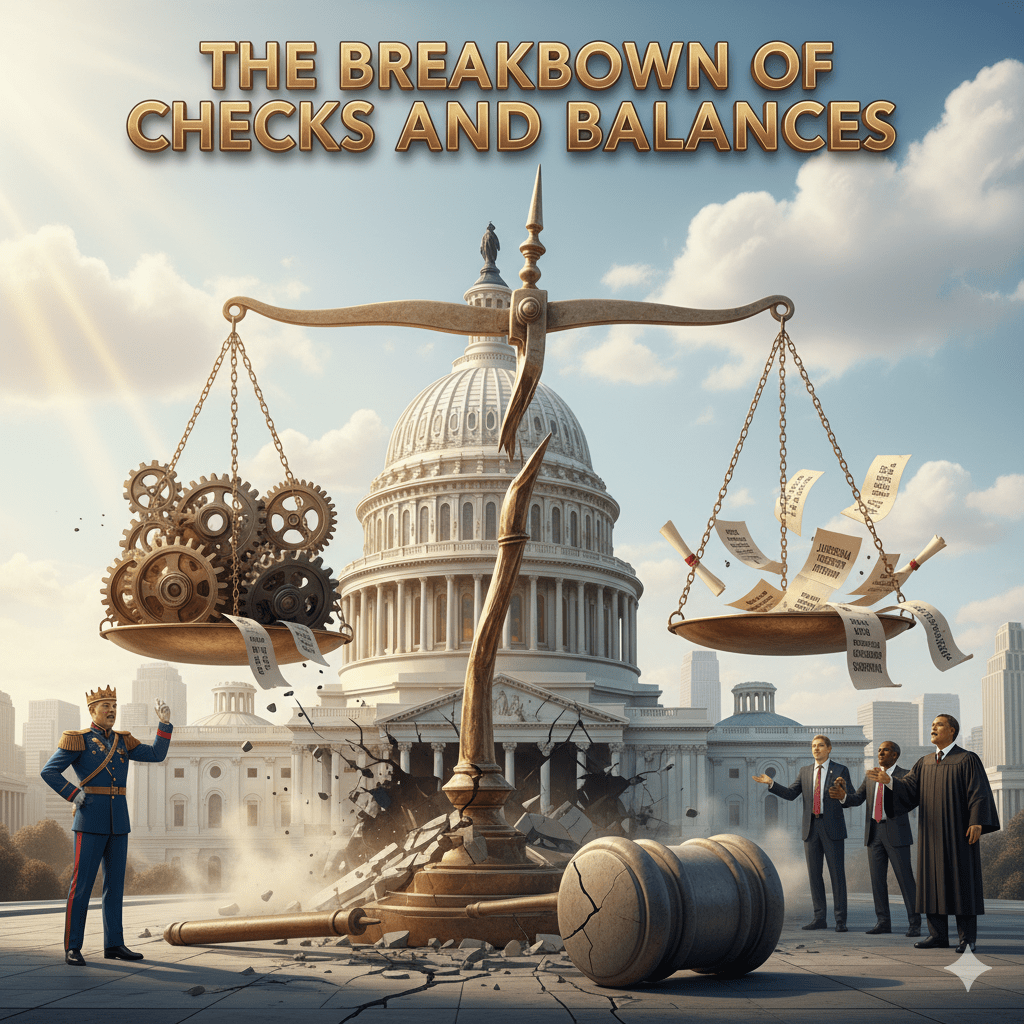
This administration is not just flirting with the infringement of free speech; it is directly and deliberately putting democracy in peril by dismantling the system of checks and balances. The presidency, which has been described as an “imperial presidency,” is using executive orders and other unilateral actions to bypass Congress’s legislative process. When Congress fails to act as a check on executive power, the responsibility falls to the judiciary. However, as the Supreme Court has become increasingly divided along ideological lines, its ability to provide a non-partisan check on power is undermined. This has led to a situation where constitutional disputes are resolved through partisan legal battles rather than through the collaborative processes the Founding Fathers envisioned. The use of federal power to intimidate and retaliate against those who express dissent, as seen in the Kimmel case and other reported instances, is a dangerous overreach that challenges the very foundations of American constitutional order.
VI. The One-Sided Application of Free Speech
The free speech debate has been weaponized by the political right, which applies a blatant double standard. Free speech is often championed to defend the controversial or even extremist rhetoric of groups like the Proud Boys and figures at events such as the 2017 “Unite the Right” rally in Charlottesville. In the aftermath of the Charlottesville violence, the defense of these groups centered on their right to peaceful assembly and expression, with some political leaders referring to “very fine people on both sides” of the conflict. This stance prioritized the right to speak, even when the content of that speech was rooted in ideologies of hate. Just recently on Sept. 14th a fox host called for the lethal involuntary lethal injection of homeless people on air. It was widely covered but this host has been allowed to apologize and keep his job. https://www.tiktok.com/@davidpakmanshow/video/7549937431160573214
In stark contrast, under the current administration, the same figures have been quick to condemn and call for the suppression of any speech they find disagreeable. The calls to remove Kimmel’s show and the public encouragement for employers to fire critics demonstrate a significant shift in posture. When government officials speak of a need to crack down on “hate speech,” they are criticized for seeking to redefine a term they once defended to now apply it exclusively to their political opponents. This one-sided application of free speech principles reveals that the First Amendment has become less of an unwavering right and more of a tactical shield.
VII. Targeted Attacks on Specific Demographics

This administration has also used its power to disproportionately target specific demographics as a form of retaliation for their dissent, with Black women being a prominent example. Data from the Bureau of Labor Statistics indicates a significant and rapid decline in Black women’s employment during the first year of this administration. Between February and July 2025, over 300,000 Black women left the workforce, even as the overall U.S. workforce saw a net gain. The unemployment rate for Black women rose from 5.4% in January 2025 to 6.7% by August 2025. This trend is a direct result of federal workforce cuts and other initiatives. In my opinion this phenomenon is a retaliatory measure, a response to the many Black women in various positions who have been outspoken critics of the administration. I think this is an overt attempt to slow or halt the economic and social advances made by Black women since the Civil Rights Acts demonstrating that the suppression of speech extends beyond public figures and into the economic lives of a targeted group.
VIII. The Digital Age and the Transformation of Free Speech
While the concepts of censorship and retaliation are as old as governance itself, the digital age has fundamentally transformed the landscape of free speech, creating a unique and dangerous environment. The internet and social media platforms have created a new “public square” that is simultaneously more expansive and more volatile than any in history. The cost of speech is no longer just tied to government action, but is also determined by the actions of private corporations and the unpredictable force of public opinion. This transformation is a double-edged sword. On one hand, the internet has democratized speech, giving every individual a potential megaphone to reach a global audience. People no longer need to rely on traditional media gatekeepers to have their voices heard. On the other hand, this democratization has also given rise to new forms of private censorship. Private companies like Meta and X wield immense power over public discourse through their content moderation policies and algorithms. They are not bound by the First Amendment in the same way the government is, and they can remove, de-platform, or shadow-ban speech they deem to be in violation of their terms of service. This creates a new battleground where the most important decisions about free speech are not made in courtrooms but in corporate boardrooms. Furthermore, the digital age has accelerated the speed and severity of public backlash. Social media allows for rapid, viral mobilization against individuals. A single post or comment can lead to a coordinated campaign of public shaming, doxing, and demands for professional consequences. This creates a “chilling effect” that extends beyond government control, forcing individuals to self-censor for fear of losing their jobs, clients, or reputation. The digital age has blurred the lines between the personal and the professional, creating a world where every utterance is a potential liability, and the price of free speech is paid in lost livelihoods and public scorn, facilitated by the very platforms that were once hailed as the ultimate tools of liberation.
IX. From Physical to Professional Harm: The Evolving Cost of Dissent
The cost of dissent has evolved dramatically from the Civil Rights era to the present day. During the Civil Rights Movement, leaders such as Martin Luther King Jr., Malcolm X, and Al Sharpton faced brutal and life-threatening repercussions for their free speech. King’s non-violent protests were met with overt physical attacks, fire hoses, and police dogs, while his home was bombed and he was imprisoned. Malcolm X, advocating for Black self-determination, faced a campaign of threats and intimidation that culminated in his assassination. Al Sharpton’s early activism also faced physical danger; he was met with violent mobs during marches and was even stabbed in the chest. In these instances, the state and its allies used overt physical violence as a primary tool to silence dissent and maintain control. The price of free speech was often one’s own life.
This stands in stark contrast to the primary costs of dissent in the current digital age. While political violence and targeted attacks still occur, as seen in the recent assassination of a conservative activist, the most common form of retaliation has shifted from physical harm to professional and social destruction. For a figure like Jimmy Kimmel, the consequence of his speech was not a mob, but the loss of his show and the potential ruin of his career. For many, the threat is not a jail sentence but a firing, not a physical assault but a targeted campaign of public shaming on social media. The harm is still devastating and can be crippling, but the nature of the threat has changed. The battleground has moved from the streets to the digital public square, where the power to silence is wielded not just by the government but by private corporations and anonymous online actors.
X. Conclusion
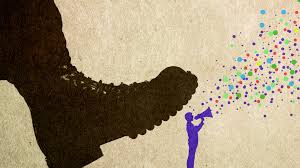
In conclusion, the price of free speech is not a theoretical concept; it is a tangible and growing burden that threatens to put American democracy in peril. The actions of the current administration demonstrate a deliberate and concerted effort to suppress dissent and consolidate power, targeting not only public figures like Jimmy Kimmel but also specific demographics like Black women. This erosion of democratic norms and the weaponization of free speech principles, facilitated by the new power dynamics of the digital age, is a recurring threat in American history. A truly robust and healthy society requires not only the right to free expression but a collective commitment to protecting it from all forms of suppression—both from the government and from powerful private entities. The ongoing challenge is to ensure that the principles of free speech and democracy are not sacrificed in the face of political expediency and the relentless pressure to silence opposing voices.
Edward Odom
