
Contents:
- Intro
- The Original Flaws of the “Great Experiment”
- The “Second Founding” and the Expansion of Rights
- Competition, Not Marginalization
- The Perception of a Global Decline
- Conclusion: A More Perfect Union
Intro
A powerful undercurrent in modern political discourse is the sentiment that America has drifted from the foundational vision of its original Constitution. This belief has fueled an active assault on the constitutional amendments responsible for the increased diversity in the country. This view often stems from a belief that the nation’s perceived decline in global status is a direct result of its increasing diversity. Proponents of this idea often argue that the historical advantages once held by white men have been erased, leading to a sense of marginalization and a loss of national cohesion resulting in this decline. However, this essay will argue that the inclusion of women, African Americans, and immigrants in the national competitive landscape is not the cause of a decline, but a necessary evolution that has raised the bar for all. The constitutional amendments were not an aberration but a vital mechanism for growth that ultimately led to the nation’s success, a success that would have been impossible had its original design endured.
The Original Flaws of the “Great Experiment”
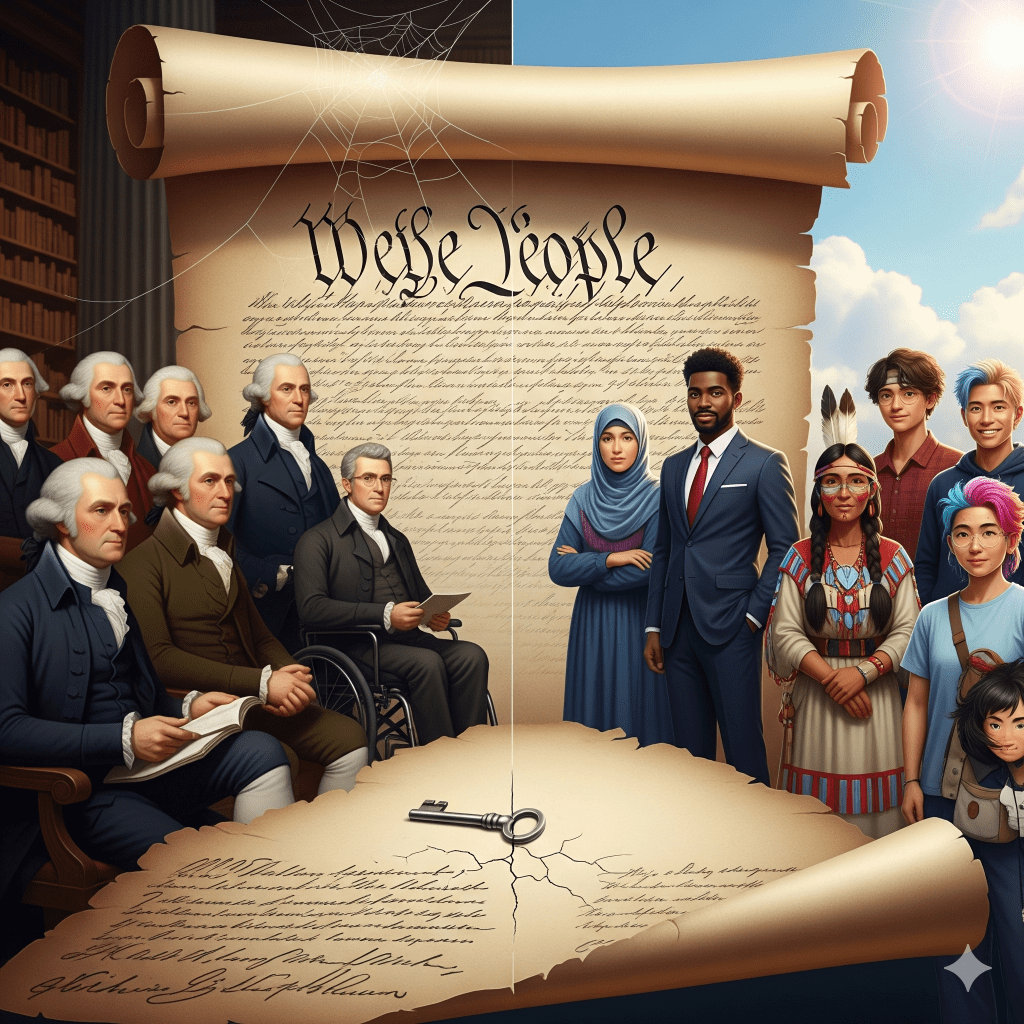
The Founding Fathers, in their wisdom, created a framework for a more perfect union, but their vision was limited by the social and racial norms of their time. The initial document was a compromise, a fragile peace between states with competing interests. The most profound of these compromises was the Three-Fifths Compromise, which counted enslaved people as three-fifths of a person for purposes of representation and taxation. Had this original vision remained unchanged, the nation would have been paralyzed by its own internal contradictions. Slavery would have persisted, creating an insurmountable moral and economic burden. The nation would have been perpetually divided, and the inevitable conflicts would have been far more devastating than the Civil War, which was, in itself, a direct consequence of the Constitution’s original failings. Without the constitutional ability to adapt and address this fundamental flaw, the very concept of a unified nation would have crumbled.
The initial lack of a Bill of Rights further underscores the vulnerability of individual liberties in the original document. While the first ten amendments were ratified shortly after the Constitution, their absence at the outset shows that the protection of fundamental freedoms like speech, press, and assembly was not a given. These rights, which we now consider inherent to the American identity, became the bedrock upon which subsequent movements for equality were built. A society without these guaranteed freedoms would have been unable to foster the open critique and intellectual debate necessary for progress. The freedom to challenge the status quo and to express dissenting opinions—from abolitionists to suffragists—was vital to pushing the nation toward a more just and inclusive future. Without the Bill of Rights, such a push would have been much more easily suppressed, leading to stagnation and repression.
The “Second Founding” and the Expansion of Rights

The true “Second Founding” of the nation came with the passage of the Civil War amendments: the Thirteenth, Fourteenth, and Fifteenth. The Thirteenth Amendment abolished slavery, finally removing the most glaring hypocrisy from the nation’s law. The Fourteenth Amendment, however, was arguably the most pivotal. Its Equal Protection and Due Process Clauses provided a legal foundation for every civil rights struggle that followed. Without it, the “separate but equal” doctrine of the Jim Crow era would have been constitutionally unassailable, and the Civil Rights Movement of the 1960s would have lacked the legal leverage to dismantle systemic racism. The Fifteenth Amendment, which granted African American men the right to vote, further expanded the franchise and forced the nation to begin the long, difficult process of becoming a more legitimate representative democracy. If these amendments had never been passed, the United States would have remained a two-tiered society, a society with two distinct classes: a first tier of full citizens with all rights and privileges (in this case, white men), and a second tier of people who are denied those fundamental rights (such as African Americans and other people of color), forever crippled by racial strife and internal conflict. Its economic growth would have been limited by an entrenched system of racial inequality, and its claims of being a land of liberty would have been globally discredited, severely limiting its soft power on the world stage.
An unamended Constitution would have also severely limited America’s human capital. Without the constitutional amendments that eventually granted rights to women and people of color, vast segments of the population would have been unable to contribute fully to the nation’s progress. Women, comprising half of the population, were instrumental in the nation’s growth. The Nineteenth Amendment, which granted women the right to vote, empowered them to participate in politics and society in a way that had previously been denied. This expansion of rights unlocked immeasurable intellectual and social capital. Similarly, the denial of citizenship and rights to immigrants of color would have prevented the massive waves of immigration that fueled the industrial revolution and provided a diverse range of skills and perspectives.
The contributions of African Americans, in particular, are central to this argument. Their forced labor built much of the early nation’s infrastructure and agricultural wealth. But their contributions did not end with emancipation; they are a story of immense resilience and enduring influence. African Americans served in every war since the Revolution, fought for the nation’s ideals even when the nation denied them, and their bravery proved indispensable in both World Wars. In the early 20th century, the Great Migration saw millions move from the rural South to Northern and Western cities, reshaping America’s urban centers and its economy. Culturally, their contributions are immeasurable, as they are the source of some of America’s most globally recognized art forms, including jazz, blues, and rock and roll. African American intellectuals, from Frederick Douglass to W.E.B. Du Bois, consistently held the nation accountable to its stated principles, serving as a moral compass that drove the push for equality. Without their ability to become citizens, have their rights protected, and contribute to every aspect of American life, the nation would have missed out on the innovators, laborers, and visionaries who built the modern nation.
Competition, Not Marginalization
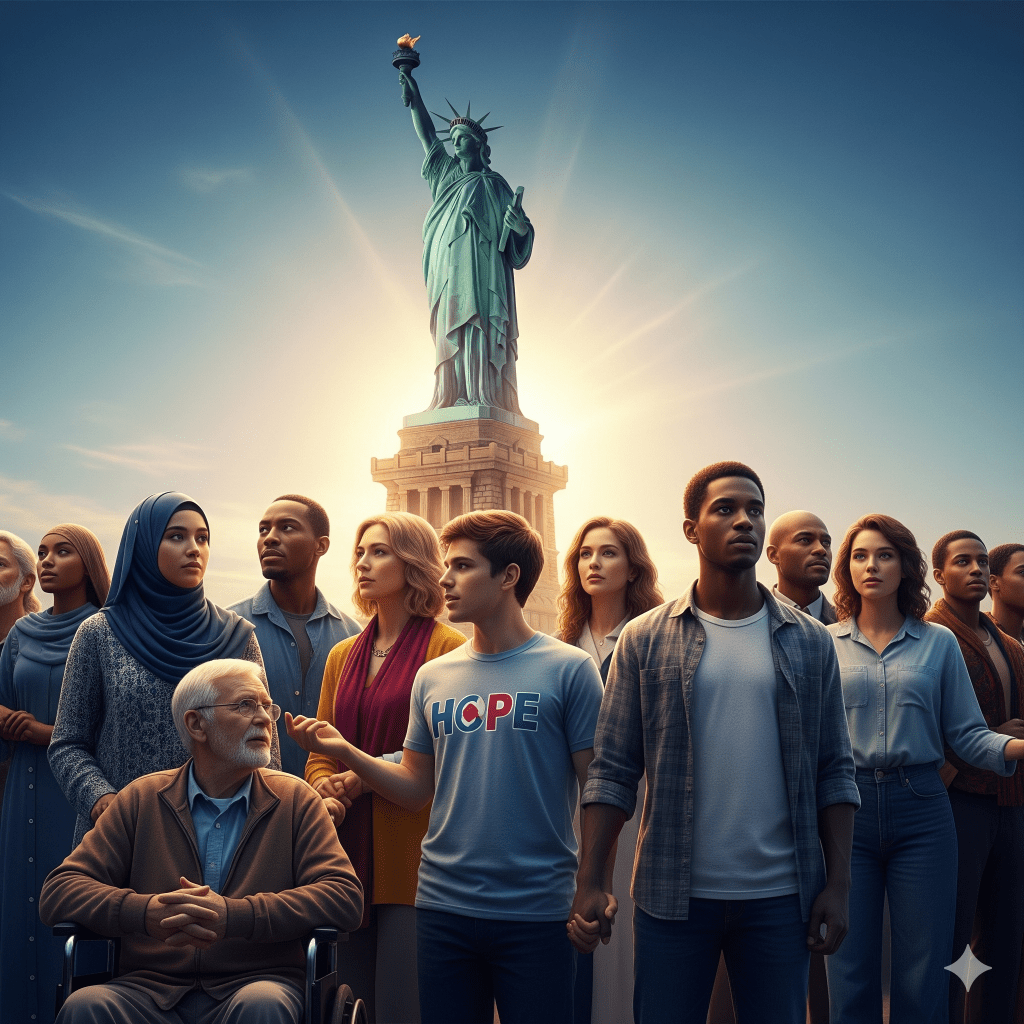
The unique strength of the American experiment is its ability to attract and integrate ambitious individuals from every corner of the globe. The Statue of Liberty became more than just a symbol; it represented a reality of opportunity for millions. Without the ability to become citizens and have their rights protected, these individuals would not have come, and America would have missed out on the innovators, laborers, and visionaries who built the modern nation.
Much of the modern discourse regarding a return to a society controlled by white men comes from the sentiment that white men are being marginalized in this “new” America. Proponents of this view argue that they are now being discriminated against, and many of the advantages they once had have been erased. They believe that a more open and diverse society puts them at a disadvantage, creating a sense of unfairness.
However, the opposing thought is that white men have not been marginalized. Instead, the inclusion of women, African Americans, and immigrants in the competitive pool has simply made it necessary for everyone to improve. The bar for success has been raised for the nation as a whole, which is a good thing for everyone. This new level of competition increases the talent pool, raises the level of creativity and innovation, and ultimately helps the country prosper. The answer, according to this view, is not to lower the bar and remove the added competition but to provide the resources for white men to compete at the level of the new competition. The nation’s strength comes from its ability to challenge all of its citizens to reach their full potential.
The Perception of a Global Decline
The sentiment that America has declined in its global status is a key piece of evidence used to support the argument for a return to a more homogeneous society. This perspective points to the rise of China as a military and economic power, the increasing influence of a new generation of nations, and a perceived erosion of America’s geopolitical influence. Proponents of this view often claim that domestic social changes, including increased diversity, have weakened the nation from within, leading to a loss of the unity and purpose that once defined it. The argument suggests that a focus on identity politics and social equity has distracted the nation from its strategic interests and made it less competitive on the world stage.

However, this narrative of decline is a misdiagnosis of a complex, evolving world. America’s shrinking share of global GDP is not necessarily a sign of its decline, but rather a reflection of the rapid growth of other countries, which is a natural feature of a globalized economy. Similarly, the end of the post-Cold War era, where the U.S. was the sole superpower, was inevitable. We are now in a more multipolar world, with power distributed among several nations. It is a fundamental misunderstanding to link this geopolitical shift to domestic diversity. In fact, America’s ability to integrate diverse cultures and attract the world’s best talent is one of its most potent and unique advantages over more monolithic rivals.
Conclusion: A More Perfect Union

The economic and military rise of the United States to a world power is inextricably linked to its internal growth, which was a direct result of these constitutional evolutions. From the early 20th century, as America’s industry and economy expanded, it was the diverse workforce—fueled by immigration and the gradual inclusion of previously marginalized groups—that powered this growth. Immigrants built the railroads, worked in the factories, and started the businesses that defined the era. Later, as the nation shifted to a more knowledge-based economy, the diversity of thought and experience became an even greater asset, fostering innovation and creativity. In contrast, opposing views might suggest that a return to a more “monolithic” vision would have led to a more cohesive and stable society, free from the social conflicts that have marked America’s history. This argument posits that the social divisions we see today are a direct consequence of diversity.
However, this perspective overlooks a crucial point: the conflicts America has faced were not a result of its diversity, but of its original failure to embrace it. The Civil War was not caused by diversity but by the institution of slavery. The Civil Rights Movement was not a product of racial diversity but of racial inequality. These were fights to make the nation’s promise of equality a reality for all citizens. A society that prioritizes conformity over freedom of thought and expression ultimately sacrifices the very engine of its long-term success. It might achieve a certain level of stability, but it would do so at the cost of dynamism, creativity, and resilience.
In conclusion, the American experiment’s enduring strength is not in its original design, but in its capacity for self-correction and its ongoing journey toward a more perfect and inclusive union. The amendments to the Constitution were the necessary mechanism for this evolution. They were not a deviation from the founders’ vision, but a fulfillment of the preamble’s promise to “form a more perfect Union, establish Justice, insure domestic Tranquility… and secure the Blessings of Liberty to ourselves and our Posterity.” Without them, America would have been a smaller, less prosperous, and less powerful country—one that would have failed to live up to its own proclaimed ideals and would have been, by any measure, far less successful. The constitutional evolution that has expanded rights to all citizens is the central narrative of America’s growth, and it is a process that, by necessity, must continue.
Edward Odom

