
Content:
- Intro
- The Repurposing of “Woke”
- Political and Ideological Context
- The Dangers to African Americans
- The Smithsonian’s Evidence-Based History
- Conclusion
Intro
In recent public statements, President Trump has criticized the Smithsonian museums, particularly their content on slavery and other challenging aspects of American history. He has claimed the museums are “out of control” and “woke,” arguing that they focus on “how horrible our Country is, how bad Slavery was, and how unaccomplished the downtrodden have been — Nothing about Success, nothing about Brightness, nothing about the Future”, he said. This perspective appeals to his constituents, who feel that discussing historical injustices undermines American exceptionalism. However, I view it as a dangerous act of historical revisionism and censorship. This push to control historical narratives aligns with the policy goals outlined in Project 2025 and poses significant dangers for African Americans.
America’s awakening began in earnest during the Civil Rights Movement, when events like “Bloody Sunday” in Selma, Alabama were televised for the nation to see. For the first time, the brutality of systemic racism was broadcast directly into millions of American homes. This awakening eventually led to the passage of landmark legislation like the Civil Rights Acts of 1964, 1965, and 1968, and it eventually culminated in the election of Barack Obama as President. This election, the first of a Black president, frightened a segment of the conservative population, causing them to fear what America could become. It was at that moment, I feel, that movements like MAGA and Project 2025 were birthed in reaction to this perceived change.
The Repurposing of “Woke”
The term “woke” originated in African American Vernacular English in the early 20th century. Its original purpose was to signify an awareness of racial prejudice and discrimination. Blues musician Huddie Ledbetter (Lead Belly) used the phrase “stay woke” in a 1938 song to caution Black people to remain vigilant. The term was later popularized during the Black Lives Matter movement to encourage an active awareness of social and racial injustices.
The current administration has re-purposed the term as a pejorative to attack a wide range of perceived liberal agendas. It is used to criticize efforts related to diversity, equity, and inclusion (DEI), and to discredit discussions of systemic racism, gender identity, and other social justice issues. In this new context, I see “woke” as a political tool to frame any critique of American history or institutions as unpatriotic and a threat to national pride.
Political and Ideological Context
The Trump administration’s actions satisfy constituents who feel that the country’s cultural institutions have been taken over by a “woke” ideology. By framing museums as the “last remaining segment” of this ideology, Trump positions himself as a defender of what I believe are his own version of traditional American values against what he sees as a destructive and un-American force. This narrative is a powerful way to mobilize his base, who believes that a focus on historical injustices is a form of national self-loathing.
Conversely, opponents view these actions as a direct assault on intellectual freedom and historical accuracy. They argue that this move is a form of censorship that seeks to whitewash history and suppress the experiences of marginalized groups. The administration’s actions are seen as an attempt to control the public narrative and prevent a full and honest reckoning with the past, which is essential for national progress.
These actions fall squarely within the framework of Project 2025, a comprehensive plan for a conservative administration. The project calls for a “review and potential overhaul” of federal cultural institutions, including museums, to ensure they align with conservative values and promote a more “uplifting” view of American history. It advocates for reducing federal oversight and funding for any programs that promote what it considers “divisive” or “race-centered” ideologies.
The Dangers to African Americans
The effort to remove or sanitize historical information presents significant dangers to African Americans, impacting them both psychologically and systemically.
- Erosion of Identity and Psychological Harm: When a group’s history is erased or minimized, it can lead to a profound sense of invisibility and disconnection. For African Americans, whose identity is deeply tied to a history of struggle and resilience, this historical erasure can be psychologically damaging. It can exacerbate feelings of intergenerational trauma and impede the healing process by denying the existence of past injustices. Imagine someone hits you in the head in full view and while you stand there bleeding, they tell you, “its not that bad. Stop complaining”. Or worse they say that it never happened. That how African Americans feel every day. A sanitized history can also inadvertently reinforce negative stereotypes by making it seem as if the “downtrodden” were “unaccomplished,” when in reality, they built communities and achieved greatness in the face of immense oppression. Often during Black History Month, the one month that it is acceptable to talk about African American achievement, someone asks me, “is that true?”
- Hindering Social Progress: Without a collective understanding of America’s history of slavery and systemic racism, it becomes far more difficult to address present-day inequalities. By downplaying historical injustices, these actions create a false narrative that racial disparities are not the result of historical and ongoing systemic issues. This can be used to justify policies that oppose diversity, equity, and inclusion, and to dismiss demands for racial justice as unmerited.
- A Call for “Americanism” that Excludes: The vision of “American exceptionalism” promoted by this narrative often excludes the painful and essential contributions of African Americans. It promotes a version of history that is incomplete and leaves little room for Black people to see themselves as central to the nation’s story. This can limit their sense of belonging and their willingness to seek leadership roles, while simultaneously making it easier for society to overlook their importance.
The Smithsonian’s Evidence-Based History
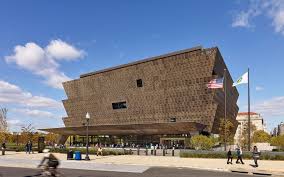
President Trump’s statement that the Smithsonian is “out of control” and lacks content about “Success, nothing about Brightness, nothing about the Future” is a complete misrepresentation of its mission and content, particularly that of the National Museum of African American History and Culture (NMAAHC). The museum’s design and exhibits are a direct contradiction of his claims.
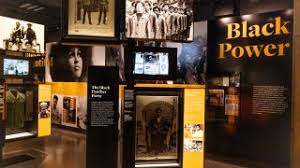
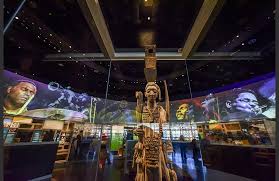
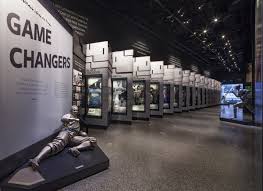
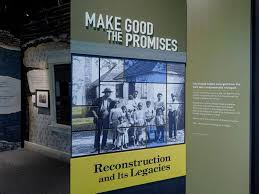
My family and I not too long ago visited the NMAAHC. It was a day filled with learning and was both emotional and inspiring. We felt fortunate to be able to expose our children to information that growing up, we never had access to. So, I know first-hand that this museum does not focus solely on the negative. It is designed to present a full and nuanced narrative that places African American history at the center of the American experience. While the museum unflinchingly details the horrors of slavery and the Jim Crow era, it is also a powerful celebration of Black success, accomplishment, and resilience. Exhibits are dedicated to pioneers in science, medicine, and business. The museum showcases the profound impact of Black Americans on culture, from the birth of jazz and blues to the influence of hip-hop and modern art.
The museum’s central theme is the triumph of the human spirit. It is built on the concept of “making a way out of no way,” demonstrating how Black Americans built institutions, communities, and wealth in the face of incredible adversity. This narrative is the very definition of “brightness” and “accomplishment” that Trump claims is missing. By connecting the past to the present and future, the museum encourages visitors to reflect on the ongoing struggle for equality, directly engaging with the “Future” he says is ignored.
Conclusion
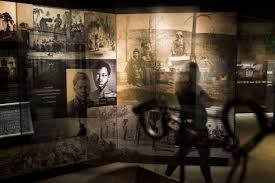
Ultimately, I feel the museum’s comprehensive approach—which integrates both suffering and triumph—aims not to “make our country horrible” but to create a more informed and just nation. I believe it argues that true national pride comes from confronting the full truth of our past, not from ignoring it. I think the effort to censor this history is not about patriotism; it is an effort to suppress the truth and, in the process, put a nation that is still healing from historical trauma “back to sleep.”
America is for the people and by the people, and people make mistakes. But people learn from their mistakes and are better for it. America is no different. It has made some horrific mistakes, but it has also accomplished some monumental achievements. These accomplishments are not diminished by acknowledging the mistakes.
Conservatives say their principles are rooted in the Bible. In the Bible, the key to salvation is repentance. To repent means to feel sincere regret and remorse for wrongdoing, accompanied by a commitment to change one’s behavior. It involves acknowledging the harm caused by past actions and resolving to avoid similar actions in the future. Repentance is not just about feeling sorry, but also about taking steps to correct past mistakes and make amends.
From a biblical perspective, it is not possible to simply “go to sleep and forget” your past sins. Repentance is an active process that involves remembering sin with godly sorrow and turning away from it. While God promises to “remember our sins no more” once we genuinely repent, this does not mean we lose the memory of our past actions. I feel that by trying to erase or diminish America’s past mistakes, these actions are in direct conflict with a core tenet of the conservative’s stated beliefs. The path to a better, brighter America lies not in a manufactured, sanitized history, but in an honest and full reckoning with our past—a true form of national repentance.
Edward Odom

