
I’ve been on this earth for six decades and have seen many shifts in social and political attitudes. I have studied history from many different perspectives and have learned how events can change public opinion; media influence, political events and actions, social and cultural events, economic conditions, personal experiences, opinion leaders and influencers, persuasive messaging, and protests and social movements. No matter what the influence, America, after centuries of existence, has only slightly changed its opinion regarding race. I know it seems like it has sometimes. The abolition of slavery, the ending of Jim Crow, the election of an African American president, all seem to point to major shifts in racial attitudes but look around. Look at all that is happening right now:
- rollbacks of Diversity, Equity, and Inclusion (DEI) initiatives
- changes in criminal justice policies like the reinstatement of the death penalty which disproportionately affects African Americans
- proposed changes to the Fair Housing Act’s “disparate impact” standard could make it harder to challenge housing policies and practices that disproportionately harm people of color, such as credit score requirements or criminal background checks.
- rolling back efforts to “Affirmatively Further Fair Housing” could impede progress in addressing historic housing discrimination and segregation
- executive orders aimed at prohibiting federal funding for schools that teach Critical Race Theory or “radical gender ideology” are seen by critics as an attempt to censor discussions about race and racism and undermine inclusive curricula
- proposed budget cuts to programs like Pell Grants and federal work-study could disproportionately impact Black students, who rely heavily on these resources to attend Historically Black Colleges and Universities (HBCUs)
- the elimination of funding for Equity Assistance Centers, which provide support to schools addressing desegregation issues
All these policies are from the current administration. An administration that won the popular vote. Most Americans voted for this administration fully aware of the agenda they were pushing. The majority of them are also affected negatively by these policies but they still voted against their self interest? Why? How can these attitudes persist for centuries?
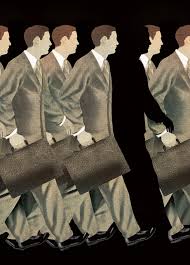
In America today, it often feels like we’re living in different worlds, especially when it comes to politics. This deep divide isn’t just about policy disagreements; it’s deeply tied to who we spend our time with. When people’s friend groups, neighborhoods, and even online interactions are overwhelmingly made up of people from the same racial background, it significantly shapes their views on race, and in turn, contributes to the polarized political environment we see today. This phenomenon is largely explained by two simple but powerful ideas: “birds of a feather flock together” (what sociologists call homophily) and the importance of getting to know different kinds of people (known as intergroup contact theory).
The “birds of a feather flock together” principle, or homophily, is a natural human tendency. We gravitate towards individuals who share similar experiences, backgrounds, and opinions. While this can foster comfort and belonging, it also makes our social circles remarkably narrow, especially along racial lines. A striking 2014 study by the Public Religion Research Institute vividly illustrated this segregation. It found that for the median white American, their social network was overwhelmingly white, consisting of 91 white friends for every one Black friend, one Hispanic friend, and one Asian friend. This isn’t just a “white problem”; the study also showed that for the median Black American, their network included 83 Black friends, compared to 8 white friends, 2 Hispanic friends, and 1 Asian friend. These numbers paint a clear picture: Americans, regardless of their own race, largely exist within racially homogeneous social bubbles. This deep-seated tendency to stick with our own group severely limits who we talk to and, consequently, whose perspectives we are exposed to.
This brings us to the crucial concept of intergroup contact. If you don’t spend much meaningful time with people from different racial groups, it becomes incredibly difficult to truly understand their lives, perspectives, and challenges. Instead, you might find yourself relying more on stereotypes or what you hear from people within your own group. Research consistently shows that when people from different racial backgrounds have positive, meaningful interactions, it can significantly reduce prejudice and improve understanding. However, if these interactions aren’t happening much because social circles are so similar, then those positive changes in attitudes are far less likely to occur.
When people mostly interact within their own racial group, it creates what’s often called an “echo chamber.” Imagine being in a room where everyone says the same thing over and over. That’s what it’s like in these racially similar social groups. You primarily hear opinions and information that already match what you think about race. This constant reinforcement can solidify pre-existing biases, stereotypes, and prejudices, making individuals less likely to challenge their own views or consider alternative perspectives. This can also perpetuate misinformation and distort perceptions about racial out-groups, contributing to the “othering” of those outside one’s immediate social circle. It’s easier to be prejudiced when you’re judging a “book by its cover” because you’ve never bothered to read it. Studies have even shown that individuals in ethnically homogeneous environments, where opportunities for positive intergroup contact are low, tend to report more negative attitudes about ethnic out-groups.
Furthermore, this lack of diverse exposure makes it harder to put yourself in someone else’s shoes. Diverse social networks naturally foster empathy and perspective-taking by exposing individuals to varied life experiences, cultural norms, and the unique challenges faced by different racial groups. In homogeneous networks, this crucial exposure is minimal, hindering the development of empathy and understanding across racial lines. This can directly translate into a lack of concern or understanding for policies that disproportionately affect other racial groups, as their struggles may not resonate with those outside the homogeneous circle. Research indicates that positive out-group contact, especially in the form of cross-race friendships, improves intergroup attitudes by enhancing knowledge about the out-group, reducing anxiety about contact, and increasing empathy.
Even the internet, which seems to offer boundless connections, often reflects and even amplifies offline homophily. Studies have shown racial bias in online connection-forming, with users less likely to reciprocate ties with profiles of racial minorities, regardless of political affiliation. This online homophily can reinforce segregated social circles. However, the relationship is complex. For some, social media might provide a rare avenue for exposure to diverse viewpoints, which is otherwise absent in their offline homogeneous networks. Conversely, social media can also serve as a medium for the rapid circulation of racist discourse, stereotypes, and misinformation, potentially normalizing structural racism and further entrenching existing biases.
This social segregation has profound implications for America’s polarized political environment. When people are primarily exposed to racially similar groups, their political views can become more entrenched because they lack diverse lived experiences that might challenge their perspectives. Homogeneous social networks can easily foster an “us vs. them” mentality, where “the other” is not just a different race but also, by extension, often a different political ideology. This makes compromise and understanding incredibly difficult, as individuals struggle to grasp the motivations or concerns of those with opposing political views. The reinforced biases within these homogeneous groups become fertile ground for political narratives that thrive on division, making it harder for a shared national identity or common ground to emerge.
This social separation can also lead to a perplexing phenomenon: people voting against their own self-interest. When individuals are deeply embedded in racially homogeneous social circles, their political decisions might be more heavily influenced by group identity and loyalty rather than a clear assessment of how policies directly affect their finances or well-being. For instance, some research suggests that lower-income individuals might support policies that reduce social welfare programs, even if those programs would directly benefit them, because their party affiliation or perceived group identity holds more sway. It’s not necessarily that voters intend to harm themselves; rather, their understanding of “best interest” can be shaped by the limited information and perspectives circulating within their echo chamber, or by strong moral and social values shared by their group. Demagogic political messaging, amplified within these homogeneous networks, can further persuade voters to support agendas that, in the long run, may not align with their personal benefit. The difficulty lies in the fact that it’s hard to definitively say what “best interest” means for everyone, as it can involve financial, moral, or social priorities, and it’s always challenging to know what would have happened under different circumstances. However, the lack of diverse viewpoints in racially uniform social circles undoubtedly plays a role in how voters interpret information and prioritize issues, potentially leading them down paths that seem counterintuitive from an outside perspective.
In conclusion, the racial homogeneity of social networks in America, driven by the natural tendency of homophily and the resulting limitation of meaningful intergroup contact, profoundly shapes racial attitudes. It reinforces existing beliefs, can increase prejudice, and hinders the development of vital empathy and understanding across racial lines. This social segregation, by limiting exposure to diverse perspectives and solidifying existing worldviews, plays a significant role in exacerbating the deep political polarization that defines much of contemporary American society, even influencing how individuals perceive and vote on issues that may or may not align with their personal interests.
So what does this mean in the general scheme of things? I think future campaign strategies need to directly address the challenges posed by racially homogeneous social networks to effectively reach and persuade voters. Here’s how:
- Bridge Echo Chambers, Don’t Just Shout Over Them: Instead of simply presenting opposing viewpoints, campaigns should craft messages that acknowledge the existing beliefs within homogeneous groups. This means finding common ground on shared values (like economic opportunity, family well-being, or community safety) and then subtly introducing how diverse perspectives or policies could actually serve those shared goals.
- Emphasize Shared Humanity and Universal Impact: To counter the lack of empathy, campaigns should highlight stories and experiences that resonate across racial lines. They need to show how policies affect all people, not just one group, and how the struggles of one community can impact the broader society. This can involve personal testimonials from diverse individuals who share similar aspirations or challenges.
- Connect Policies to Tangible Personal Benefits: To address voting against self-interest, campaigns must clearly articulate the direct, personal economic and social benefits of their policies. This means moving beyond abstract ideological appeals and showing voters, in very concrete terms, how a policy will put more money in their pocket, improve their health, or make their neighborhood safer, regardless of their racial background or party affiliation.
- Strategically Navigate Online Spaces: While online platforms can reinforce homogeneity, they also offer avenues for targeted messaging. Campaigns should use digital tools to introduce diverse voices and perspectives in a non-confrontational way. This might involve sharing content that promotes understanding or features diverse individuals discussing shared concerns, aiming to gently broaden the “information diet” of those in echo chambers.
- Invest in Authentic Cross-Group Engagement: Beyond just messaging, campaigns should support and participate in initiatives that foster genuine intergroup contact at the local level. This could be community dialogues, volunteer efforts, or events that bring diverse people together around common interests, allowing positive interactions to naturally chip away at prejudice.
Ultimately, successful campaign strategies in a racially homogeneous environment must go beyond traditional persuasion and actively work to build bridges of understanding and shared purpose, rather than exploiting existing social divisions.
Edward Odom

