
Table of Contents
- The Mirror of Plymouth County
- The Physical Reality: Cell Block vs. Treatment Ward
- The Clinical Patient vs. The Pop-Culture Monster
- Anticipating the Detractors: Why They Would Say There Was No Bias
- The Constitutional Myth of the “Peer”
- The Intent Trap and the Fiction of Colorblindness
- The Broader Horizon: Colorblindness as a Weapon
- Glossary of Legal and Sociological Terms
- Bibliography and Legal Authorities
The Mirror of Plymouth County
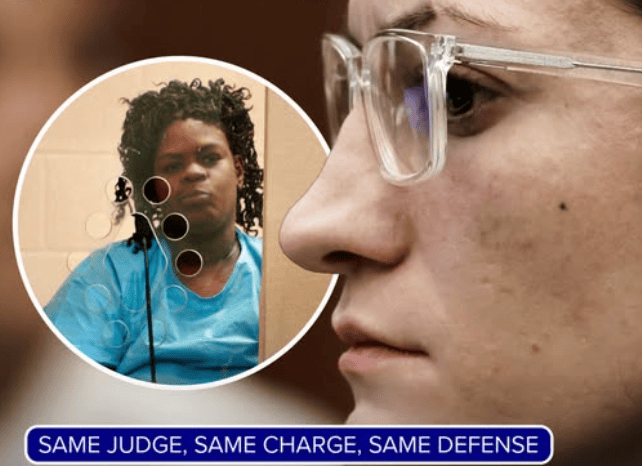
There are rare moments in American jurisprudence when the curtain drops completely, exposing the enduring racial double standard that Black Americans have navigated since the founding of this republic. We are often told that the disparities in our courts are the product of differing criminal records, varying levels of violence, or mismatched statutes. But every so often, two cases arise from the exact same soil, under the exact same law, before the exact same judge, presenting a factual mirror so clearly that the legal system’s procedural excuses collapse under their own weight.
The trials of Latarsha Sanders and Lindsay Clancy are that mirror.
Consider the striking baseline of both cases:
- Both matters involved mothers taking the lives of their young children inside the family residence during an acute psychiatric crisis.
- Both women suffered from severe, debilitating conditions characterized by active psychosis and a documented detachment from reality.
- Neither case involved financial gain, domestic retaliation, or spite directed toward the children.
- In neither trial was identity or the physical act contested; both defense teams conceded the underlying acts occurred.
- The sole disputed issue before both juries was criminal responsibility under Massachusetts’ foundational standard, Commonwealth v. McHoul. Under this rule, once mental defect is raised, the Commonwealth bears the strict burden to prove beyond a reasonable doubt that the defendant possessed substantial capacity to appreciate the wrongfulness of her conduct or conform her actions to the law.
- Both cases were prosecuted by the Plymouth County District Attorney’s Office under identical charges of first-degree murder alleging deliberate premeditation and extreme atrocity.
- Both juries were drawn from the broader county venire of Plymouth County.
- Both trials were presided over in the exact same courtroom by the exact same jurist: Judge William F. Sullivan.
Yet the outcomes were vastly different.
In December 2022, Latarsha Sanders—a low-income Black mother from Brockton—was convicted of two counts of first-degree murder by an all-white jury that deliberated for barely four hours. Judge Sullivan sentenced her to two consecutive life sentences without the possibility of parole. She spent years in maximum-security confinement before the Massachusetts Supreme Judicial Court (SJC) stepped in on August 6, 2026, unanimously vacating her convictions and remanding the case for a new trial.
In September 2026, Lindsay Clancy—a white, middle-class labor-and-delivery nurse from suburban Duxbury—stood trial in that same courtroom. Her proceedings ended in a dramatic mistrial after seven days of agonizing deliberations. Eleven jurors voted to find her not guilty by reason of lack of criminal responsibility due to postpartum psychosis. The lone holdout refusing to join that consensus was the only Black person on the panel: a young man in his thirties. Clancy avoided a murder conviction and remains in medical custody pending retrial hearings or a civil disposition.
The Physical Reality: Cell Block vs. Treatment Ward
Strip away the legal briefs, the courtroom motions, and the procedural jargon, and look at the physical reality of where these two women sit today:
Latarsha Sanders has spent eight years and eight months locked inside a state prison—four of them under the shadow of dying behind bars on a conviction Massachusetts’ highest court ruled was fundamentally tainted. Lindsay Clancy is currently residing at Tewksbury Hospital, a state-run psychiatric and medical treatment facility in Tewksbury, Massachusetts, receiving specialized inpatient therapeutic care while the state weighs whether it can even retry her. One mother was treated as a clinical patient whose tragedy belonged in a treatment ward; the other was treated as a disposable criminal whose severe illness belonged in a cell block.
Why did two cases with near-identical legal parameters end in such radically different institutions? The answer lies in the discretionary choices made inside the courtroom and the stark contrast between an unchecked, homogenous jury and one interrupted by a single dissenting voice.
The Clinical Patient vs. The Pop-Culture Monster
The divergent paths of these two mothers were paved by evidentiary rulings. In Clancy’s trial, the courtroom was flooded with clinical empathy. The jury heard comprehensive testimony detailing her medical history: outpatient treatment for postpartum depression, prescription drug regimens, consultations with psychiatrists, and post-arrest evaluations charting her psychotic collapse. The medical narrative was the center of gravity.
In Sanders’ trial, Judge Sullivan slammed that evidentiary door shut. The court barred her defense from introducing thousands of pages of psychiatric evaluations and hospital records compiled after her arrest while she was confined at Worcester Recovery Center and Framingham MCI. Sullivan ruled that post-offense records did not directly prove her mental state at the exact moment of the tragedy. He dictated that the defense could only reference those diagnoses if the prosecution “opened the door” during cross-examination—a tactical invitation the prosecutor pointedly declined.
Stripped of her medical records, Sanders was left legally defenseless. The prosecution filled that manufactured vacuum with sensational fiction. In closing arguments, prosecutors pointed to the fact that an episode of Law & Order: SVU happened to be playing on a television when police arrived, arguing to the jury that Sanders had drawn inspiration from fictional plots involving voodoo and ritual sacrifice. There was no evidence she had watched the broadcast or modeled her conduct after it. The state’s highest court later ruled that this argument was improper, speculative, and unsupported by the record, explicitly finding that excluding her records had stripped her defense of its medical foundation.
When a white mother suffers a psychotic breakdown, the justice system treats her as a patient failed by healthcare infrastructure. When a Black mother suffers an identical breakdown, the system withholds her medical records and recasts her as a calculating, pop-culture monster.
Anticipating the Detractors: Why They Would Say There Was No Bias
Legal traditionalists or discrimination apologists will immediately reach for technical defenses to explain away this contrast.
First, detractors will argue that Clancy possessed pre-existing, contemporary medical records, whereas Sanders’ records were generated post-arrest during years of competency evaluations. They will argue that Judge Sullivan’s ruling was based on “temporal relevance,” not racial bias.
The Massachusetts Supreme Judicial Court answered that argument directly on August 6, 2026. The SJC explicitly held that schizophrenia spectrum disorders do not emerge overnight. These records, collected continuously over a long period of time, generated post-arrest, are critical evidence of chronic illness, indispensable for evaluating criminal responsibility under McHoul. Moreover, post-arrest evaluations were admitted and weighed extensively in Clancy’s case. The question remains: why did the court apply a hyper-restrictive view of relevance to a low-income Black mother, while applying an expansive, humane lens to a white suburban one?
Second, critics will point to the calendar. Sanders went to trial in December 2022; the SJC issued its reversal on August 6, 2026, while the Clancy trial was actively underway. Detractors will claim Sullivan was merely obeying the SJC, applying a new mandate from above, not offering suburban favoritism.
We must examine the human cost of that learning curve. Why is it that a low-income Black mother has to spend nearly nine years behind prison walls to serve as the system’s constitutional guinea pig, while a white suburban defendant received the benefit of that SJC correction in real time? The mechanism may appear procedural on paper, but its human impact is undeniably stratified by race and class.
Third, defenders of the system will weaponize the Clancy mistrial itself. They will argue that because Clancy was not acquitted outright, the 11–1 deadlock disproves racial bias. “The lone Black juror held out for conviction,” they will argue, “proving that the system allows rigorous dissent.”
This claim misunderstands the mechanics of deliberation. The Clancy jury deliberated for seven days precisely because a non-majority peer was in the room to question the consensus and demand strict accountability. In Sanders’ case, there was no such peer. An all-white jury accepted the state’s narrative in four hours. The presence of a single Black juror in Clancy did not prove the system is free of bias; it proved that demographic diversity is the only thing that prevents reflexive assumptions from executing swift, uncritical verdicts.
The Constitutional Myth of the “Peer”
The Sixth Amendment promises every accused citizen an impartial jury of their peers. Yet American jurisprudence has hollowed out the word “peer” until it means nothing more than random geographic selection.
In Taylor v. Louisiana (1975), the Supreme Court ruled that the Constitution requires the juror pool (the venire) to represent a fair cross-section of the community but explicitly rejected the requirement that the final twelve-person jury in the box reflect that cross-section. Under the banner of Equal Protection, courts have ruled that actively ensuring racial representation on a jury constitutes unconstitutional “racial balancing.” The defense cannot demand a peer; it can only raise reactive objections under Batson v. Kentucky if a prosecutor overtly strikes a juror for discriminatory reasons.
This framework creates an institutional failure in places like Plymouth County. Brockton is a diverse, working-class, majority-minority city. Yet county-wide venires pull predominantly from affluent, white South Shore suburbs. The result is structural dilution: urban Black defendants are routinely tried by suburban, all-white juries who share none of their lived experiences, cultural realities, or perspectives on community health.
A homogenous jury confirms its assumptions rapidly. Without an outsider’s voice to ask, “Why aren’t we seeing her hospital charts? Where is her medical foundation?”, Sanders was convicted between lunch and dinner. In contrast, eleven white jurors in the Clancy trial immediately identified with the defendant—a professional mother residing in a pastoral suburb. They saw themselves in her. It took a lone Black juror, standing firm for a full week, to interrupt that domestic empathy and force the room to grapple with statutory law.
Representation in the jury box should not be a game of geographic roulette left to chance. If the state possesses the power to strip a citizen of their liberty for life, the obligation to provide an authentic jury of peers must be an affirmative, structural guarantee.
The Intent Trap and the Fiction of Colorblindness
Detractors will inevitably demand: “Where is the proof of racial bias? Did Judge Sullivan or the prosecutors express racial animus?”
This demand for “proof of intent” is the single greatest barrier to civil rights accountability in modern America. Under doctrines like Washington v. Davis (1976) and McCleskey v. Kemp (1987), the Supreme Court constructed an intentional trap: disparate outcomes do not matter unless a Black claimant can uncover subjective malice inside an official’s mind.
Institutional bias does not announce itself with overt hostility. It operates through the selective application of discretion:
- Discretion decides whether an unrepresented mother’s psychiatric records are “irrelevant post-arrest paperwork” or “vital medical context”.
- Discretion decides whether a mother’s tragic collapse is framed around clinical empathy or sensationalized SVU storylines.
- Discretion decides whether an accused woman sits in a secure psychiatric hospital room at Tewksbury or inside a state penitentiary.
By demanding subjective proof of malice while ignoring objective disparities in discretion, the justice system retreats behind the veil of “colorblindness.” In doing so, it protects inequality from legal challenge.
The Broader Horizon: Colorblindness as a Weapon
This dynamic extends far beyond the borders of Plymouth County. Across American civic life, the doctrine of colorblindness has been weaponized into an offensive tool to dismantle the civil rights protections won during Reconstruction and the 1960s:
- The Inversion of the 14th Amendment: The Reconstruction Amendments were race-conscious measures designed specifically to protect newly freed Black Americans from white-dominated state power. Today, conservative legal doctrine has inverted the Equal Protection Clause, using it to bar the state from ever considering race to remedy historic wrongs.
- Redistricting and the Louisiana Trap: In litigation over Louisiana’s congressional maps (Louisiana v. Callais), Black voters demonstrated under Section 2 of the Voting Rights Act that their voting power was unconstitutionally diluted. Yet the moment a second majority-Black district was drawn to fix the violation, opponents challenged it under the Fourteenth Amendment as an unconstitutional “racial gerrymander.” The state was placed in a manufactured Catch-22: address systemic dilution and face an Equal Protection lawsuit or remain “colorblind” and preserve white political power.
- The Assault on the Civil Rights Act: Titles VI and VII of the 1964 Civil Rights Act were passed to break structural barriers in employment and public life. Today, those exact provisions are invoked by executive actions and conservative litigators to outlaw corporate DEI initiatives, racial disparity audits, and targeted grants, manufacturing a false symmetry between racial oppression and proactive correction.
- The Attack on Citizenship: Even the fundamental guarantee of birthright citizenship under the Fourteenth Amendment is facing ideological challenges, as opponents attempt to discard the simple rule of birthright citizenship on American soil and replace it with unequal classes of citizens.
The common thread connecting the Plymouth County courthouse to federal appellate dockets is the deliberate denial of context.
A legal system that claims to be “blind” to race in a nation built upon racial stratification is not impartial; it is complicit. Colorblindness allows an all-white jury to condemn a mentally ill Black mother to state prison in four hours after her medical records are suppressed, while a white mother receives clinical nuance, national advocacy, and treatment at a hospital facility. It allows mapmakers to disenfranchise Black voters under the banner of neutrality. It transforms the constitutional amendments written for Black freedom into instruments that protect white institutional privilege.
Until our courts abandon the fiction of colorblind neutrality and acknowledge that discretion without accountability is the engine of disparity, the promise of equal justice under law will remain what it was for Latarsha Sanders: a right denied in silence.
Glossary of Legal and Sociological Terms
- Actus Reus: The objective, physical act or conduct that constitutes the external element of a crime, separate from the mental state (mens rea).
- Batson Challenge (Batson v. Kentucky): An objection made during jury selection asserting that the opposing party used a peremptory strike to exclude a potential juror on the basis of race, ethnicity, or sex.
- Colorblind Jurisprudence: A judicial philosophy holding that the Constitution prohibits any governmental consideration of race, treating race-conscious remedial policies designed to combat discrimination the same as race-conscious policies designed to oppress.
- Criminal Responsibility (McHoul Standard): The Massachusetts legal test for the insanity defense derived from Commonwealth v. McHoul (1967). A defendant is not criminally responsible if, as a result of a mental disease or defect, she lacks substantial capacity either to appreciate the criminality (wrongfulness) of her conduct or to conform her conduct to the requirements of the law.
- Discretionary Inequity: The systemic disparity that occurs when judges, prosecutors, and law enforcement exercise lawful decision-making latitude in ways that consistently benefit privileged demographics while penalizing marginalized groups.
- Intent Doctrine: The constitutional barrier established by Washington v. Davis requiring plaintiffs challenging racial disparities under the Fourteenth Amendment to prove subjective, deliberate discriminatory purpose by state actors, rather than merely demonstrating disparate discriminatory impact.
- M.G.L. c. 233, § 79: The Massachusetts statutory hearsay exception governing the admissibility of hospital and medical facility records in judicial proceedings to establish medical history, diagnosis, and treatment.
- Structural Dilution: The diminishing of minority demographic influence that occurs when jury venires or voting districts are drawn across expansive, predominantly white regional jurisdictions, submerging urban, minority populations into conservative, suburban majorities.
- Temporal Relevance: An evidentiary doctrine evaluating whether evidence relates closely enough in time to the events at issue to have probative value regarding a party’s mental state or actions at that exact moment.
- Venire: The broad pool or panel of citizens summoned for jury duty from which the individual petit jury of twelve deliberators is ultimately selected.
- Vicinage: The geographic jurisdiction, county, or district from which a jury is drawn and where a crime is alleged to have been committed.
Bibliography and Legal Authorities
Judicial Opinions and Precedents
- Batson v. Kentucky, 476 U.S. 79 (1986). U.S. Supreme Court decision holding that the Equal Protection Clause forbids prosecutors from challenging prospective jurors solely on account of their race.
- Commonwealth v. Clancy, Plymouth Superior Court (2026). Trial proceedings regarding maternal filicide, criminal responsibility under McHoul, postpartum psychosis, and jury deadlock.
- Commonwealth v. Kostka, 370 Mass. 516 (1976). SJC precedent establishing that once a defendant introduces evidence of mental disease or defect, the prosecution bears the burden of proving sanity beyond a reasonable doubt.
- Commonwealth v. McHoul, 352 Mass. 544 (1967). Seminal Massachusetts decision adopting the Model Penal Code standard governing lack of criminal responsibility due to mental disease or defect.
- Commonwealth v. Sanders, SJC-13552 (Mass. Aug. 6, 2026). Massachusetts Supreme Judicial Court decision vacating two first-degree murder convictions due to the prejudicial exclusion of post-arrest psychiatric records and improper prosecutorial closing argument.
- Commonwealth v. Soares, 377 Mass. 461 (1979). Massachusetts state constitutional counterpart to Batson, prohibiting the use of peremptory challenges to exclude prospective jurors based on group bias.
- Louisiana v. Callais, 603 U.S. ___ (2024). Federal voting rights litigation examining the conflict between Section 2 remedial compliance under the Voting Rights Act and Equal Protection challenges alleging racial gerrymandering.
- McCleskey v. Kemp, 481 U.S. 279 (1987). U.S. Supreme Court ruling holding that complex statistical evidence showing systemic racial disparities in capital sentencing is insufficient to establish an Equal Protection violation without proof of specific, purposeful discriminatory intent.
- Taylor v. Louisiana, 419 U.S. 522 (1975). U.S. Supreme Court precedent holding that the Sixth Amendment requires jury venires to be selected from a fair cross-section of the community, while excluding petit juries from mandatory proportional representation.
- Washington v. Davis, 426 U.S. 229 (1976). U.S. Supreme Court landmark ruling establishing that disproportionate racial impact alone does not establish unconstitutional discrimination under the Equal Protection Clause without proof of discriminatory purpose.
Statutory and Constitutional Authorities
- U.S. Const. amend. VI. Right to a speedy and public trial by an impartial jury of the state and district wherein the crime shall have been committed.
- U.S. Const. amend. XIV, 1. Citizenship Clause and Equal Protection Clause guaranteeing birthright citizenship and equal protection of the laws.
- Civil Rights Act of 1964, Pub. L. 88-352, 78 Stat. 241 (Titles VI & VII). Prohibiting discrimination on the basis of race, color, and national origin in federally assisted programs and employment.
- Mass. Gen. Laws ch. 123, 16. Statutory procedure governing hospitalization, evaluation, and civil commitment of criminal defendants found not guilty by reason of lack of criminal responsibility.
- Mass. Gen. Laws ch. 233, 79. Statutory rule governing the admissibility of hospital, medical, and clinical records as evidence in court proceedings.


