
Table of Contents
- Introduction: The Lemonade Matrix
- The Naomi Osaka Dinner & The Cultural Blind Spot
- The Forging of a Heritage: How Race Became Culture
- The Radical Necessity of Illumination
- Deconstructing the Anger: The Myth of the “Main Character”
- The Path Forward: Facts Over Comfort
- Glossary of Terms
- Selected Bibliography
1. Introduction: The Lemonade Matrix
I am frequently asked by white readers why I choose to focus so consistently on “blackness” in my writing. Often, the questions come framed in a tone of weary frustration: How are we ever going to get past racism if Black people are the ones constantly bringing up color? Because my content uncovers and highlights Black history, I have been called divisive, exclusionary, and even racist.
For a long time, I have searched for the clearest way to help white readers understand a fundamental truth: when white America hears, sees, or reads the word “Black,” their minds immediately jump to the clinical, political mechanics of race. But for Black people, it isn’t about race at all. It is simply about us. It is about our culture.
It is neither the fault nor the responsibility of Black people that early American lawmakers weaponized skin color as a tool for systemic oppression. We did not write those laws. But in the face of them, our ancestors did what they have always done best: they made lemonade out of lemons.
Indeed, the defining, distinguishing characteristic of Black American culture is this exact, miraculous ability to take a devastating, generational circumstance and transform it into a brilliant cultural advantage. Over centuries of survival, triumph, and creativity, Black people took the baseline of “blackness”—originally a label designed to strip away our humanity—and transformed it into something equivalent to Greek, Italian, Irish, or Chinese heritage. It became our ethnicity. It became our living, breathing culture.
When you don’t understand that history, you completely misread the present.
2. The Naomi Osaka Dinner & The Cultural Blind Spot
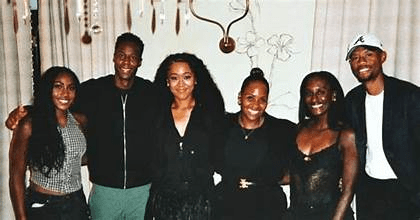
We saw this exact cultural blind spot play out on a global stage recently when international tennis star Naomi Osaka hosted an intimate dinner party for her fellow Black female tennis players. Almost instantly, a familiar, wearying uproar rippled through sections of white America. Social media comment sections quickly filled with accusations of “segregation,” “exclusion,” and “reverse racism.” To a vocal segment of the public, gathering a group of people who share a skin tone could only mean one thing: a calculated, political statement about race.
But they missed the entire point. They were looking at a vibrant act of culture, but through their own rigid, anxious lens, they could only see race.
In a predominantly white, country-club sport, Osaka wasn’t drawing a battle line based on a biological factor. She was gathering a community. She was creating a space for women who share a highly specific, nuanced cultural experience, a unique collective history, and a shared set of distinct societal hurdles. It was an act of heritage and mutual understanding—no different than Irish-American police officers gathering for an Emerald Society dinner, or Italian athletes bonding over a traditional meal. Yet, when Black people do it, the cultural context is instantly stripped away, replaced by the heavy, polarizing machinery of racial grievance.
This defensive blind spot isn’t confined to sports headlines; I watch it play out in the comment section of this very blog.
Following my recent article illuminating the true, foundational history behind Memorial Day and the Statue of Liberty, a white male reader left a comment that perfectly illustrates this national pathology. He wrote:
“This is a load of horse shit. There’s a little town in Pennsylvania that would argue that your Afrocentric, we have to be the main character in every story, is in fact, just made up history.”
It is worth noting that while my article included a detailed bibliography fully documenting my references, this reader presented nothing but a vague inference. When I responded, I acknowledged his point and explained where mainstream historians actually place that Pennsylvania claim, but I received nothing but silence in return.
This pattern is typical. More often than not, these reactions are purely emotional—grounded in a defensive need to validate a traditional storyline, even when it isn’t backed by a shred of documented data.
What this reader—and the critics of Osaka’s dinner—fail to grasp is that when Black Americans discuss, celebrate, or gather around our history, we are not trying to “steal the spotlight” or execute a hostile takeover of the American narrative. We are doing exactly what every other distinct culture on earth has always done. When Italian-Americans wax poetic about the glory of Rome, or Greek-Americans celebrate the conquests of Alexander the Great, or British-Americans romanticize the legends of King Arthur, society views it as a normal, healthy expression of cultural pride.
But when Black Americans do the exact same thing, it is weaponized as a personal assault.
To understand why a documented historical fact or a simple dinner party can provoke such visceral, defensive anger, we have to step away from modern social media debates and look at the deep, historical evolution of how identity was constructed in this country. We have to examine how a biological category forced upon us by law became a rich, resilient culture forged by our ancestors—and why illuminating that truth remains a revolutionary necessity today.
3. The Forging of a Heritage: How Race Became Culture
To understand why mainstream America is so quick to reduce Black identity to mere “race,” we have to look at the unique, deliberate way history was engineered on American soil.
When European immigrants arrived in the United States during the nineteenth and twentieth centuries, they carried with them a recognized, unbroken connection to a specific nation-state. Whether they were Irish, Italian, Polish, or German, they retained their surnames, their regional recipes, and their distinct lineages. They could point to a map and say, “That is where my ancestors came from.” Over generations, as they assimilated into the political construct of “white America,” their distinct cultural heritages remained intact, celebrated every St. Patrick’s Day or Columbus Day without question.
The African experience in America was fundamentally and systematically different.
Enslaved Africans were not permitted to bring their nation-states with them. They were captured from vast and diverse regions, representing entirely distinct ethnic groups—Yoruba, Igbo, Akan, Mandinka. Upon arrival, a calculated, institutional erasure took place. They were stripped of their names. Their native languages were banned under penalty of violence. The beating of the traditional drum—the literal heartbeat of communication and spiritual expression across many African societies—was outlawed. Families were intentionally shattered on the auction block to prevent any continuity of lineage.
The architects of chattel slavery created the legal construct of “race” to categorize these distinct peoples into a singular, subjugated class based solely on skin color. It was a sterile, political designation designed to justify human bondage.
But our ancestors did something miraculous. Out of the ashes of that deliberate cultural erasure, they did not simply survive; they created.
Because they could not return to a specific homeland, the plantation became the crucible for a new ethnicity. Enslaved people blended diverse West African traditions with Christian stories of liberation, creating the Spirituals—songs that carried coded maps for freedom. They developed unique linguistic patterns, blending English vocabulary with the syntax of African languages to form what we recognize today as African American Vernacular English (AAVE). They merged disparate culinary traditions into a distinct cuisine built on survival, resourcefulness, and community.
Through shared trauma, shared faith, and shared triumph, “Blackness” ceased to be just a biological category imposed by an oppressor. It evolved into a rich, resilient, and deeply cohesive culture.
When a Black American refers to “our history” or “our culture,” they are not talking about a political agenda or a skin pigmentation. They are speaking of a distinct ethnic heritage forged right here in the American soil. To tell a Black writer to stop talking about Black history is to demand that we erase the very culture our ancestors built from nothing.
4. The Radical Necessity of Illumination
Because Blackness is a distinct culture with its own unique history, writers and historians have a profound responsibility to bring these hidden narratives into the light. Illuminating these events is not about creating division; it is about filling a massive, historical vacuum.
My mission on this blog is driven by three distinct reasons why this work remains a radical necessity today.
1. To Counteract Weaponized Narratives
For generations, American institutions did not just ignore African Americans; they actively constructed narratives designed to paint them in a negative light. From the post-Civil War “Lost Cause” mythology to the caricature-laden minstrel shows of the Jim Crow era, history was intentionally distorted to depict Black people as a class devoid of intellect, leadership, or foundational contribution. These narratives were engineered to justify subjugation and systemic inequality.
When we uncover the truth, we are actively dismantling a centuries-old psychological weapon. Illuminating the facts is the only way to neutralize the lingering poison of those deliberate lies.
2. To Fill the Educational Void
The uncomfortable truth is that much of American history was never taught in standard classrooms. For decades, curricula were curated to protect a comfortable, white-centered storyline, leaving millions of citizens functionally illiterate regarding their own country’s past.
When people grow up never learning about the true roots of major American holidays, the brilliant Black inventors who fueled the Industrial Revolution, or the architectural contributions of enslaved craftsmen, a distorted view of reality becomes the default baseline. Writers must illuminate these events because our educational systems failed to do so. We aren’t making up new history; we are teaching the history that was stolen from the lesson plans.
3. To Restore Self-Worth and Identity
Perhaps the most damaging casualty of a suppressed history is what it does to the human psyche. When a group of people is continuously starved of its true heritage and fed a steady diet of negative stereotypes, it is tragically easy to internalize that propaganda.
For many Black readers, encountering the documented brilliance, resilience, and foundational contributions of their ancestors is an act of psychological restoration. It directly repairs the damage done to self-worth and esteem. It proves to the next generation that they are not mere bystanders in the American story—they are the architects of it.
5. Deconstructing the Anger: The Myth of the “Main Character”
To truly heal from our racial past, we have to look directly at the visceral anger of that commenter. Why does a documented historical fact feel like a personal assault? Why does a simple dinner party hosted by Naomi Osaka provoke such intense defensiveness?
The answer lies in the psychology of the “Main Character” narrative.
For centuries, standard American history was written through an exclusively Eurocentric lens. In this curated storyline, white Americans were positioned as the sole pioneers, inventors, philosophers, and heroes. Subconsciously, generations of white Americans tied their sense of national pride, and their personal self-worth, to this exclusive ownership of the American story. They were taught that they were the absolute center of everything.
When a Black writer introduces documented facts that disrupt this monopoly—such as the true, multicultural origins of Memorial Day—it is often misinterpreted. We are not attempting to erase white history, nor are we trying to force a narrative of racial grievance. We are simply expanding the frame to include the whole, accurate picture.
But to an individual whose identity relies on being the only main character, sharing the stage feels like displacement. They perceive an invitation to historical accuracy as an act of hostility, and they mistake the inclusion of others for their own erasure.
6. The Path Forward: Facts Over Comfort
If we are ever to truly dismantle the racial barriers that continue to fracture our society, the responsibility will fall to the next generations.
The path forward requires a courageous shift in how we educate our youth. We must raise a generation that is taught to value facts over comfort, and truth over mythology.
Instead of inheriting a fragile pride built on curated silence, the next generation must inherit a resilient intelligence built on objective reality.
When young people are encouraged to embrace the full, unfiltered truth of American history, the defensiveness will begin to evaporate. They won’t look at Naomi Osaka’s dinner and see a racial threat; they will see a normal celebration of cultural community. They won’t read about the Black contributions to the American fabric and feel personally attacked; they will simply see it as the missing chapters of our shared human story.
Progress will not come from pretending race and culture do not exist. It will come when we finally stop looking at Black heritage through the anxious lens of racial division, and finally begin to honor it for what it truly is: a rich, foundational American culture.
7. Glossary of Terms
- Afrocentric: An approach to the study of world history and culture that centers the histories, perspectives, and foundational contributions of people of African descent, directly counteracting Eurocentric biases.
- AAVE (African American Vernacular English): A distinct, systematic, and rule-governed dialect of American English spoken by many Black Americans, tracing its linguistic roots back to the fusion of various West African languages and English vocabulary.
- Culture: The shared social behavior, institutions, arts, beliefs, customs, values, and language of a distinct group of people that is passed down through generations. Unlike race, it is learned and forged, not biologically determined.
- Ethnicity: A category of people who identify with each other based on shared cultural heritage, ancestry, history, language, homeland, or dialect.
- Eurocentric: The practice of viewing the world and interpreting history focused heavily or exclusively on Western civilization, European values, and white pioneers, treating them as the universal baseline for human progress.
- Historiography: The study of how history is written, analyzed, and handed down over time, focusing on the biases, motivations, and selection methods of the historians themselves.
- Lost Cause Mythology: A revisionist historical narrative constructed in the American South following the Civil War that sought to romanticize the Confederacy, minimize the central, brutal reality of chattel slavery, and portray secession as a noble defense of states’ rights.
- Race: A social construct created by legal, political, and institutional systems to classify human beings into rigid categories based primarily on physical traits like skin color, historically engineered to establish hierarchies of power.
8. Selected Bibliography
- Baldwin, James. The Price of the Ticket: Collected Nonfiction 1948-1985. New York: St. Martin’s Press, 1985. (Crucial framework for understanding how the legal and psychological invention of “whiteness” impacts American social dynamics.)
- Du Bois, W.E.B. The Souls of Black Folk. Chicago: A.C. McClurg & Co., 1903. (Foundational text detailing “double consciousness” and the early synthesis of a distinct African American cultural consciousness.)
- Gomez, Michael A. Exchanging Our Country Marks: The Transformation of African Identities in the Colonial and Antebellum South. Chapel Hill: University of North Carolina Press, 1998. (A meticulous study tracking how distinct West African tribal nations systematically coalesced into a unified, distinct African American ethnic culture on plantations.)
- Kendi, Ibram X. Stamped from the Beginning: The Definitive History of Racist Ideas in America. New York: Nation Books, 2016. (Chronicles the historical construction of racial categories and narratives engineered to justify systemic power imbalances.)
- Woodson, Carter G. The Mis-Education of the Negro. Washington, D.C.: Associated Publishers, 1933. (Classic analysis outlining how the intentional omission of African and African American contributions within the standard educational system damages both Black and white psyches.)
