

Table of Contents
- Introduction: The Engineer’s “Why”
- The Mechanics of the Challenge
- How We Got Here: The Path to the High Court
- The Strategy of Palatable Attacks
- The Ghost of Dred Scott
- The “Gotchas”: A New Reality for All Citizens
- The Weaponization of Allegiance
- Conclusion: A Stress Test for the Second Founding
- Glossary of Terms
- Bibliography
Introduction: The Engineer’s “Why”
In my professional and personal life, I’ve been blessed or cursed, depending on one’s perspective, to be driven by the question of why. It’s the basis of how I fix things when they are broken and the key to maintaining things when they are not. It’s the catalyst for my quest for knowledge, for in analysis, “the how” quickly follows “the why.” Though I feel that I am an optimist, this approach to things can make me seem like a skeptic or untrusting because I tend not to take things at face value.
This takes me to the current case being ruled on in the U.S. Supreme Court, Trump v. Barbara (No. 25-365). When the administration issued Executive Order 14160 in early 2025, the stated “why” was to fix a broken immigration system. But when you apply an engineer’s eye to the mechanics of this challenge, you see a structural alteration to the very foundation of American citizenship—one that threatens to scale back over 150 years of civil rights progress gained since 1865. If citizenship is conditional on the government’s approval of your “allegiance,” it’s no longer a right; it’s a subscription service that can be canceled at the whim of the provider.
The Mechanics of the Challenge
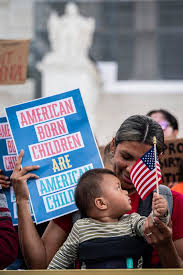
The core of the challenge hinges on a radical reinterpretation of the 14th Amendment’s phrase: “All persons born or naturalized in the United States, and subject to the jurisdiction thereof, are citizens.”
The Trump administration’s central legal argument in this case is that “subject to the jurisdiction thereof” requires more than just being present in the U.S. and obeying its laws (territorial jurisdiction). Instead, they stipulate it requires “political jurisdiction,” which they define as owing direct and immediate political allegiance to the United States.
They contend that children born to parents who are in the country illegally or on temporary visas are subject to the jurisdiction of their parents’ home countries, not primarily the U.S. Under this theory, the physical act of being born on U.S. soil is insufficient for citizenship without this “deeper legal tie.” The order specifically targets:
- Undocumented Immigrants: Individuals present without legal authorization.
- Temporary Residents: Individuals on non-immigrant visas (tourists, students, or short-term workers).
The order asserts that the President has the authority to clarify this interpretation through an Executive Order alone, bypassing Congress and the Immigration and Nationality Act of 1952.
How We Got Here: The Path to the High Court
The road to the Supreme Court began almost immediately after the ink dried on the 2025 order. A massive coalition of civil rights organizations—led by the ACLU and the Legal Defense Fund (LDF)—filed a nationwide class-action lawsuit to block the order. The lead plaintiff, “Barbara,” represents the immediate human cost: her child, born on U.S. soil while her asylum case was pending, was denied a U.S. birth certificate.
Before reaching the Supreme Court, this executive order was met with uniform rejection across the federal judiciary. Lower courts, including the U.S. District Court of New Hampshire, ruled that the President cannot override a Constitutional Amendment or a Congressional statute with an executive order. Because every lower court ruled against the administration, it was the Trump Administration that filed the appeal to the Supreme Court. They are the petitioners asking the High Court to overturn a century of established law.
The Strategy of Palatable Attacks
This administration has constantly pulled on the threads of the foundational amendments that gave African Americans their civil rights. However, they rarely admit to this directly. Because the rights of all marginalized citizens—women, the LGBTQ+ community, and immigrants—are legally tied to the amendments created specifically for African Americans during Reconstruction, the attackers have a unique advantage. They can attack these amendments in the name of something more palatable to the general public, such as “fixing immigration.” By using immigration as a shield, they can dismantle the “how” of our constitutional protections without acknowledging their true target. It is legal camouflage for the erosion of Black civil rights.
The Ghost of Dred Scott
When you weaken the amendment that ended Dred Scott, you weaken the ground every Black American stands on. The 1857 Dred Scott v. Sandford decision ruled that Black people were not citizens and had “no rights which the white man was bound to respect.” The 14th Amendment was the definitive “never again” to that logic.
By reintroducing “allegiance” as a subjective requirement, the administration is effectively reviving the idea that the government must “consent” to who is a citizen. History shows us that whenever the government gets to “choose” who belongs, African Americans are the first to have their belonging questioned.
The “Gotchas”: A New Reality for All Citizens
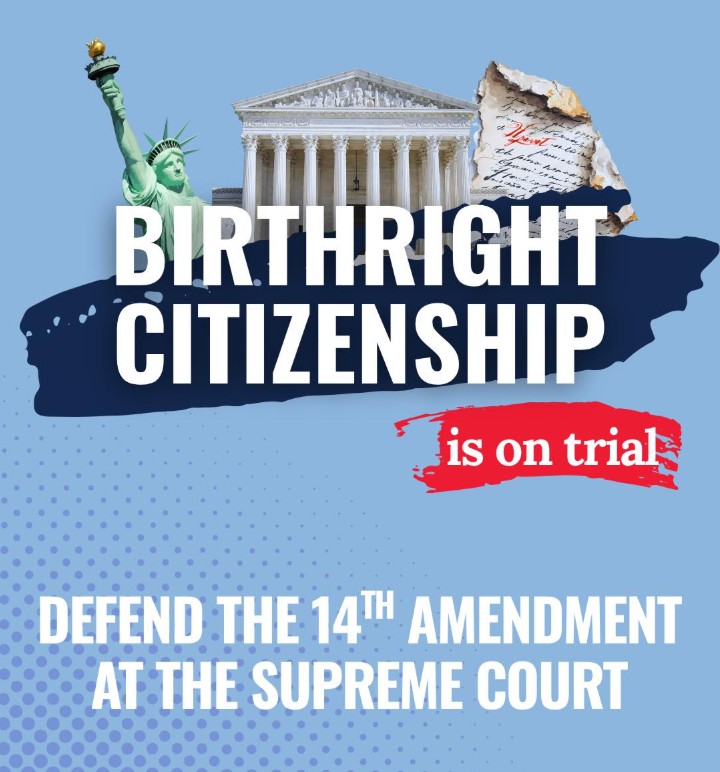
If the Supreme Court upholds the challenge, the ripple effects will create a precarious reality for all:
- The Birth Certificate Trap: A birth certificate alone will no longer be sufficient evidence. Parents must provide their own proof of status, ending the era of automatic recognition.
- Retroactive “Clouding”: By arguing the government has “misinterpreted” the 14th Amendment for 150 years, this casts a shadow over the citizenship of millions whose parents were not citizens at the time of their birth.
- The Bureaucratic Tax: Analysts estimate verification fees of $600 to $1,000 and significant delays in receiving Social Security numbers.
- “Show Me Your Papers” Society: The shift moves the “burden of proof” onto the individual, inviting racial profiling for anyone who “looks” like they might have immigrant parents.
The Weaponization of Allegiance
As an engineer of “why,” I ask: what happens when “allegiance” is defined by those in power? If citizenship is tied to loyalty, we open a door to the suppression of dissent. Historically, Black autonomy—HBCUs, autonomous communities, and even the communal singing of “Lift Every Voice and Sing”—has been viewed with suspicion. Would a gesture of protest, like kneeling during the anthem or singing the Black National Anthem instead of the “Star-Spangled Banner,” become grounds for an investigation into one’s citizenship? This is why we must protect the “bright-line” rule—a standard based on the objective fact of birth.
Conclusion: A Stress Test for the Second Founding
The 14th Amendment was designed to stop the government from asking “Who are your parents?” and start asking “Where were you born?” As we wait for the Court’s ruling—expected by June 2026—we must realize the “gotcha” is the degradation of our citizenship. We are being asked to trade a bedrock right for a sliding scale of government approval. If the soil no longer guarantees belonging, then none of us are truly on solid ground.
Glossary of Terms
- Autonomous Communities: Historically independent Black settlements (e.g., Mound Bayou, Tulsa’s Greenwood District) founded to bypass discriminatory white economic and legal control.
- Bright-Line Rule: A clearly defined legal standard that leaves no room for subjective interpretation (e.g., birth on soil = citizenship).
- Consensual Citizenship: The legal theory that citizenship is a contract requiring the mutual consent of the individual and the government.
- Jus Soli (Right of the Soil): The principle that citizenship is determined by place of birth.
- Political Jurisdiction: A requirement that an individual owe exclusive political loyalty to a nation to be considered “subject to its jurisdiction.”
- Territorial Jurisdiction: The requirement that an individual simply be physically present and subject to the laws of a nation.
Bibliography
- Supreme Court of the United States. Trump v. Barbara, No. 25-365 (2026). Oral Arguments Transcript (April 1, 2026).
- U.S. District Court for the District of New Hampshire. Barbara v. Trump, Preliminary Injunction Ruling (2025).
- The White House. Executive Order 14160: Protecting the Integrity of American Citizenship (January 2025).
- Foner, Eric. Reconstruction: America’s Unfinished Revolution, 1863-1877. Harper Perennial (Updated Edition).
- Jones, Martha S. Birthright Citizens: A History of Race and Rights in Antebellum America. Cambridge University Press.
