
I am often stunned at the negative comments I get from the white readers of the Facebook posts I use to promote my articles for mytwocents.press. Most, I suspect, never actually click the link to read the piece, but the few introductory words are always enough to trigger a vitriol-filled commentary. I often wonder why my articles—which are mostly Black history themed—bother them so much. I can understand if they disagree, but it goes far deeper than a simple disagreement. They call me names and try to dismiss everything I write, even when there are tons of facts to validate my words. They don’t provide any counter-data; it’s just pure negativity. They don’t have to comment, yet they feel absolutely compelled to do so.
What drives them? Where does this deep-seated anger come from?
To understand this compulsion, we have to look past the internet name-calling and examine the profound psychological disorientation happening in our society today. We are living through a moment where a segment of our population is deeply angry, and white men as a group feel increasingly villainized. But this anger didn’t happen in a vacuum. It is the result of a massive shift in time and sensibilities—and it is being actively galvanized and manipulated by modern political puppeteers to gain power.
Table of Contents
- Act I: The Psychological Shock of Losing the “Default”
- Act II: Dismantling the Myth of the White Solo Act
- Act III: The Path to Cultural Maturity
- Glossary of Key Terms
- Selected Bibliography
Act I: The Psychological Shock of Losing the “Default”
For generations, American society operated on an unwritten contract that granted white males a fixed, comfortable place as the default authors and gatekeepers of the culture. When you are the default, you don’t view yourself as having a specific identity; you just view yourself as “normal.”
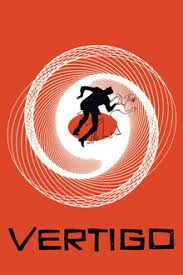
But time evolves, and sensibilities inevitably evolve with it. As society shifts toward a more shared, equitable reality, that invisible baseline is moving. This creates a type of Chronological Vertigo. When a pilot flies into a thick cloud and loses sight of the horizon, their body tells them they are flying straight, but their instruments show they are diving. If they are guided by their panic over the instruments, they crash.
Right now, a segment of our society is experiencing that exact disorientation. The cultural horizon has shifted. But instead of adapting to changing times, there is a fierce temptation to look backward and try to drag the attitudes of the past into the present. Human beings feel the pain of a perceived loss twice as intensely as the joy of a gain. Therefore, when spaces that were once exclusive become shared—whether it’s corporate leadership, historical narratives, or political power—it psychologically feels like theft.
This internal panic is highly exploitable. Opportunistic media figures, politicians, and algorithms harvest this anxiety. They take the natural discomfort of a changing world and give it a dangerous new label: persecution. They convince these men that they are under attack, turning a complex chronological evolution into a binary war of “us versus them.” Rage replaces anxiety, and a demographic that believes it is fighting for its cultural survival becomes a predictable, loyal base of power.
Act II: Dismantling the Myth of the White Solo Act
To justify this rage, there is a powerful defense mechanism at play: the belief that white men are the sole heirs and creators of everything Western civilization has to offer. The narrative suggests that because they “built the modern world,” any critique of the past is an act of ungrateful villainization.
But this unearned pride of ownership relies on a deeply sanitized, historically inaccurate version of human development. The uncomfortable truth for those clinging to this myth is that Western civilization is actually the youngest child of global history. Long before European nations took their modern shape, sophisticated empires in Africa and Asia were mastering medicine, governance, and global commerce. It is a simple matter of historical logic that a younger culture inherits, adapts, and iterates upon the ideas of the elders who came before it.
When we look closely at the pillars of the West, we see a tapestry of global accumulation, not a white solo project.
- The Science and Math: The mathematics that underpins our modern engineering—from algebra to the very Arabic numerals we use—was preserved, perfected, and expanded in India and the Islamic world while Europe was stumbling through the Middle Ages.
- The Global Technology: The “Four Great Inventions” that allowed Europe to navigate the globe and project its power—the magnetic compass, gunpowder, paper-making, and printing—were all invented in China centuries before they reached the West.
- The Philosophical Foundations: Long before Greece, the Nile Valley civilizations of Ancient Egypt (Kemet) had codified advanced geometry, astronomy, and medicine. Early Greek thinkers openly traveled there to learn the foundational principles later credited to the West.
Even from within the borders of the Western experiment, the engine of progress was co-authored by Black culture. It was the stolen labor of Black bodies that provided the raw capital to launch the global economy through the slave trade and colonization, and it was the uncredited genius of Black minds that repeatedly solved the technical, scientific, and architectural problems of a growing nation.
Western accomplishment is not a monument to white supremacy; it is a monument to human accumulation. The West didn’t create the light of knowledge; it inherited a torch lit by the global majority, and then used the wealth of colonization to claim they invented the fire.
Act III: The Path to Cultural Maturity
This brings us back to the vitriol in my Facebook comments. Why does a verified fact about Black history provoke such rage?
Because every era eventually sends a bill for the comfort it enjoyed. For centuries, the costs of the Western system—the racism, the misogyny, the exploitation—were hidden from the people who benefited from them. Today, the bill has arrived in the form of demands for accountability, equity, and truth.
To accept these historical truths is not to “cancel” the West, nor is it an attempt to villainize anyone. Rather, it is an invitation to cultural maturity. A child demands that their parents be flawless superheroes, throwing a tantrum when forced to confront their mistakes. But an adult possesses the capacity to hold two conflicting realities at the same time.
We can marvel at the constitutional frameworks, industrial breakthroughs, and democratic ideals that Western civilization iterated into the modern world, while simultaneously acknowledging the brutal atrocities that funded them. Both are true.
The anger we see today isn’t a defense of tradition; it is a refusal to grow up. But the bill for our history cannot be paid with nostalgia, and we cannot force a pluralistic world back into a colonial-era box. Until we can summon the courage as a nation to look directly into both the light and the shadow of our history, we will remain trapped in this exhausting cycle of resentment.
True strength does not look like hoarding a false past; it looks like having the courage to adapt to the present. When we finally strip away the myth of exclusive ownership, we realize that human progress is a relay race, not a solo sprint. And accountability is no longer viewed as a threat, but as the basic price of admission to a fairer, more honest world.
Glossary of Key Terms
- Arabic Numerals: The ten digits (0-9) used worldwide today. They originated in India as a base-10 positional numeral system and were transmitted to the West through Islamic mathematicians.
- Chronological Vertigo: A state of psychological disorientation experienced by individuals or groups when rapid cultural, social, or moral baseline shifts make their historically rooted expectations feel obsolete.
- Coverture: A historical legal doctrine under English common law where a woman’s legal rights and independent legal existence were entirely subsumed by those of her husband upon marriage.
- Doctrine of Discovery: A concept originating in 15th-century Papal Bulls that granted Christian explorers the right to claim lands inhabited by non-Christians, laying the legal foundation for European colonization and indigenous subjugation.
- Eurocentrism: A worldview or historical narrative that is centered on Western civilization and biased toward interpreting non-Western history and culture through a European lens.
- The Great Divergence: The historical process by which Western Europe and parts of North America became wealthy and technologically advanced, significantly pulling ahead of historically equal Eastern and African economies starting in the 19th century.
- Invisible Baseline (Societal Default): A sociological phenomenon where the dominant group’s cultural characteristics, norms, and values are treated as the objective standard or “normal,” while other identities are explicitly categorized as distinct or “other.”
- Manifest Destiny: A 19th-century American cultural belief that United States settlers were divinely ordained to expand across the North American continent, used to justify territorial expansion and the displacement of Native Americans.
Selected Bibliography
- Al-Khwarizmi, Muhammad ibn Musa. The Compendious Book on Calculation by Completion and Balancing (Al-Kitab al-mukhtasar fi hisab al-jabr wa’l-muqabala). (Historical reference for the foundation of Algebra, c. 820 CE).
- Aristotle. Politics. Translated by Benjamin Jowett. (Source for historical philosophical justifications of social hierarchies and gender dynamics).
- Diop, Cheikh Anta. The African Origin of Civilization: Myth or Reality. New York: Lawrence Hill Books, 1974. (Investigates the Nile Valley contributions to Western philosophy and science).
- Hobson, John M. The Eastern Origins of Western Civilisation. Cambridge: Cambridge University Press, 2004. (Details the critical transfer of technologies and ideas from Asia and the Middle East to Europe).
- Locke, John. Two Treatises of Government. London: Awnsham Churchill, 1689. (Key text for Enlightenment individual liberty, providing context for the era’s economic contradictions regarding property and colonialism).
- Pomeranz, Kenneth. The Great Divergence: China, Europe, and the Making of the Modern World Economy. Princeton: Princeton University Press, 2000. (Analysis of economic shifts and the rise of coal and industrialization).
- Williams, Eric. Capitalism and Slavery. Chapel Hill: University of North Carolina Press, 1944. (Essential text detailing how the transatlantic slave trade fueled the industrial wealth of the Western world).
- X, Malcolm. “The Chickens Coming Home to Roost.” Speech delivered at the Grand Ballroom in New York City, December 1, 1963. (Historical context for the cause-and-effect relationship of cultural violence and social reckoning).


