
Table of Contents
- Introduction: The Fault in the System
- The Systemic Failure of 1944
- The Architecture of a Loophole
- The 13th Amendment and the “Except” Clause
- 81 Days: The Velocity of Injustice
- Isolation, Confession, and the Ten-Minute Verdict
- The Silent Suspect: When Justice is a Shield
- The Burke Family and the Protected Elite
- The Physical Impossibility
- Engineering and the Laws of Physics vs. State Narrative
- The Pattern: Beyond Alcolu
- The Ghosts of Alexander McClay Williams, Joe Persons, and James Arcene
- The Filter of Justice: Calibrating the Outcome
- Over-Policing, Differential Processing, and the “Crime Rate” Myth
- The Economic Engineering of Poverty: Wealth Theft
- The Removal of the Breadwinner and Generational Economic Erasure
- The “Why” of the Present
- Modern Parallels and the Continuity of Disparity
- A Note on “The Green Mile”
- Magical Realism vs. Historical Reality
- Conclusion: Closing the Loophole
Introduction: The fault in the system
When I first told my wife and my son about the subject of my next article, they cringed. I don’t blame them. As an engineer who spends my days developing solutions that ensure the reliability and integrity of the systems my clients depend on, my life is dedicated to solutions that are sound. But the story of George Stinney Jr. is a systems failure so profound, so gut-wrenching, that the natural human instinct is to look away.
I struggled with the “why” myself. Why revisit a tragedy from 1944? Why drag a 14-year-old boy back into the light only to watch him sit on a Bible to fit into an electric chair? The answer lies in the foundation of our country. If we do not understand the “Stinney Era,” we cannot understand the modern carceral state. We are not just looking at a sad story; we are looking at the blueprint of mass incarceration—the “teeth” that gave the Jim Crow era its bite.
The Architecture of a Loophole
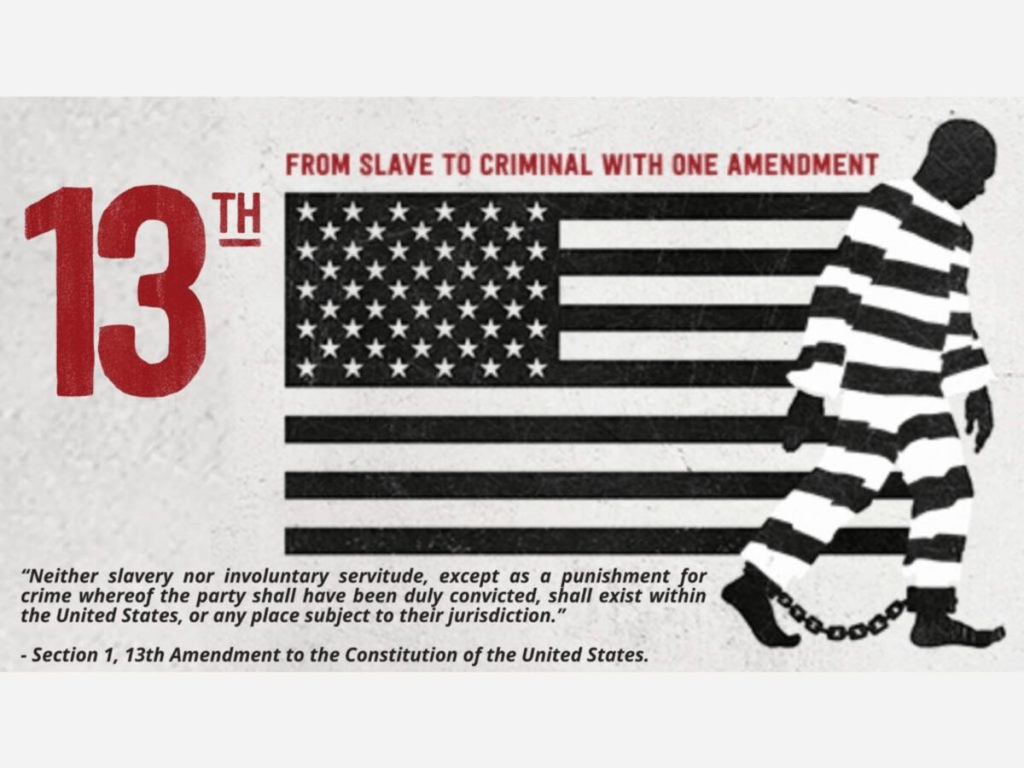
To understand why George Stinney was executed in 81 days, we have to go back further than 1944. We have to look at the 13th Amendment. While we celebrate it for “ending” slavery, it contained a structural flaw that was exploited by design:
“Neither slavery nor involuntary servitude, except as a punishment for crime whereof the party shall have been duly convicted, shall exist within the United States…”
That “except” clause is the most expensive word in American history. It created a legal bypass. If the state could label a Black person a “criminal,” it could legally return them to a state of servitude. Following the Civil War, Southern states engineered “Black Codes”—laws that criminalized everything from “vagrancy” to “loud talking.” This wasn’t about public safety; it was about labor and social control. The convict leasing system that followed was a direct evolution of the plantation, and by the mid-20th century, this system had evolved into the machinery of state-sanctioned terror that caught George Stinney in its gears.
81 Days: The Velocity of Injustice
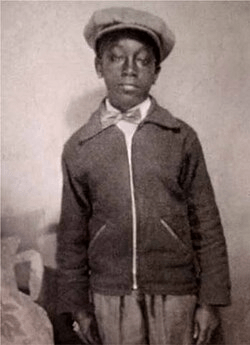
In March 1944, in the segregated mill town of Alcolu, South Carolina, two young white girls—Betty June Binnicker and Mary Emma Thames—were found dead in a ditch. The town wanted blood. George Stinney Jr., a 95-pound Black boy who had been seen near the girls earlier that day, was the easiest target.
The “system” functioned with terrifying efficiency:
- Isolation: George was interrogated alone. His parents were forced to flee town under threat of violence, leaving their child in the hands of a mob-controlled state.
- The “Confession”: The police claimed he confessed. No written record of this confession exists. There were no witnesses to the statement.
- The Trial: The trial lasted barely two hours. George’s court-appointed lawyer, a tax commissioner with no trial experience, called zero witnesses and performed no cross-examination.
- The Jury: An all-white jury took less than ten minutes to find him guilty. They did not recommend mercy.
On June 16, 1944, George Stinney Jr. became the youngest person executed in 20th-century America. He was so small that the adult-sized electrodes wouldn’t fit his head. They used a Bible—the very book used to swear in the “justice” that was killing him—as a booster seat. When the current hit, the oversized mask fell off, exposing his terrified, weeping face to the witnesses.
The Silent Suspect: When Justice is a Shield
If George Stinney Jr. did not kill those two girls, then who did? For seventy years, the state of South Carolina acted as if the question were settled. But in the decades following the execution, a much more sinister reality began to emerge from the shadows of Alcolu.
The leading theory, supported by local testimony and research presented during the 2014 exoneration hearing, points toward George Burke Jr. He was the son of a prominent white businessman who owned the lumber mill where George’s father worked. More chillingly, Burke’s father was the foreman of the jury that sent George Stinney to the electric chair.
The community had whispered for years about a deathbed confession from the Burke family, but in 1944, those whispers were a death sentence. In the social hierarchy of a segregated mill town, a member of the Burke family was untouchable. The “system” didn’t just need a culprit; it needed a diversion. By sacrificing a 14-year-old Black boy, the state provided the white community with “closure” while ensuring the powerful remained protected. This is the ultimate callousness: the law wasn’t used to find the truth; it was used as a shield for the privileged and a shroud for the innocent.
The Physical Impossibility
We must also look at the physics—the cold, hard data that the 1944 court ignored. The girls were killed with a fourteen-inch railroad spike, suffering massive skull fractures. Forensic experts in 2014 testified that it would have been physically impossible for a 95-pound child to wield such a weapon with the force required to kill two people while also managing to overpower them both.
George had an alibi—his sister, Amie, was with him grazing the family cow when the girls passed by—but in a system designed to exploit the “punishment clause” of the 13th Amendment, an alibi is just noise. The “duly convicted” label was the goal, and the state achieved it by ignoring the laws of physics and the screams of a child.
The Pattern: Beyond Alcolu
George was a centerpiece, but he was not an anomaly. As I researched this, I found the ghosts of other children whose names have been scrubbed from the collective memory:
- Alexander McClay Williams (1931): At 16, he was the youngest person executed in Pennsylvania history. His “confession” was coerced, and the state suppressed evidence of a bloody handprint that didn’t match his. It took until 2022 for his conviction to be vacated.
- Joe Persons (1915): A boy in Georgia, estimated to be 12 or 13, who was so small that officials debated adding weights to his feet so the hanging would “work.”
- James Arcene (1885): A Cherokee youth executed for a crime committed when he was just 10 years old.
In each of these cases, the 13th Amendment’s “duly convicted” clause was the shield. By providing the thin veneer of a trial, the state could legally commit what was essentially a lynching.
The Filter of Justice: Calibrating the Outcome
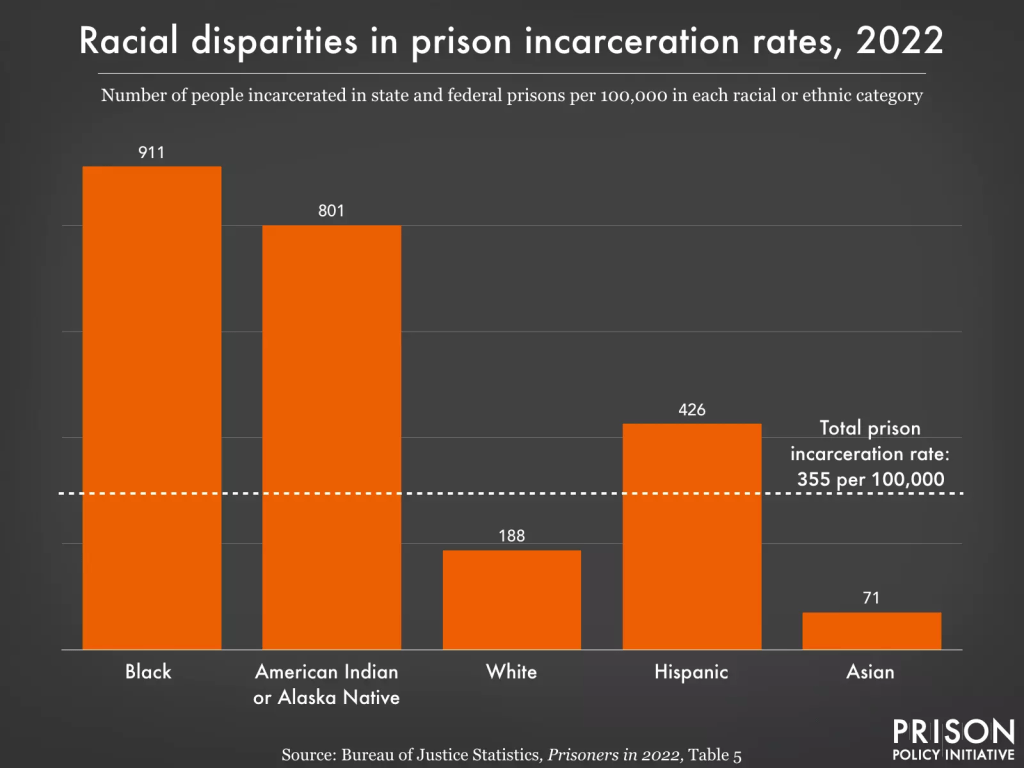
When we discuss mass incarceration, a common counter-argument often arises: “Don’t Black people simply commit more crime?” I know that if you calibrate a sensor to only look for anomalies in one specific area, your data will be skewed. To understand the disparity, we must look past the “output” and analyze the “filter” of the legal machine.
1. The Frequency of Interaction Fallacy
The argument that Black people “commit more crime” often confuses crime rates with arrest rates. A 2023 UCLA study using smartphone data from 10,000 officers across 23 cities found that police spend significantly more time in Black neighborhoods, even when those neighborhoods have the same crime rates and income levels as white neighborhoods.
The result is simple math: if you put 100 police officers in one neighborhood and two in another, you will “discover” more crime in the first one—even if the actual behavior is identical. This creates a “feedback loop” where higher arrest records are used to justify even more policing, artificially inflating the statistical profile of a community.
2. Drug Use vs. Drug Arrests
This is the “smoking gun” of systemic bias. For decades, federal surveys from the CDC and the NAACP have shown that Black and white Americans use and sell drugs at almost identical rates. However, despite similar usage, Black Americans are nearly 4 times more likely to be arrested for marijuana possession and 6 times more likely to be incarcerated for drug charges overall. It’s not about who is committing the crime; it’s about who the system is looking for.
3. The “Differential Processing” of Justice
Even when the crime and the criminal history are identical, the system treats the bodies differently:
- Bail: Black defendants are 21% more likely to be denied bail, which forces them to stay in jail while awaiting trial—leading to lost jobs, lost homes, and a higher likelihood of eventually taking a “guilty plea” just to go home.
- Plea Bargaining: Prosecutors are more likely to offer plea deals that include prison time to Black defendants, while white defendants are more likely to be offered “diversion programs” or probation.
- Sentencing Length: According to 2026 data reports, Black men receive sentences that are 19.1% longer than white men for the exact same crimes.
4. Wrongful Convictions: The Margin of Error
If the system were truly objective, the rate of “mistakes” would be equal. It isn’t. Black people make up 13% of the population but over 50% of the exonerated population. Innocent Black people are 7 times more likely to be wrongfully convicted of murder and 12 times more likely to be wrongfully convicted of drug crimes than white people.
George Stinney Jr. is the historical proof of this. The system didn’t care about the truth; it cared about “closure” that fit the racial hierarchy. When someone says, “they commit more crime,” they are looking at the output of a machine and assuming it is a neutral scale. But as an engineer, I see a filter. It filters out white crime through warnings and diversions, and it filters in Black crime through over-policing and structural bias.
The Economic Engineering of Poverty: Wealth Theft
If you want to understand why a large percentage of the Black community remains trapped in poverty today, you need to look no further than the “teeth” of mass incarceration. It was never just about free labor for a season; it was about the permanent maintenance of a lower class.
When the state arrested George Stinney Jr., they didn’t just take a child; they destroyed a household. Within hours of his arrest, his father was fired from the local lumber mill. The family was given mere hours to vacate their company-owned housing and flee the town. They left behind their possessions, their community, and their stability.
Mass incarceration acts as a surgical strike against the Black family unit. By removing men—and in George’s case, the future men of the community—the system achieves several objectives:
- Destruction of the Household Anchor: Historically, when a man was incarcerated or executed, the family lost its primary earner. According to the American Journal of Sociology, paternal incarceration is one of the single greatest predictors of a family falling below the poverty line.
- The “Marriageable Men” Gap: By disproportionately removing Black men from the community, the state created a demographic vacuum. This forced single mothers into a cycle of “survival labor,” where the ability to save, invest, or purchase property became a mathematical impossibility.
- Educational Depletion: A 2014 study by the National Academy of Sciences found that the children of incarcerated parents are significantly less likely to graduate from college, creating a “secondary sentence” that spans generations.
The Numbers Behind the Theft
The statistics are staggering:
- The Wealth Gap: Today, the median white household holds roughly eight times the wealth of the median Black household. This is not a failure of work ethic; it is a result of a century of wealth-stripping policies.
- Lifetime Loss: The Brennan Center for Justice estimated that formerly incarcerated people lose an average of $500,000 in lifetime earnings. When you multiply that by the millions of Black men swept up in the “War on Drugs,” you are looking at trillions of dollars in wealth that never entered the Black community.
- Voter Disenfranchisement: In many states, a felony conviction (the “duly convicted” status of the 13th Amendment) leads to the loss of voting rights. This removes the community’s ability to vote for the very policies—school funding and housing—that build wealth.
Mass incarceration is not a “side effect” of poverty; it is the architect of it. It ensures that the Black community remains in a state of “perpetual catch-up.” Every time a generation begins to build equity, a new wave of “tough on crime” legislation resets the clock.
The “Why” of the Present
People ask me why this matters now. It matters because the “punishment clause” is still in the Constitution. The transition from the Jim Crow executions of the 40s to the mass incarceration boom of the 80s and 90s is a straight line.
I know that systems don’t fix themselves. When we look at the racial disparities in our modern prison system, we are seeing the same logic that executed George Stinney. We are seeing a system that prioritizes “closure” and “control” over “integrity.”
When the Stinney family was run out of town, they lost their property, their stability, and their history. This is how the wealth gap was engineered. Mass incarceration isn’t just about the person in the cell; it is about the “Generational Theft” of Black potential. We care about George Stinney because his execution was a warning shot: The law does not belong to you.
A Note on “The Green Mile”
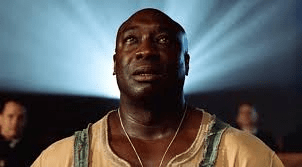
By the way, as I dug into this, I noticed how many people believe that Stephen King’s The Green Mile is based on George Stinney. While King has never confirmed this, the parallels are undeniable: the two girls, the rural South, the wrongful execution.
But there is a dangerous difference. In the movie, John Coffey is a “Magical Negro”—a gentle giant with supernatural powers. In reality, George Stinney had no magic. He was just a scared 14-year-old child who wanted to go home. By turning these tragedies into “magical fables,” we risk softening the edges of the reality. We don’t need magic to explain George’s innocence; we just need to look at the physics of a 90-pound boy and the corruption of a system that didn’t care to measure the weight of the evidence.
Conclusion: Closing the Loophole
In 2014, seventy years after he was killed, Judge Carmen Mullen vacated George Stinney’s conviction. She cited “fundamental, constitutional violations of due process.” It was a victory, but a hollow one. You cannot return 70 years of life to a boy who was burned to death by his own government.
We revisit this story because the “crack” in the foundation is still there. As long as the 13th Amendment allows for slavery-by-another-name, and as long as our system views Black children as “superpredators” rather than children, George Stinney is not a ghost of the past. He is a mirror of the present.
If a system is designed to protect some by sacrificing others, it has no integrity. It is a bridge waiting to collapse. We owe it to George—and to the children whose names we don’t yet know—to stop patching the cracks and start questioning the blueprint. Until the “except as punishment” loophole is closed and the law is applied without the filter of power and race, we aren’t living in a state of justice. We are just living in a very long, very crowded Green Mile.
Glossary of Terms
- 13th Amendment (Punishment Clause): The section of the US Constitution that abolished slavery except as punishment for a crime, creating a legal loophole for involuntary servitude.
- Black Codes: Laws passed by Southern states after the Civil War to restrict the freedom of Black Americans and compel them to work in a labor economy based on low wages or debt.
- Convict Leasing: A system in which state penitentiaries leased incarcerated people to private companies (e.g., coal mines, railroads) for labor.
- Differential Processing: The phenomenon where individuals of different races are treated differently by the criminal justice system even when the alleged crimes are identical.
- Doli Incapax: A legal doctrine (often ignored in the Jim Crow era) suggesting that children below a certain age are incapable of forming the intent to commit a crime.
- Generational Wealth Theft: The systemic removal of assets, property, and earning potential from a specific community over time, preventing the accumulation of intergenerational wealth.
- Jim Crow Era: The period (late 19th century to mid-20th century) characterized by state and local laws that enforced racial segregation in the United States.
- Vacated Conviction: A legal ruling that voids a previous conviction, treating it as if it never happened due to errors or violations of rights (as seen in Stinney’s 2014 case).
Bibliography & References
Legal & Historical Documents
- U.S. Const. amend. XIII. (1865). The 13th Amendment of the United States Constitution.
- State of South Carolina v. George Stinney, Jr. (1944). Trial Transcript and Court Records (Archived).
- Mullen, C. (2014). Order Vacating Judgment in the Case of State v. George Stinney, Jr. Circuit Court of South Carolina.
Academic Research & Books
- Alexander, M. (2010). The New Jim Crow: Mass Incarceration in the Age of Colorblindness. The New Press.
- Blackmon, D. A. (2008). Slavery by Another Name: The Re-Enslavement of Black Americans from the Civil War to World War II. Doubleday.
- National Academy of Sciences. (2014). The Growth of Incarceration in the United States: Exploring Causes and Consequences. National Academies Press.
- The Sentencing Project. (2023). The Color of Justice: Racial and Ethnic Disparity in State Prisons. ### Articles & Data Reports
- Brennan Center for Justice. (2022). Conviction, Imprisonment, and Lost Earnings: How the Criminal Justice System Deepens Inequality.
- UCLA Department of Sociology. (2023). Police Activity Analysis: Surveillance and Deployment in Urban Environments.
- U.S. Sentencing Commission. (2024-2026). Report to the Congress: Federal Sentencing Statistics and Fentanyl Trafficking Trends.
- Urban Institute. (2026). Racial Disparities in Charging and Plea Bargaining: A Longitudinal Study.
