
Table of Contents
- Introduction
- The Red Clay of Dinwiddie: A Vision Beyond the Fields
- The VSU Years: Forging a Mathematical Mind
- Breaking the Color Barrier at Dahlgren (1956)
- Technical Spotlight: Taming the “Lumpy” Earth
- The Quiet Professional and the Delayed Honor
- My Two Cents: The Map We Carry
- Glossary of Terms
- Bibliography
Introduction
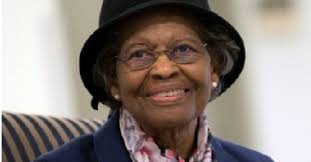
On January 17, 2026, the world lost a woman whose intellectual fingerprints are on nearly every movement we make in the modern era. Dr. Gladys West passed away at the age of 95, leaving behind a legacy that is literally foundational to global infrastructure. For forty-two years, she worked within the high-security confines of a naval base in Virginia, translating the chaotic, invisible forces of gravity and planetary irregularities into the clean, precise lines of the Global Positioning System (GPS).
I have used GPS since its early consumer versions back in 2000, and I have relied on it ever since. I still vividly remember the “MapQuest era”—the frantic unfolding of paper sheets and the perils of trying to read printed directions while driving. Before that, there was the inevitable ritual of stopping at a gas station to ask for directions, hoping the person behind the counter knew the local shortcuts. At the time, I never could have imagined that this life-changing tool, which transformed the very nature of travel, was made possible by the brilliance and tenacity of a Black woman.
While popular history has recently begun to celebrate the “Hidden Figures” of NASA’s early space program, Dr. West’s story represents a parallel pillar of Black excellence in the defense sector—one that did not just put a man on the moon, but mapped the very Earth beneath our feet.
The Red Clay of Dinwiddie: A Vision Beyond the Fields
Dr. West’s journey did not begin in a laboratory; it began in the tobacco fields of Sutherland, Virginia, during the height of the Great Depression. Born in 1930 to a sharecropping family, her early life was dictated by the rhythms of the harvest and the rigid constraints of the Jim Crow South. In Dinwiddie County, the path for a young Black girl was often predetermined: you worked the land your parents worked, or you found labor in the local tobacco processing plants.
However, Gladys possessed a trait that would define her career: an uncanny ability to observe a system and find a way through it. She watched her parents toil in the sun and realized that the only way to alter her trajectory was through the classroom. “I realized I had to get an education to get out,” she would later recall. Education wasn’t just a passion; it was a survival strategy.
She attended a small, segregated school where resources were scarce but the community’s commitment to excellence was absolute. Gladys wasn’t just a good student; she was a competitive one. When she learned that the top two students in her graduating high school class would receive full-ride scholarships to Virginia State College (now University), she saw her opening. She studied with a singular focus that would later become her hallmark at the Naval Surface Warfare Center, eventually graduating as valedictorian and securing her future.
The VSU Years: Forging a Mathematical Mind
At Virginia State University, an HBCU with a proud tradition of academic rigor, Gladys entered a world that both nurtured her and challenged her. At the time, women—and especially Black women—were socialized toward “service” roles or home economics. Gladys, however, gravitated toward Mathematics.
Choosing math in the 1940s was a radical act. It was a field where objective truth reigned supreme; a proof was either right or wrong, and no amount of prejudice could change the validity of a correct equation. She earned her Bachelor’s degree in 1952 and spent two years teaching in Waverly, Virginia, to save money for graduate school. She returned to VSU and earned her Master’s in Mathematics in 1955, making her one of the most highly educated women in the state. This academic armor was necessary for the world she was about to enter.
Breaking the Color Barrier at Dahlgren (1956)
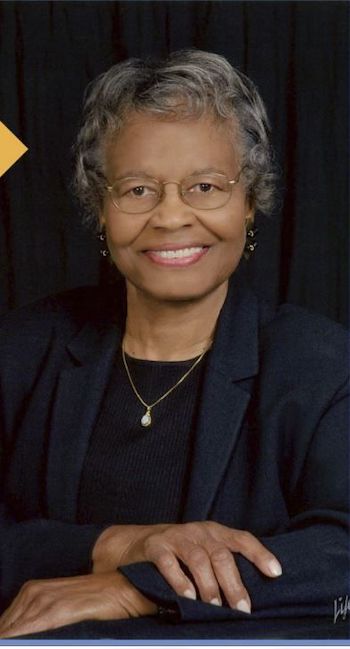
In 1956, Gladys was recruited as a mathematician for the Naval Proving Ground in Dahlgren, Virginia. When she arrived, she was only the second Black woman ever hired as a professional at the base. She was a pioneer in a sea of white male engineers and physicists.
The social climate of 1950s Virginia was hostile. Segregation was the law of the land, and even within the federal facility, the social lines were clear. She was doing high-level ballistic calculations for the Navy during the day, but she lived in a world where she couldn’t always eat in the same restaurants or stay in the same hotels as her colleagues.
Dr. West often spoke about the “pressure of the pioneer.” She knew that her performance would be used as a proxy for the capabilities of all Black women. This resulted in a work ethic that was legendary. She didn’t have the luxury of “networking” at the water cooler; she had to be twice as fast and twice as accurate to be seen as an equal. It was during these early years that she met her husband, Ira West, another brilliant mathematician. Together, they formed a “power couple” of the defense world, quietly raising a family while solving the complex problems of the Cold War.
Technical Spotlight: Taming the “Lumpy” Earth
To understand why Dr. West’s work is so vital, one must understand the central problem of geodesy: the Earth is “lumpy.”
Many people assume that to create GPS, you simply put satellites in the sky and measure the time it takes for a signal to reach the ground. However, if the Earth were a perfect, smooth sphere, that would be easy. In reality, the Earth is an “oblate ellipsoid”—bulging at the center and flattened at the poles. Furthermore, the distribution of mass within the Earth is uneven. Mountain ranges, deep ocean trenches, and varying rock densities mean that gravity pulls harder in some places than others.
The Challenge of the Geoid
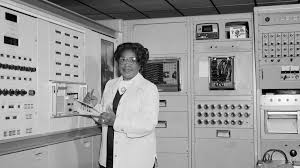
Before GPS could be accurate, scientists needed a mathematical model of the “Geoid”—the shape the surface of the oceans would take under the influence of Earth’s gravitation and rotation alone. This is where West’s genius came into play.
Starting in the 1960s, she began work on the IBM 7030 “Stretch” computer. This was the fastest supercomputer of its era, but it was a beast to program. Using FORTRAN IV, West wrote the code that could ingest massive amounts of data from the Seasat and Geosat missions.
Seasat and Geosat: The Data Revolution
Seasat, launched in 1978, was the first satellite to use radar altimetry to sense the oceans. West was tasked with processing this data to prove that the ocean’s surface actually mimicked the seafloor—that the water would “mound up” over underwater mountains due to higher gravity.
Following the success of Seasat, she became the project manager for Geosat (1985). This was the turning point for modern navigation. Under her leadership, the team created a data processing system that accounted for:
- Atmospheric Drag: How the thin air in high orbit slows down satellites.
- Solar Radiation Pressure: How the sun’s light literally pushes on the satellites.
- Tidal Variations: How the moon shifts the Earth’s mass in real-time.
In 1986, she published her seminal technical report, Data Processing System Specifications for the Geosat Satellite Radar Altimeter. This 51-page document provided the exact mathematical specifications that allowed GPS satellites to know exactly where they were in relation to an irregular Earth.
The Quiet Professional and the Delayed Honor
For decades, Dr. West remained a “hidden figure” by choice and by circumstance. The culture of the Navy at the time was one of quiet professionalism, and much of her work was classified or buried in technical archives. She didn’t seek the limelight; she sought the truth in the numbers.
Recognition finally caught up to her in the 21st century:
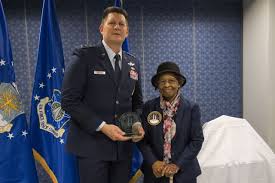
- The Hall of Fame (2018): Inducted into the U.S. Air Force Space and Missile Pioneers Hall of Fame.
- The Ph.D. at 70: Completed her doctorate from Virginia Tech in 2000, proving that the pursuit of knowledge has no expiration date.
- The Prince Philip Medal (2021): Awarded for her role in the creation of GPS.
My Two Cents: The Map We Carry
As we say goodbye to Dr. Gladys West, we recognize that she gave us more than just a tool for navigation. She gave us a new way of seeing the world. She took the “lumpy,” irregular, and often unfair world she was born into and used the pure, objective power of mathematics to make sense of it.
Every time you look at that blinking blue dot on your smartphone, you are standing on the shoulders of Gladys West. She was the silent architect of our global motion, a woman who proved that you can start in the soil and end up in the stars.
Glossary of Terms
- Geodesy: The science of accurately measuring and understanding Earth’s geometric shape, orientation in space, and gravity field.
- Geoid: The hypothetical shape of the Earth’s surface if the oceans were at rest and influenced only by gravity and rotation, used as a reference for altitude.
- IBM 7030 “Stretch”: A 1960s-era supercomputer known for its complexity and speed, used by West for high-level naval calculations.
- Radar Altimetry: A technique used by satellites to measure the distance between the satellite and the Earth’s surface by timing how long a radio pulse takes to reflect back.
- Oblate Ellipsoid: A sphere that is squashed at the poles and swollen at the equator; the basic geometric description of Earth’s shape.
- FORTRAN: One of the earliest high-level programming languages, used extensively in scientific and engineering applications.
Bibliography
- West, Gladys B. Data Processing System Specifications for the Geosat Satellite Radar Altimeter. Naval Surface Weapons Center, Dahlgren, VA, 1986.
- West, Gladys B. It Began with a Dream. (Autobiography). 2020.
- U.S. Air Force. “Dr. Gladys West: Space and Missile Pioneers Hall of Fame Induction.” Air Force Space Command, 2018.
- Shetterly, Margot Lee. Hidden Figures: The American Dream and the Untold Story of the Black Women Mathematicians Who Helped Win the Space Race. William Morrow, 2016.
- Virginia Tech News. “Gladys West: The mathematician who helped invent GPS.” 2018.
