
Research & Methodology Disclosure: This article is authored from the dual perspective of a technologist specializing in Artificial Intelligence and a historian focused on African American movements. The analysis is based on a synthesis of primary source data, including the December 2025 NIST Face Recognition Evaluation, the Fifth Circuit Court of Appeals’ ruling in United States v. Smith, and documented 2024–2025 algorithmic audits. This is a data-driven inquiry into how modern infrastructure can inadvertently or intentionally replicate historical systemic inequities.
Table of Contents
Introduction
The mistreatment of the Black citizen has always been the definitive moral gauge of the American experiment. Historically, the United States has often existed in a state of constitutional debt, professing ideals of life, liberty, and the pursuit of happiness while systematically defaulting on those promises for its non-white population. It has been the relentless, exhausting movements to correct these injustices that have acted as the true architects of our democracy. Without the friction of Black struggle, the American Constitution would remain a static, exclusive document; it is through the fire of these movements that the nation is repeatedly forced to evolve, finally aligning its practice with its principles for the benefit of all.
There has always been an element of American society, however, that has fought against these changes. Driven by a fear that a more inclusive distribution of these foundational principles results in a perceived loss of status, or perhaps motivated by simple economic preservation, this faction has ensured that backlash invariably follows progress. This backlash is a defensive reaction designed to protect a specific social order. We saw it in the rise of Jim Crow after the Civil War; we saw it in the emergence of the original COINTELPRO, mass incarceration, and redlining following the Civil Rights movement. Today, we are seeing the latest iteration: a regime of digital surveillance and AI-driven suppression deployed to safeguard legacy power structures against a modern conscience.
In my professional capacity as a technologist, I spend my days immersed in the architecture of the future. It is my job to study Artificial Intelligence, to probe its vulnerabilities, and to harness its benefits. I provide AI solutions every day and fully believe in its potential. However, in my activity as a blogger specializing in African American history, I recognize that this technology is being integrated into a pre-existing framework of exclusion. We must understand that America is the poster child for Western Civilization—a civilization whose foundational economic and social hierarchies were built upon a philosophy of white supremacy. This was not merely about hate; it was a pragmatic economic necessity used to justify a class system fueled by the cheap labor of non-white bodies. The “backlash” we see today is the automated defense of that very hierarchy. It is from this position—the intersection of technical advocacy and historical vigilance—that my current research and this article are birthed.
I. The Architecture of Suppression: From Manual to Automated
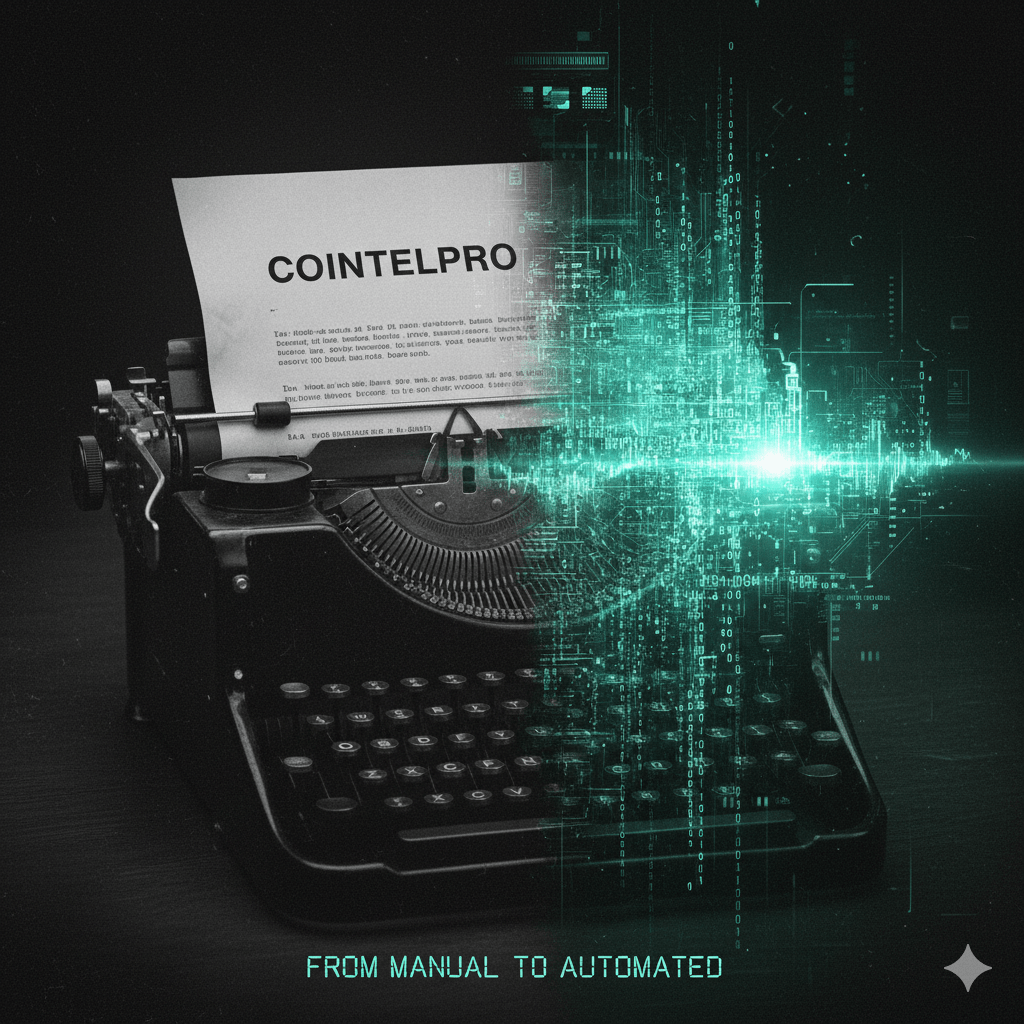
In the mid-20th century, the FBI operated under a mandate known as COINTELPRO (Counterintelligence Program). Conducted between 1956 and 1971, its official goal was to “expose, disrupt, misdirect, discredit, or otherwise neutralize” groups deemed a threat to the existing social order. While it targeted various organizations, its most systematic efforts were directed at the Black Freedom Movement.
COINTELPRO was labor-intensive, requiring agents to manually forge letters and maintain paper trails. Today, the cost of this disruption has plummeted through the automation of surveillance.
- The Pretext: In 2017, a leaked FBI memo created the “Black Identity Extremist” (BIE) category. This provided a modern “national security” justification for surveilling activists, essentially updating the 20th-century “subversive” labels for the digital age.
- The Method: Algorithmic Redlining: Much like the physical redlining of the 1930s that denied Black families home loans, digital redlining uses AI to deny specific movements digital “reach.” Algorithms optimized for “brand safety” often flag Black political speech—terms like “reparations” or “systemic racism”—as “high-risk.”
A Personal Testimony of Digital Erasure:
I have experienced this digital wall firsthand. Before launching my current blog, I utilized Twitter (now X) to share insights on African American history. Without warning or explanation, my account was permanently banned. Years later, despite numerous appeals, I have never been granted the courtesy of a reason. Today, that suppression has simply shifted form. When I share my research on platforms like Facebook, I find that my historical analysis is treated differently than my regular social posts. To achieve even a fraction of the same reach, I am forced to “boost” my content—effectively paying a digital toll to bypass the very algorithms that suppressed me in the first place. Even then, I must navigate a minefield of phrasing; using WordPress tools like Blaze or Facebook’s ad manager requires a careful, almost coded language. If I am too direct about the realities of history, the boost is denied. This is the new gatekeeping: you either sanitize your message, or you pay to have it heard.
II. Digital Disruption: The Infiltrator 2.0
The original COINTELPRO used “poison pen” letters to sow discord. AI has scaled this through “Digital Blackface” and the exploitation of the “Liar’s Dividend.” This phenomenon occurs when the mere existence of deepfake technology allows bad actors to escape accountability by claiming that genuine evidence of their misconduct is actually AI-generated.
- Synthetic Apathy: In late 2024 and 2025, networks of AI-generated “sock puppet” accounts were identified targeting Black social media users. These bots mimic cultural cues to spread messages of voter apathy, designed to fracture the very voting blocs that historically decide American elections.
- Neutralizing the Digital Record: Historically, the video camera was the “great equalizer” for the Black conscience, providing objective proof of state violence. Today, the “Liar’s Dividend” erodes this power. In legal proceedings throughout 2025, we have seen a rise in the “Deepfake Defense,” where attorneys for the state move to suppress genuine footage of police misconduct by arguing it could be a synthetic fabrication.
- The Erosion of Objective Truth: The burden of proof has shifted. Forensic verification of a single piece of misconduct video can now take months. During this “verification lag,” public outrage is cooled, and the window for accountability often closes. As the public is trained to doubt their own eyes, the “Liar’s Dividend” provides a permanent escape for those in power, effectively neutralizing the power of the digital witness.
III. Automated Policing: The New Redlining

As a technologist, I am keenly aware of the danger posed by “black box” algorithms in law enforcement.
- Facial Recognition: The NIST December 2025 report confirms that facial recognition is still up to 100x more likely to misidentify Black faces.
- Geofence Warrants: The 2025 legal crisis (exemplified by the circuit split in United States v. Smith) shows how police use “location dragnets” to identify every individual at a political rally, treating an entire community as suspects based on geographic proximity.
IV. The Engine of Democracy: Why the Establishment Fears the Conscience
A detractor might ask: “Why would modern-day technology still be manipulated to target Black citizens?” The answer is found in the history of every major American success.
1. The Architect of Universal Rights
Black Americans have never fought solely for themselves; they have fought for the integrity of the system.
- The Reconstruction Amendments: The 14th Amendment’s “Equal Protection” clause was won through Black blood and labor. Yet today, it is the legal shield for every American—from women seeking equality to religious minorities.
- The Universal Tide: The Civil Rights Act of 1964, the ADA (Disability Rights), and the progress of the Women’s Suffrage movement all utilized the tactics and legal precedents established by the Black struggle.
2. The Threat to “Exclusive Privilege”
Western Civilization’s foundational element is a hierarchy that prioritizes whiteness to protect its economic class system. Because every major expansion of American democracy has come from Black struggle—dismantling the very “cheap labor” foundations of the system—these movements are viewed as an existential threat. They are targeted not because they are criminal, but because they are effective.
V. Reclaiming Our Digital Sovereignty: The Three Pillars

To “reclaim digital sovereignty” is to move from being “subjects” of a tech stack we don’t control to becoming the “authors” of our own digital lives. This is defined by three core pillars:
- Mastery Over the “Digital Stack”: Sovereignty means moving away from total dependency on monolithic corporations. This involves prioritizing Open Source tools where the code is transparent, ensuring that no “Black Box” biases or secret backdoors for state surveillance can remain hidden.
- Data Agency and Content Provenance: Data is the primary currency of the 21st century. Reclaiming sovereignty means asserting ownership over the data you generate. To combat the “Liar’s Dividend,” we must adopt Content Provenance standards (such as C2PA). By using tools that “hash” or timestamp video to an Immutable Ledger (Blockchain) at the moment of capture, we create a permanent, unalterable record of authenticity. This technical “fingerprint” prevents the state from dismissing genuine evidence of misconduct as a deepfake.
- Algorithmic Self-Governance: This is the right for a community to influence the rules that govern its digital existence. It requires “Algorithmic Accountability”—demanding the legal right to audit and reject AI systems that demonstrate statistically significant demographic harm.
VI. Hacking the Algorithm: Strategies for Digital Civil Disobedience
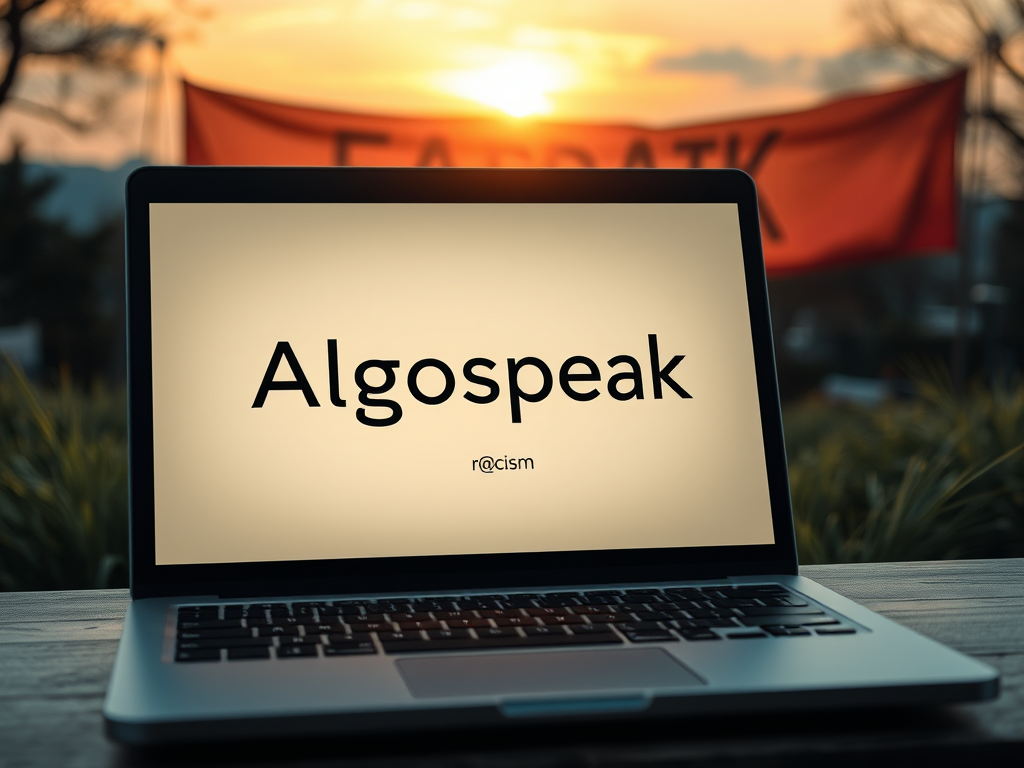
To maintain reach without paying the “digital toll” of boosting, we must adopt a repertoire of digital resistance:
- “Algospeak” and Keyword Recoding: Altering spellings (e.g., “r@cism”) or moving key terms out of the first three lines of a caption where AI scrutiny is highest.
- The “Neutral Front-Load” Tactic: Front-loading content with “neutral” visuals to buy “dwell time” before introducing explicit political analysis.
- Lattice Organizing: Using social media for discovery, but routing the audience to decentralized channels like private email newsletters or Signal.
VII. Glossary of Terms
- Algorithmic Redlining: The automated practice of limiting digital visibility or services to specific demographic groups through biased machine learning.
- Data Sovereignty: The principle that data is subject to the governance of the individuals who produced it.
- Geofence Warrant: A search warrant compelling tech companies to reveal every user in a specific geographic area at a specific time.
- Technical Debt (Social): The long-term societal cost of deploying “black box” technologies without first auditing them for historical bias.
Conclusion
We must understand that in a society where the “White Default” is coded into the software, Black political organizing is the ultimate “hack” to save American democracy. By reclaiming our digital sovereignty, we are not just protecting one group—we are protecting the conscience of the nation.
