
Contents:
- Intro
- The Myth of Moral Goodness: Family Status and Virtue
- The Perilous Intersection of Religion and Politics
- The Empathy Deficit in the Conservative Position
- White Evangelicals and Political Identity
- The Interpretation of Scripture: A Pro-Choice Reading
- The Psychological Dimensions of Political Choice
- The Role of Education and Information
- References
- Conclusion
Intro
When the Republicans claim to be the only true party representing Christianity, millions of people listen, including some of my own relatives. But as a lifelong Democratic voter and a devoted Christian, I must disagree. This essay explains why I reject the idea that my faith belongs exclusively to the conservative side of politics. My choice comes down to one core belief: that empathy is the non-negotiable center of the Christian mandate, encapsulated by the command to “Love your neighbor as yourself” (Leviticus 19:18; Matthew 22:39)—a standard I do not see reflected in the conservative philosophy the GOP champions. Worse, as an African American who studies history, I find the party’s tolerance for a racist element—white supremacist ideology—impossible to ignore. This contradiction between their faith and their actual actions is the heart of my political stance.
The Myth of Moral Goodness: Family Status and Virtue

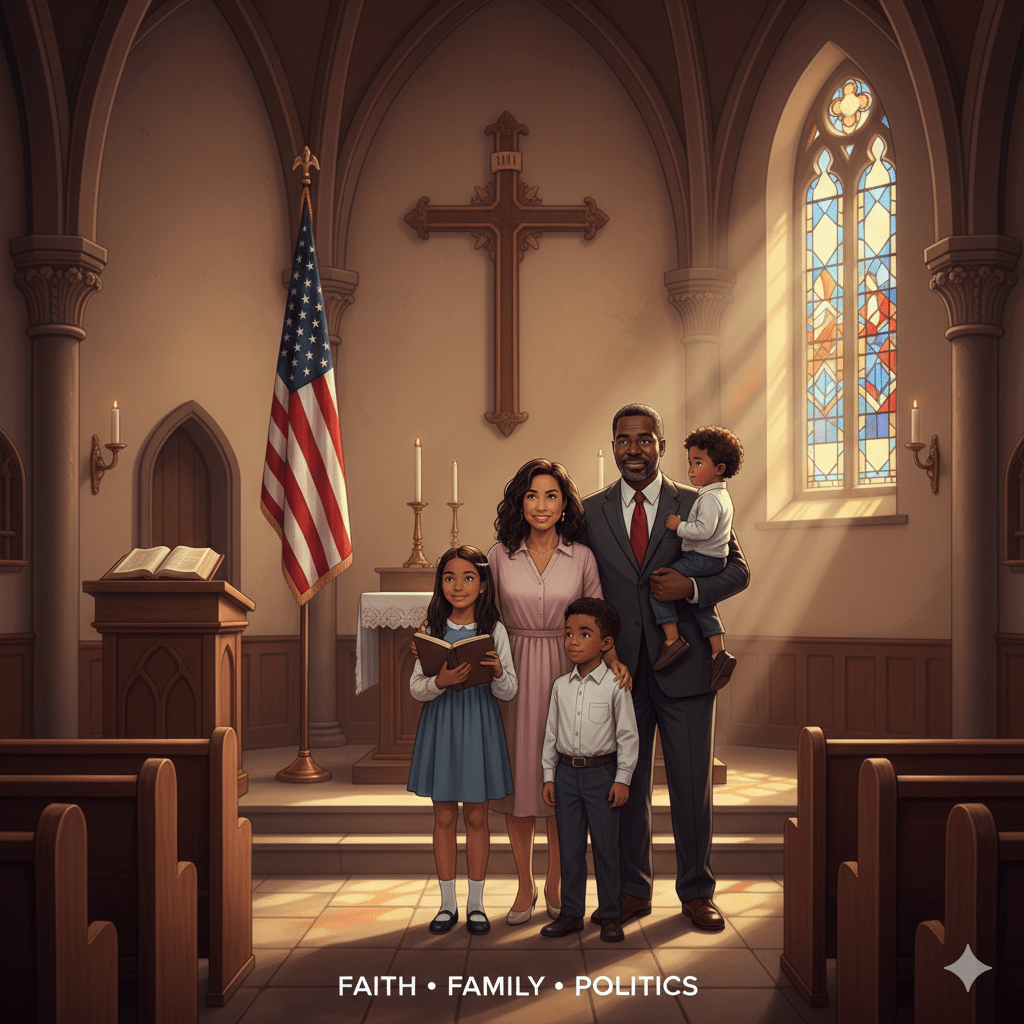
One common theme in political rhetoric is the elevation of “family values” and the implicit idea that merely having a family makes one inherently virtuous or a moral authority. I often hear after a person’s death that they were a great person because they were a family man or woman, a great father or mother. While I believe that being a family person and being a great father or mother is a great thing, I come from a strong family, but does having a family make you a good person? History offers a clear answer: no. Morality is a matter of empathy and ethical action, not marital or parental status. The historical record is filled with examples of individuals who were devoted parents, yet were also ruthless kings, exploitative industrialists, or slave owners. Conversely, many of the greatest social reformers and compassionate figures operated outside of traditional family structures. Reducing moral goodness to familial participation allows politicians to dodge accountability for the societal consequences of their policies, substituting private virtue for true public responsibility.
The Perilous Intersection of Religion and Politics
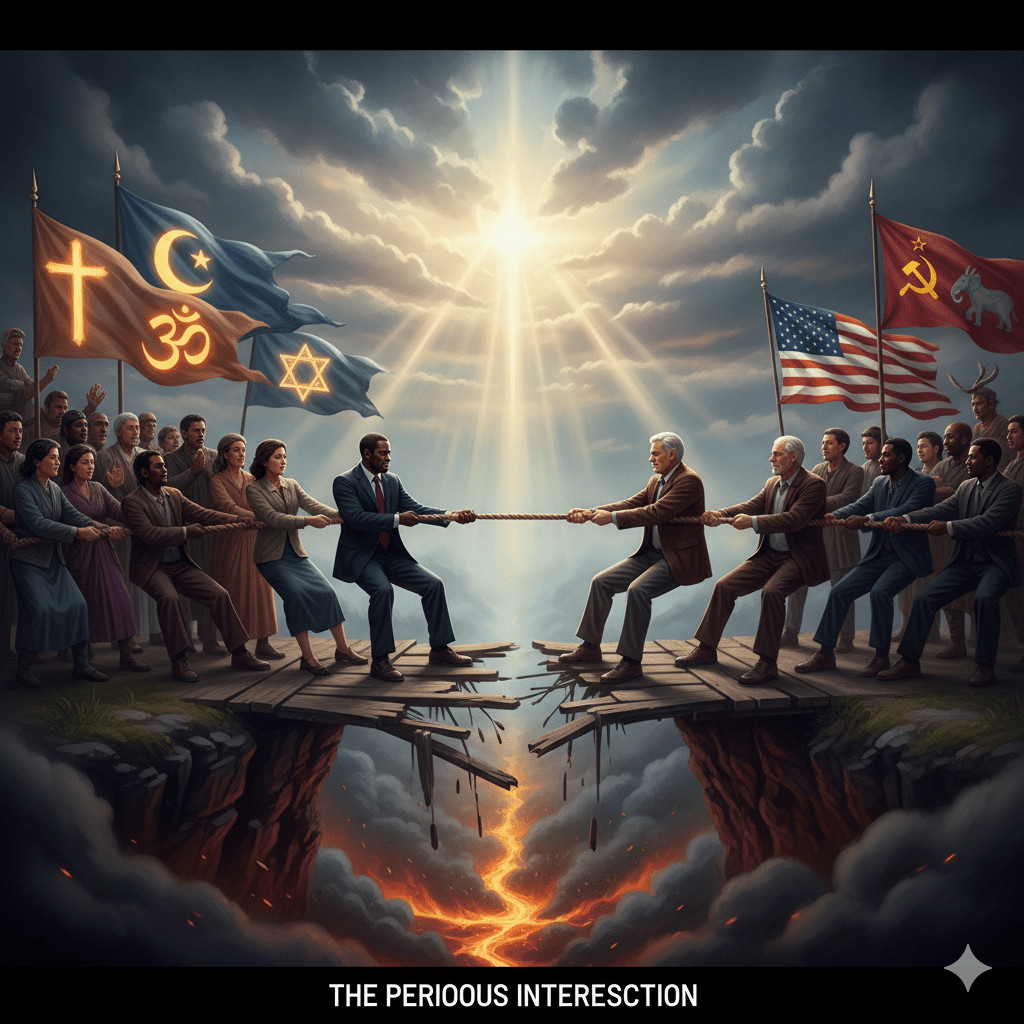
The entanglement of Religion and politics has long been fraught with peril, particularly when one party asserts exclusive ownership over religious morality. This relationship demands scrutiny when considering the history of Christianity and Slavery. For centuries, many white American theologians and ministers actively used Biblical texts—such as the Curse of Ham and Paul’s instruction to servants—to defend and perpetuate the brutal institution of slavery. These religious leaders performed a noble Christian duty by converting and enslaving Africans, who were inferior to whites in the eyes of the church. 1.2 This history demonstrates that religious devotion, even fervent Christianity, is not a guarantee of moral alignment or empathy. Scripture in these cases are used not as a guide for ethical action, but as a justification for existing social and economic hierarchies.
The Empathy Deficit in the Conservative Position

My critique against The conservative position is one of profound internal contradiction. Conservatives are dogmatic on the issue of abortion, taking a hardline pro-life stance based on moral conviction, yet their prevailing policies often fail to support the life of the individual after birth. This selective morality is seen in the consistent opposition to robust social safety nets, affordable healthcare expansion, universal nutrition programs, and comprehensive anti-poverty measures.
The conservative economic philosophy rests on the fiercely championed “pull yourself up by your bootstraps” concept. This narrative, however, fundamentally ignores the history of government-subsidized racial privilege. The reality is that many who preach self-reliance have benefited from unacknowledged systemic advantages. White Americans are the most privileged group in the nation, having gained generational wealth and systemic stability from federal programs often inaccessible to Black Americans at the time, such as the Homestead Act, the New Deal, and the GI Bill, alongside wealth accumulated through the direct institution of slavery. Even landmark legislation like the Civil Rights Act sometimes benefited segments of the white population more than it did African Americans.
Furthermore, conservatives often condemn programs like welfare as being “handouts” primarily for African Americans, perpetuating a racially charged narrative of dependency. The reality is that federal assistance programs, including Social Security, Medicare, and various state-level social services, benefit many of their white constituents more than they do African Americans in raw numbers. When policy is based on this false equivalence—that everyone starts on equal footing—it results in systemic unempathy, shifting blame for structural poverty, lack of healthcare, or economic inequality from government-sponsored systemic failures onto individual moral failings. This position often prioritizes efficiency, deregulation, and low taxes over social welfare and systemic support, leading to policies that disproportionately harm marginalized communities. This unempathetic stance becomes particularly jarring when coupled with Christian claims, as the core message of Christianity emphasizes charity, righteousness, and care for the poor and the marginalized.
White Evangelicals and Political Identity
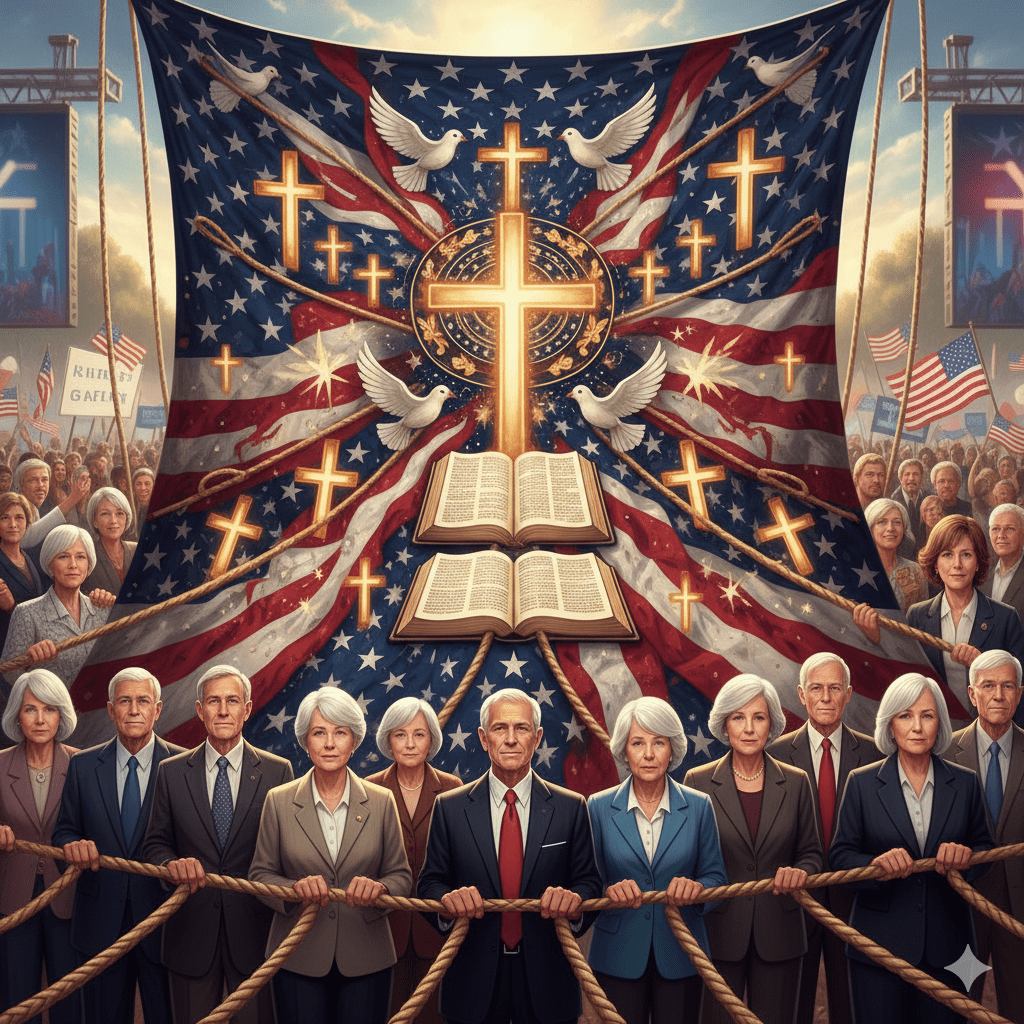
The modern Republican Party is heavily influenced by the White Evangelicals voting bloc, a group whose political identity has arguably become inseparable from its religious identity. White Evangelicals represent approximately 14% of the U.S. population but are a highly reliable Republican voting group (e.g., they voted 76% Republican in 2020). For many conservative Christians, this political choice is framed as a moral necessity because they believe the Democratic Party embraces elements that their traditional Christian views preach against, particularly its staunch support for abortion rights and LGBTQ+ inclusion. These social issues are often prioritized as non-negotiable moral conflicts that supersede all other policy considerations, including economics or racial equity.
This reliance on Selective Moral Scrutiny is a key problem: they apply intense moral judgment to issues of sexual and individual “purity,” while simultaneously offering moral silence—or even tacit approval—on issues of systemic righteousness and racial hierarchy. However, the Republican Party’s tolerance for, and sometimes embrace of, a racist element, white supremacist ideology stands in stark contrast to the universal moral claims of the Gospel. When a party that claims Christian values offers sanctuary to elements that openly preach hatred and racial hierarchy, it reveals a profound moral dissonance within that political alliance.
The Interpretation of Scripture: A Pro-Choice Reading

Many Christians vote Republican strictly on the issue of abortion. They are dogmatic in their belief that the Bible is explicitly against abortion. I am pro-choice. I believe that no one has the right to tell a woman that she is legally or biblically bound to deliver a child when she becomes pregnant. Especially in the cases where her life could be in danger. I do not think God prioritizes the fetus’ life over the woman’s. The political conflict over abortion is often framed as a conflict over scriptural authority, yet the Bible contains no explicit condemnation of the practice. Pro-choice Christians reconcile their stance by prioritizing the explicit Christian mandates of compassion and care for the born person, arguing that the scriptural interpretations used by the conservative movement often rely on poetic context rather than legal or moral absolutes:
- Exodus 21:22-25 (Legal Status): While often cited as evidence that fetal loss is treated as murder, many scholars, argue that the original Hebrew implies a lower legal status for the fetus than the mother. They contend that in the scripture, if an accidental blow causes a pregnancy loss but no further harm to the woman, the penalty is only a monetary fine paid to the husband. The severe “life for life” retribution is reserved for injury or death to the woman. This establishes a legal distinction between a fetus and a born person.
- Psalm 139:13-16 and Jeremiah 1:5 (Personhood): Passages like “You knitted me together in my mother’s womb” (Psalm 139) and “Before I formed you in the womb I knew you” (Jeremiah 1:5) are interpreted as poetic expressions of God’s omniscience (His power to know individuals before their physical existence) and Jeremiah’s unique prophetic calling, not as universal biological or legal declarations of when personhood begins for every embryo.
- The Breath of Life (Genesis 2:7): Pro-choice Christians frequently reference the creation of Adam, where he became a “living being” only after God breathed the “breath of life” into his nostrils. This supports the notion that personhood, as defined in a spiritual and legal sense, commences when the individual takes their first breath outside the womb.
For these Christians, the absence of a direct biblical prohibition means the ethical decision should be guided by the explicit command to care for the living, vulnerable woman and to value compassion over dogma.
The Psychological Dimensions of Political Choice

This brings us to the psychological defenses used to maintain party alignment, specifically the dangers of Team Mentality and Cognitive Dissonance. In contemporary politics, voting is less about policy positions and more about signaling allegiance to a team. This tribal loyalty is akin to sports fandom: a Mets supporter would never root for the Yankees, not because they disagree with a specific play, but strictly because they align with one team and oppose the other. This allegiance, often reinforced by political advertising that acts like sports marketing, 3.5 makes voters more likely to interpret contradictory information in a way that protects their in-group identity.
This reliance on Team Mentality forces many to engage in Cognitive Dissonance, the mental stress of holding conflicting beliefs (e.g., “I am a loving Christian” and “I support policies that hurt vulnerable populations”). To resolve this stress, the individual often does not change their policy stance or party affiliation, but instead changes their perception of the conflicting information, rationalizing the unempathetic policy as necessary, moral, or simply the lesser of two evils. Furthermore, some political operators adopt a Lawyer mentality, where the goal is not to find the moral truth, but to use all available arguments to defend the predetermined client—the political party—regardless of their own personal ethical convictions.
The Role of Education and Information

The rise of political tribalism is deeply connected to how voters consume information, highlighting why Education Makes a Difference. Studies show that educational attainment often correlates with political alignment, with white voters without a college degree making up a significant portion of the Republican base. Education does not necessarily lead to one political party, but it does influence how individuals process complex policy information and resist simplistic narratives. The lack of higher education can sometimes make voters more susceptible to emotional appeals and less prepared to critically analyze the sophisticated messaging used in Republican Marketing.
This marketing strategy often avoids traditional policy debates, instead focusing on cultural grievances, fear-mongering regarding rapid social change, and projecting an image of strength and moral traditionalism. This targeted communication—exploiting the psychological needs for identity and belonging—successfully recruits and retains voters even when the party’s economic platforms may not directly benefit their material self-interest.
References
1.2. Equal Justice Initiative. “Racial Segregation in the Church.” EJI. Discusses the historical justification of slavery by religious leaders arguing it was a Christian duty.
3.5. Tyson, Scott. “What every American needs to know about voter turnout.” University of Rochester, News Center (October 30, 2024). Discusses the evolution of voting behavior into a ‘team sport’ reinforced by political marketing.
Conclusion
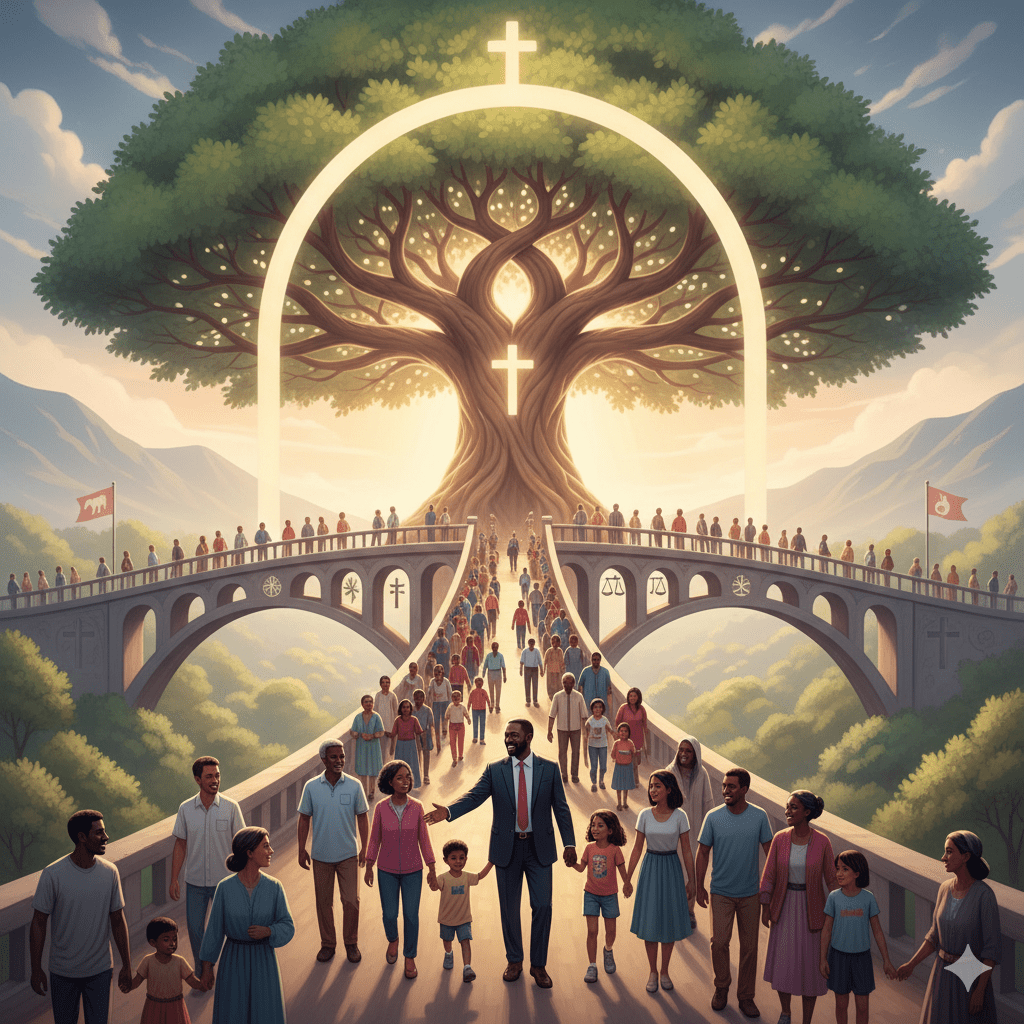
Ultimately, my identity as an African American Christian Democrat is a declaration that no political party holds a monopoly on faith or family values. My faith teaches me to prioritize the community and our neighbor, while the conservative philosophy prioritizes the individual and limited government. This difference matters deeply to me. Having studied the history of racism and economic exclusion, I cannot support a party that claims the Christian mantle yet embraces callous policies and tolerates white supremacist elements. For me, voting is a moral act. The moral imperative is clear: a Christian must seek political representation that genuinely embodies the compassion, righteousness, and empathy that Christ commanded, regardless of the party label.
