
Contents
- Intro
- The Modern Paradox: A Convergence of Economics and Politics
- The Original Sins: Misinformation as a Tool of Colonization and Slavery
- The Industrialization of Falsehood: Technology and the Evolving Threat
- The Weaponization of Ignorance: An Assault on Education and Knowledge
- A Question of Perspective: Misinformation and the Political Divide
- The Conservative Claim of “Fake News”
- The Asymmetry of Disinformation
- The Path Forward: Education and Regulation
- The Consequences of Deception: A Concluding Thought
Intro
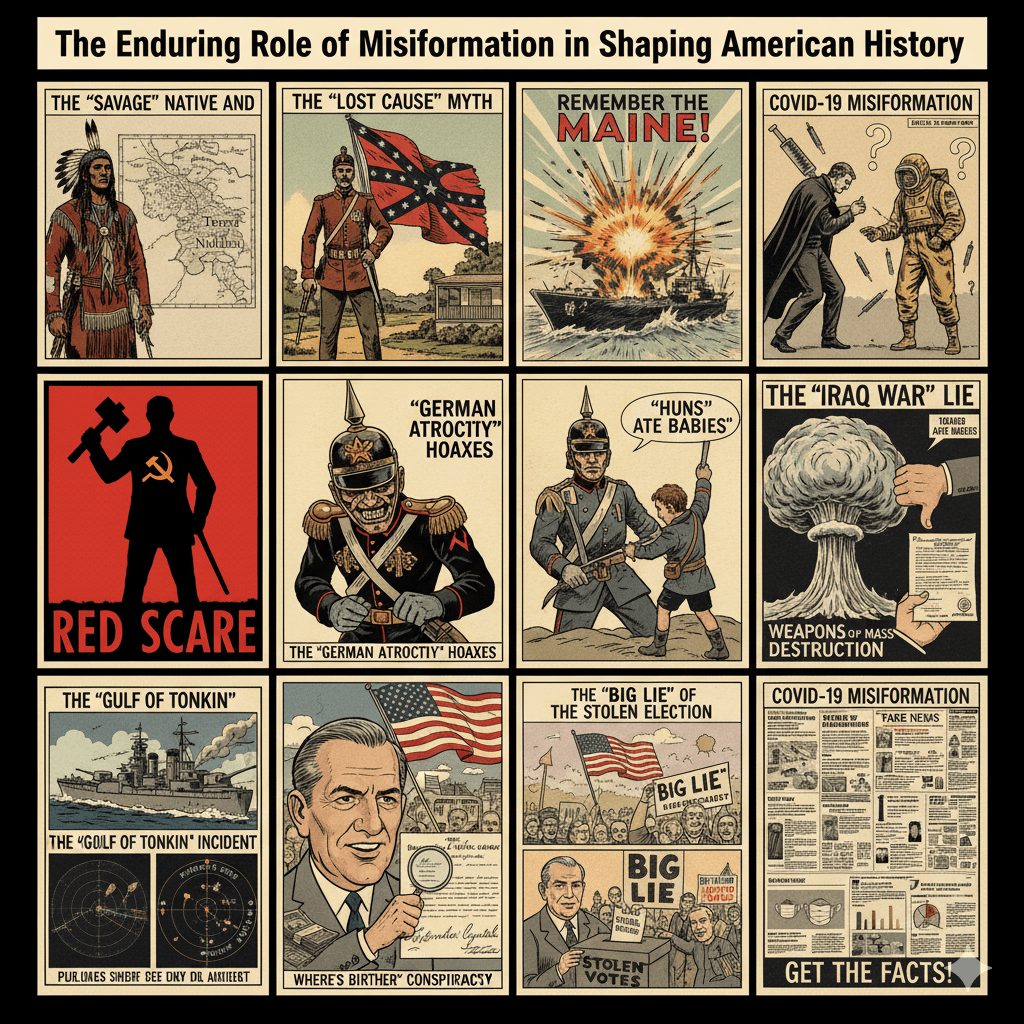
The “Savage” Native and Terra Nullius, the “Lost Cause” myth, the “Remember the Maine!” propaganda, the “German Atrocity” hoaxes, “Red Scare” exaggerations, the “Gulf of Tonkin” incident, the “Weapons of Mass Destruction” lie, the “Birther” conspiracy, the “Big Lie” of the stolen election, and COVID-19 misinformation—these are all falsehoods that were told during their time-period to gain or maintain power in the development of America. Misinformation, the unintentional spreading of false information, and disinformation, the deliberate creation of lies to deceive, are not modern phenomena. They have been woven into the fabric of American society since its colonial origins, serving as powerful tools to justify territorial expansion, maintain oppressive social hierarchies, and influence political outcomes. A deep dive into American history reveals a consistent pattern in which false narratives have been used to push specific agendas, evolving in tandem with technology to reach ever-wider audiences and cementing their role as a persistent threat to a well-informed populace.
The Modern Paradox: A Convergence of Economics and Politics

While economic gain has always been an underlying factor in the spread of misinformation—from the 19th century penny press to modern ad-driven websites—the purpose of today’s disinformation campaigns and the concurrent attack on education has evolved to serve a more complex agenda. The ultimate goal is not just financial profit but the acquisition and maintenance of political power. While the Macedonian teenagers who created fake news sites during the 2016 election were primarily motivated by ad revenue, their discovery that pro-Trump stories were “better business” revealed a deeper truth: political polarization creates a highly profitable market for disinformation. The financial incentive is now intertwined with a political one. The proliferation of outrage and fear, which are key drivers of modern misinformation, has proven to be an effective tactic for mobilizing voters, solidifying a political base, and demonizing opponents. During the 2024 presidential campaign, a baseless rumor that Haitian immigrants in Ohio were stealing and eating pets was amplified by major political figures, demonstrating how a simple, shocking falsehood can be used to stoke xenophobia and generate political support. The attack on education is a critical part of this strategy. By casting doubt on established institutions and expert knowledge, political movements can establish themselves as the sole arbiters of truth. A populace that does not trust its scientists, historians, or educators is more likely to turn to political leaders who claim to have the “real” story. This creates a condition where citizens become dependent on a specific ideological or political worldview, making them more susceptible to manipulation and less likely to engage in critical thinking.
The Original Sins: Misinformation as a Tool of Colonization and Slavery

The American colonial project was built on a foundation of deliberate falsehoods. The foundational lie of American colonization was that North America was a vacant, uncivilized land—a concept known as terra nullius. This narrative deliberately ignored the complex societies and established territories of Native American nations. It was reinforced by disinformation that painted Indigenous people as “savages” or subhuman, a racial stereotype that absolved colonizers of any moral guilt for their violent actions and gave moral cover to the policies of westward expansion and genocide. One notable historical example is the fabricated “Indian slave conspiracy” on Nantucket Island in 1738, a rumor that was spread through colonial newspapers to inflame fears and demonize the local Wampanoag people, even after it was debunked. This early use of mass media to create and amplify fear set a dangerous precedent.
Similarly, the brutal institution of slavery was sustained for centuries by a complex web of misinformation. Pro-slavery narratives claimed that enslaved people were docile, childlike, and in need of the “civilizing” hand of their white masters. This disinformation was crucial to convincing a broader public that slavery was not only economically necessary but morally defensible. Following slave uprisings like Nat Turner’s in 1831, propaganda was used to portray Black people as inherently violent and a threat to white society, creating a sense of panic that was then used to justify even harsher laws and controls. This historical pattern of using racial stereotypes and fear to maintain control is a grim precursor to modern disinformation tactics that exploit racial tensions for political gain.
The Industrialization of Falsehood: Technology and the Evolving Threat

The evolution of technology has consistently provided new and more efficient ways to disseminate misinformation. In the 19th century, the rise of the penny-press and sensationalist “yellow journalism,” exemplified by William Randolph Hearst’s and Joseph Pulitzer’s rivalry, demonstrated how financial incentives could drive the spread of false and exaggerated stories. The infamous “Great Moon Hoax” of 1835, which claimed the discovery of fantastical life on the moon, was a newspaper fabrication designed purely to increase circulation and profit.
Later, the “Remember the Maine!” propaganda of 1898 showed how this new sensationalism could be used for political gain. After the American battleship USS Maine exploded in Havana harbor, sensationalist newspapers falsely and immediately blamed Spain. This disinformation inflamed public opinion and was a key factor in pushing the U.S. into the Spanish-American War, a conflict that expanded America’s global power and influence.
The 20th century introduced radio and television, which allowed for the mass broadcast of propaganda on an unprecedented scale. During World War I, the U.S. government and media repeated and embellished stories of German soldiers committing heinous acts, such as bayoneting babies or using the bodies of their own dead to make soap. While some atrocities did occur, these “German Atrocity” hoaxes were often exaggerated or entirely fabricated to demonize the enemy and galvanize American patriotism. The Cold War, however, perfected the use of misinformation as a domestic political weapon. The “Red Scare,” spearheaded by Senator Joseph McCarthy, was a period of intense anti-communist hysteria fueled by unsubstantiated accusations and blacklists. This era demonstrated how government-sanctioned disinformation could be used to intimidate political opponents and suppress dissent, with anyone perceived as a leftist being targeted. The government’s own propaganda during the Vietnam War, which consistently misrepresented the progress of the conflict, led to a deep-seated “credibility gap” that forever changed the public’s relationship with official sources of information. A prime example is the “Gulf of Tonkin” incident in 1964, which was used by the Johnson administration to justify a massive escalation of the war, even though the alleged second attack by North Vietnamese forces was later found to be either exaggerated or entirely fabricated.
The Weaponization of Ignorance: An Assault on Education and Knowledge

Misinformation cannot thrive in an environment of critical thinking and factual literacy. For this reason, a parallel and enduring effort has been to systematically undermine and attack the very institutions designed to produce and disseminate knowledge. This assault on education has been a consistent strategy used to keep the populace susceptible to false narratives.
From the earliest days of American history, white supremacist systems understood that controlling information was essential to maintaining power. Before the Civil War, many Southern states enacted strict anti-literacy laws, making it a crime to teach enslaved people to read and write. The logic was simple: a literate population was a threat to the slave system, as it would enable communication, organization, and access to abolitionist ideas. The denial of education was a form of mass misinformation, designed to keep an entire population in a state of manufactured ignorance.
Following the Civil War and the Reconstruction era, the assault on education continued in a different form. The “Lost Cause” myth, a pervasive lie that romanticized the Confederacy and downplayed the role of slavery as the cause of the war, was systematically taught in schools across the South. Organizations like the United Daughters of the Confederacy actively lobbied for the adoption of sanitized history textbooks and the erection of monuments that glorified Confederate leaders. This was a deliberate effort to indoctrinate generations of children with a false history, creating a version of the past that justified racial segregation and the oppressive Jim Crow laws that followed. Concurrently, the federal government’s policy of Native American boarding schools was a form of cultural genocide. The stated goal was to “kill the Indian to save the man,” stripping children of their native languages, customs, and histories, thereby severing their connection to their heritage and making them more pliable to American assimilationist policies.
In the 20th century, the battle for educational content shifted to a broader stage, becoming a national political tool. During the Civil Rights Movement, public schools became a key battleground, with many white communities resisting court-mandated desegregation. Misinformation and fearmongering about the dangers of integrated schools were rampant, aimed at mobilizing white opposition to equality.
This historical pattern has resurfaced with renewed intensity in recent years. There is a coordinated, well-funded campaign to attack public education, specifically targeting discussions of race, gender, and social history. The push to ban books and censor curricula under the banner of fighting “critical race theory” (CRT) is a modern manifestation of the same tactics used to promote the Lost Cause. It’s an attempt to limit students’ exposure to uncomfortable truths about American history and to prevent them from developing the critical thinking skills necessary to dismantle systemic inequities.
The assault extends beyond K-12 schools to institutions of higher learning, government agencies, and cultural hubs. Public universities, once considered bastions of intellectual freedom, are now facing political and financial threats for their research on misinformation or for their diversity, equity, and inclusion (DEI) initiatives. Legislation and executive orders have been used to freeze funding, launch investigations, and intimidate scholars, creating a chilling effect on academic freedom. This deliberate pressure is designed to punish institutions that pursue knowledge that conflicts with a particular political ideology, effectively trying to force them to conform to a sanitized, state-sanctioned version of history.
This attack on knowledge also targets a number of federal institutions. The Department of Education, which provides critical funding and guidance to schools across the nation, has been labeled as a target for elimination by some political leaders who view its role as an overreach into local control. This sentiment, often fueled by misleading claims about curriculum and policy, seeks to weaken a federal body that has the ability to promote educational equity and national standards.
Similarly, the Smithsonian Institution, a collection of museums and research centers that serve as the nation’s repository of shared history and culture, has come under fire. Its exhibits, which aim to provide a more inclusive and complete account of the American experience, have been accused of being “anti-American” and “divisive.” These attacks are a clear attempt to control the public narrative and to prevent a full and honest reckoning with the nation’s past, particularly its struggles with slavery, racial prejudice, and westward expansion. By discrediting these trusted institutions, misinformation campaigns can more easily replace fact with politically motivated fiction.
A Question of Perspective: Misinformation and the Political Divide
A closer look at the modern landscape of misinformation reveals a complex dynamic, with both sides of the political spectrum accusing the other of spreading “fake news.” However, an analysis of the available evidence from reputable fact-checking organizations shows a distinct asymmetry in the nature and scale of the problem.
The Conservative Claim of “Fake News”
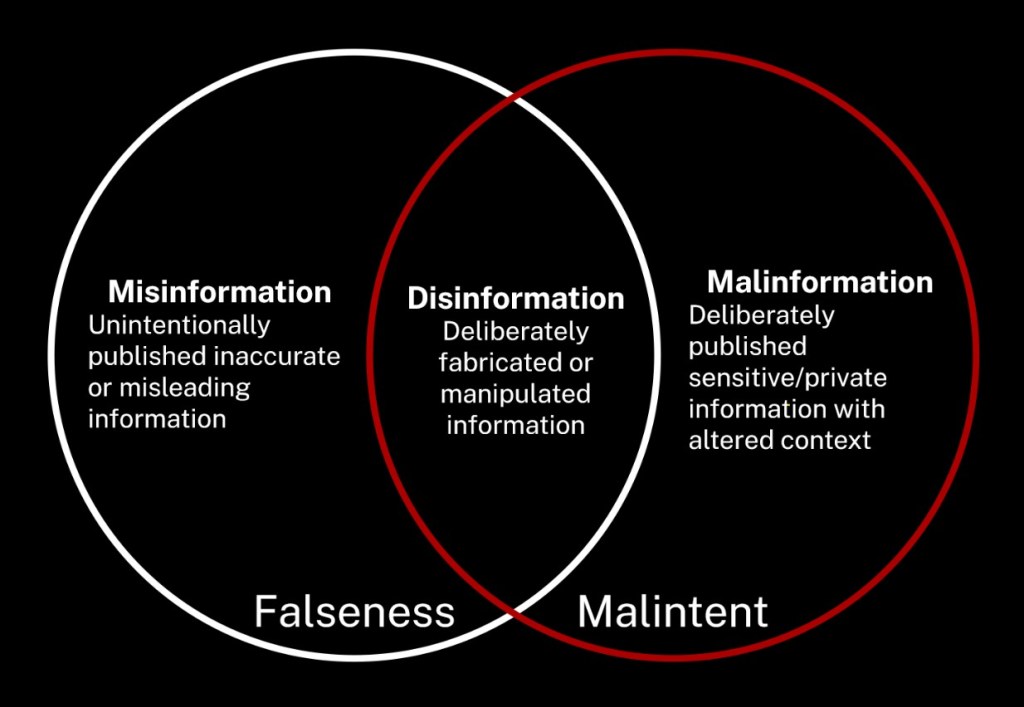
The term “fake news” was popularized by some conservative leaders and media outlets to discredit mainstream media. From this perspective, outlets like The New York Times or CNN are not sources of truth but are instead vehicles for a liberal agenda. The claim is that these outlets use a combination of framing bias (presenting a situation in a way that favors a particular conclusion) and malinformation (using true information out of context to cause harm) to mislead the public. For example, conservatives argue that liberal media outlets engage in selective reporting on political protests, focusing on one side’s unrest while downplaying or ignoring violence from the other. They argue that this bias is a form of misinformation because it prevents the public from getting a full and accurate picture of reality. While it is true that all media outlets, regardless of political leaning, can be subject to these types of biases, fact-checking organizations generally find that mainstream, left-leaning outlets have a much higher factual accuracy rating.

The Asymmetry of Disinformation
While both sides engage in media criticism and accusation, numerous studies have found that the supply of deliberate, verifiably false information is disproportionately found on the political right. Research from organizations like the Brookings Institution and academic institutions has shown that right-leaning audiences are more likely to encounter and share disinformation. There are a few key reasons for this asymmetry:
- Economic Incentives: As seen with the Macedonian teenagers, the market for outrage and highly partisan content is more lucrative on the right. Disinformation often appeals to a sense of grievance or a fear of an “out-group,” and this emotional content generates more engagement, which in turn drives ad revenue.
- Partisan Motives: In a highly polarized environment, people are more motivated to share information that denigrates their political opponents, even if they suspect it might be false. According to a Brookings study, in the search for content that confirms their partisan beliefs, conservatives are more likely to turn to “extreme news sources” that are not constrained by journalistic standards. https://www.brookings.edu/articles/how-partisan-polarization-drives-the-spread-of-fake-news/#:~:text=In%20a%20highly%20polarized%20political,our%20search%20for%20policy%20solutions. A prime example of this is the “birther” conspiracy, which falsely claimed that Barack Obama was not born in the United States. This lie, rooted in racial animus, was a concerted attempt to politically delegitimize his presidency and undermine his authority. The “Big Lie” of the stolen 2020 election, which baselessly alleged widespread voter fraud, is another falsehood used to discredit a political opponent and maintain power.
- The Rise of Alternative Media Ecosystems: Over the last two decades, a robust alternative media ecosystem has emerged on the right, including websites, news channels, podcasts, and social media influencers that operate outside the traditional media framework. These outlets, often with a clear political agenda, are less concerned with fact-checking and more focused on pushing a narrative that appeals to their base. The claim that Kamala Harris is not Black, despite her well-documented family heritage and public identification as Black, is a falsehood that was widely circulated within this ecosystem as a political attack to sow division among her base. Conversely, while left-leaning media may have a strong ideological slant, they generally still operate within a framework of journalistic norms, which includes fact-checking and corrections. The “fake news” from the left is more likely to be satire or opinion, whereas the “fake news” from the right is often presented as legitimate news.
In conclusion, while media bias is a real and pervasive issue across the political spectrum, the claim of an equivalency in the spread of misinformation is not supported by the evidence. Disinformation, defined as the deliberate creation and sharing of falsehoods, is not symmetrical. The modern political-economic model has created an environment where the propagation of verifiably false information is a highly effective, and highly profitable, tactic for consolidating power, particularly on the right, and this tactic is inextricably linked to the ongoing, systematic assault on the institutions of truth and knowledge.
The Path Forward: Education and Regulation
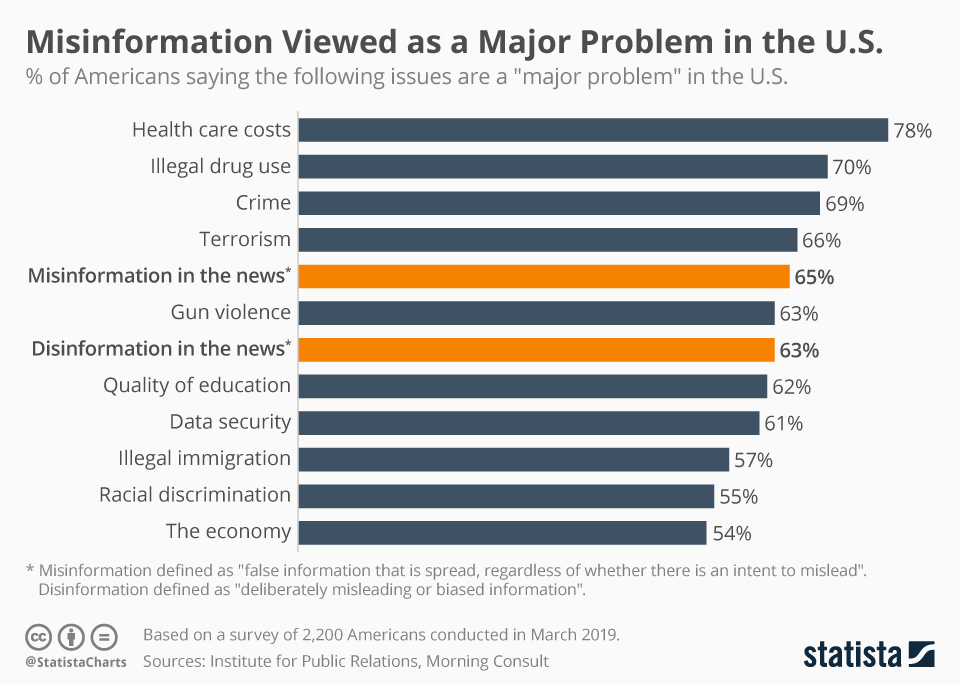
Combating misinformation requires a multifaceted approach that addresses both the supply and demand for falsehoods. One of the most critical long-term solutions is media literacy education. By teaching individuals, from a young age, how to critically evaluate sources, recognize logical fallacies, and understand the difference between news and opinion, we can build a more resilient and discerning public.
Beyond education, there is a growing need for platform regulation and societal accountability. Tech companies face increasing pressure to balance free speech with the need to prevent the spread of harmful disinformation. This includes everything from clearer labeling of false content and fact-checking partnerships to more transparent algorithmic practices and the removal of accounts that repeatedly violate misinformation policies. The challenge is immense, as a truly democratic society must protect the right to debate and dissent without allowing it to be weaponized for malicious ends. Ultimately, the battle against misinformation is a continuous effort to safeguard the very foundations of democracy: a shared and verifiable body of truth.
The Consequences of Deception: A Concluding Thought
While some of these falsehoods may have achieved their short-term political or economic objectives, their long-term consequences have been overwhelmingly negative. They have created a legacy of distrust, division, and violence that continues to undermine the democratic project itself. A society that accepts lies as a means to an end will eventually find itself consumed by the very falsehoods it created. The pattern is clear: a country built on deception cannot claim to uphold truth. The fight to define reality is a fight for the soul of the nation, and the stakes could not be higher.
Edward Odom

