

Content
- Intro
- The Guiding Blueprint: Project 2025
- This Administration’s Agenda and Its Alignment with Project 2025
- The Opposing View: A Betrayal of Core American Values
- Conclusion: A Nation Divided on its Soul
Intro
The famous sonnet on the Statue of Liberty’s pedestal, “The New Colossus,” has for generations articulated America’s enduring promise: to be a beacon of hope and a safe haven for “huddled masses yearning to breathe free.” This sentiment has long been woven into the national identity, shaping America’s image as a compassionate, democratic leader on the world stage. However, the policies of the current administration, driven by an “America First” philosophy and a detailed blueprint for government overhaul, present a profound challenge to this image. A strategic and systematic effort is underway to fundamentally reform the federal government and reorient national priorities. This raises a critical debate: Is this new approach a destructive betrayal of the very soul that has defined America’s greatness, or is it a necessary and constitutionally-sound restoration of national strength and sovereignty?
The Guiding Blueprint: Project 2025

The current administration’s agenda is so closely aligned with Project 2025 that, despite any denials, it appears to be directly guided by it. Project 2025 is a comprehensive plan to “deconstruct the administrative state.” This blueprint, a collaboration among conservative organizations and experts, rests on the belief that the federal government’s massive bureaucracy has become “a behemoth, weaponized against American citizens and conservative values.” The core objective, according to the document, is to restore a government that is accountable to the people rather than an “unaccountable” and “politically aligned” civil service. The Project 2025 plan is built upon four pillars, which collectively provide a roadmap for this transformation. The “Mandate for Leadership” is the policy volume itself, a nearly 1,000-page document that details a consensus view on how to govern and reform major federal agencies. The “personnel database” is a resource for a new administration to vet and appoint conservatives committed to the agenda, based on the axiom that “personnel is policy.” The “Presidential Administration Academy” is a training system to prepare these new leaders for service. Finally, the “Playbook” is a 100-day action plan designed for rapid and decisive implementation immediately after a presidential inauguration. The administration’s actions thus far demonstrate a deep and intentional alignment with the principles and specific recommendations laid out in this detailed plan.
This Administration’s Agenda and Its Alignment with Project 2025
Personnel is Policy
The most visible and controversial actions of the current administration have been a series of executive orders and legislative efforts directly aimed at the federal bureaucracy and its perceived cultural agenda. One of the first moves, a clear echo of the Project 2025 playbook, was the launch of the Department of Government Efficiency (DOGE) via executive order. This initiative is explicitly designed to modernize federal technology and “maximize governmental efficiency,” directly addressing Project 2025’s core complaint about bureaucratic bloat. A related executive order created a new “Schedule G” for “non-career positions of a policymaking or policy-advocating character,” which makes it easier to replace entrenched civil servants with individuals aligned with the President’s vision. This is a direct implementation of the “personnel is policy” principle, signaling a swift and methodical effort to reshape the federal workforce from within.
Society and Culture
On social and cultural issues, the administration has taken a firm stance that is unequivocally supported by Project 2025. An executive order issued on January 20th declared that it is the federal government’s policy to define “sex” as “strictly male or female” and to remove “gender identity” from federal policies and procedures. This action aligns with the Project 2025 blueprint’s call to delete terms like “sexual orientation and gender identity (‘SOGI’)” from federal rules and regulations, and to push policies based on what it refers to as “biological realities.” This order also bans transgender people from serving in the military, a specific recommendation found in the defense and health sections of the Project 2025 document. Similarly, the administration’s actions on immigration, including a renewed focus on ICE and the deployment of the National Guard to Washington D.C., are consistent with the Project 2025 plan. The playbook recommends dismantling the asylum system, and using military assets for domestic law enforcement to secure the border and address crime. Supporters see the D.C. deployment as a necessary federal response to what they view as a failure of local law enforcement.
Education
The administration’s policies on education further illustrate this alignment. The Project 2025 blueprint argues that the Department of Education is a “behemoth” and an example of federal overreach into a state and local realm. The plan calls for its ultimate elimination and a focus on parental rights. The administration has acted on this by issuing executive orders to address “radical indoctrination” in K-12 schooling and to “Save College Sports,” a move seen as protecting women’s athletics based on biological sex. The “One Big Beautiful Bill Act,” also includes a provision to tax the endowments of elite private universities. This action, while not explicitly mentioned in the Project 2025 summary, aligns with the project’s broader critique of an educational establishment perceived as hostile to conservative values. I see this attack on education as just another way that this administration is trying to suppress information. So far they have:
- As already stated, targeted and sought to close the Department of Education: This department includes the National Center for Education Statistics, which produces widely used data on student achievement and other education-related statistics.
- Removed datasets and research reports from the public domain: These removals include data on crime, sexual orientation, gender, education, climate, and global development, citing reasons like eliminating “DEI” from the federal government or that the data doesn’t align with administration priorities.
- Disbanded or removed expert advisory panels: These panels provided feedback and guidance to statistical agencies, including the Census Bureau and Bureau of Labor Statistics.
- Fired and replaced the U.S. chief statistician: This role is historically considered apolitical and responsible for setting standards for federal statistical agencies.
- Cut staff and funding for data-providing agencies: The Bureau of Labor Statistics, for instance, has reduced data collection due to staffing issues.
Energy and the Environment
In the crucial area of energy and the environment, the administration’s policies are a stark departure from Biden’s administration’s. Project 2025 advocates for an “all of the above” energy policy that promotes fossil fuels and nuclear power while dismantling regulations seen as hindering economic growth. This vision has been translated into action through executive orders aimed at “rapidly eliminating” green energy subsidies and “reinvigorating the nuclear industrial base” to streamline the production and operation of nuclear energy. The consolidation of federal wildfire programs, as mandated by a recent executive order, also mirrors a specific recommendation in the Project 2025 document for greater efficiency in natural resource management. These policies are defended as necessary to restore “American energy dominance” and ensure national security. I think, however his policies is to protect the pockets of his billionaire constituents. Trump’s policies favor the expansion of domestic oil, gas, and coal production by rolling back regulations and streamlining permitting processes for new projects like LNG (liquify natural gas) export facilities. This approach aims to reduce production costs and potentially increase profits for fossil fuel companies and investors.
The Economy
The economic agenda of the administration, as manifested in the “One Big Beautiful Bill Act,” also reflects Project 2025’s core principles. The bill’s permanent tax cuts, increased child tax credits, and proposed cuts to social spending are in line with the project’s goal of fiscal responsibility and a more limited government. The administration’s approach to trade, including new tariffs and a focus on reciprocity, is a direct implementation of the “fair trade” principles espoused in the Project 2025 trade section. These policies, according to the playbook, are intended to protect American industries and workers from unfair competition, particularly from China, which the project identifies as a primary geopolitical and economic threat. The administration’s focus on national security is therefore deeply intertwined with its economic policy.
To a great extent, the administration’s actions so far have been a mirror reflection of the Project 2025 blueprint. Proponents would argue this is a positive development—a disciplined and principled effort to restore the republic to its original moorings. They would contend that a strong America, with secure borders and a vibrant economy, is the only kind of nation capable of being a true beacon of liberty. In their view, the so-called “compassionate” policies of previous administrations led to a bloated, unaccountable government and a weakened national identity. In their viewpoint, the actions of the current administration, therefore, are not a betrayal of the American soul, but a powerful act of self-preservation to ensure the nation can continue to flourish.
The Opposing View: A Betrayal of Core American Values
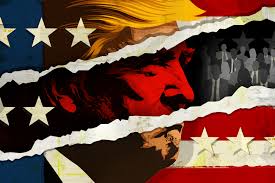
Opponents argue that this methodical implementation of the Project 2025 blueprint is a dangerous departure from democratic norms and a betrayal of the nation’s historical identity. They contend that the policies are not a restoration of constitutional order but an attack on it, with the true goal being to consolidate power and institutionalize a form of ideological discrimination. This perspective views the administration’s actions as an attempt to dismantle the very checks and balances that protect a diverse citizenry from an authoritarian state. I agree.
My most profound concern is what I feel is the reintroduction of institutional discrimination, a practice the Civil Rights Movement fought for decades to eliminate. Project 2025’s policy recommendations and the administration’s subsequent executive orders are seen as a systematic effort to roll back these hard-won protections. The blueprint explicitly calls for deleting terms like “sexual orientation and gender identity (‘SOGI’)” and “diversity, equity, and inclusion (‘DEI’)” from federal rules and regulations. This isn’t viewed as a mere bureaucratic change, but as a deliberate attempt to remove legal protections and legitimize discrimination against LGBTQ+ individuals and people of color. The executive order defining sex as “strictly male or female” and banning transgender people from the military is a direct enactment of this philosophy, which critics argue is a move to erase the identities of a vulnerable minority group. Similarly, the project’s call to repeal diversity initiatives and its push for policies based on “biological realities” in healthcare and education are seen as efforts to sanction discrimination that the Civil Rights Act of 1964 and other landmark legislation were created to prevent. A nation that legislates against equality is a nation that has abandoned a core tenet of its founding principles.
For many Americans, the “beacon on a hill” was not a reality until well into the 20th century. While the Constitution was a revolutionary document in its promise of liberty and equality, its ideals were largely unrealized for African Americans, women, and other marginalized groups for much of the nation’s history. It was through the long, arduous struggle of the Civil Rights Movement that America began to fulfill its constitutional promises by legally and socially including all its citizens. From this perspective, America only truly started to become “beautiful” and live up to its aspirational image after the passage of the Civil Rights Act and the Voting Rights Act. Opponents of the current administration’s “Make America Great Again” philosophy, therefore, fear that this slogan is a call to return to a period before these monumental advancements—a time when institutionalized discrimination was legal and social inequality was the norm. They see the current policies as a dangerous regression that seeks to undo the progress made in making America a more perfect union for all.
Furthermore, critics contend that the administration’s policies on immigration are a complete rejection of the compassion and openness symbolized by the Statue of Liberty. Project 2025 explicitly recommends dismantling the asylum system, increasing mass deportations, and using military assets for domestic law enforcement at the border. Opponents would point to this administration’s use of ICE to conduct raids and the recent deployment of the National Guard to Washington, D.C., as tangible evidence of a militarized approach to immigration and policing. They argue that this is not a system of welcoming “huddled masses yearning to breathe free,” but a system of exclusion and intimidation. The justification of these actions as a necessary response to a “crime problem” or a porous border is seen as a pretext for a fundamentally anti-immigrant agenda that damages the nation’s reputation as a safe haven. Mayor Muriel Bowser’s characterization of the D.C. National Guard deployment as an “authoritarian push” captures this fear, suggesting that the administration is willing to use federal power to override local governance and civil liberties.
The politicization of federal institutions is another major point of contention. Opponents argue that Project 2025’s plan to replace up to 50,000 civil servants is an effort to purge the government of those who do not align with a specific ideological viewpoint. The social policies are seen as a violation of civil liberties and a move toward an illiberal, Christian nationalist state. They would argue that the administration’s willingness to use federal force in local jurisdictions and to politicize government agencies erodes the principles of federalism and equal protection under the law.
They cite the administration’s actions against the Department of Justice and the FBI as examples of a “two-tiered system of justice.” Critics have pointed to allegations of the FBI’s involvement in politically motivated investigations and its alleged role in censoring information as evidence that the agency has been weaponized. This, they argue, is a direct assault on the constitutional principle of equal protection under the law and the impartiality of the justice system. In this view, a government that uses its law enforcement and intelligence agencies to target political opponents is a government that has lost its way.
The administration’s policies on education and environment are also viewed through a critical lens. Project 2025 and the administration’s actions to dismantle the Department of Education are framed by opponents as an attempt to impose a uniform cultural and social agenda on schools, rather than promoting genuine educational freedom. The tax on university endowments, is seen as a punitive measure against institutions that are perceived as being ideologically opposed to the administration. This, critics say, is a dangerous form of political retribution that undermines the independence of educational institutions. On the environment, the administration’s push to dismantle regulations and promote fossil fuels is seen as a direct repudiation of scientific consensus. Opponents contend that these policies are not about restoring economic strength but about favoring specific industries and interests at the expense of long-term environmental sustainability and public health.
Conclusion: A Nation Divided on its Soul
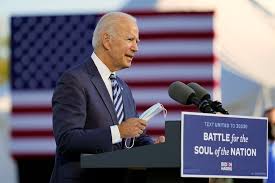
In conclusion, the administration’s policies, guided by the Project 2025 blueprint, represent a fundamental challenge to America’s traditional identity. While supporters see this as a courageous effort to restore constitutional order and national greatness, opponents view it as a betrayal of core American values. The central conflict lies in two competing visions: one that seeks to build a strong, sovereign nation by deconstructing what it views as a corrupt and bloated bureaucracy, and another that sees this process as a dangerous and methodical dismantling of the very civil rights, freedoms, and democratic institutions that have defined America as a “beacon on a hill” for over two centuries. The debate is not merely about policy, but a profound struggle over the soul of the nation—whether it will be a country that is strong for all, or a country that is strong for a few.
Edward Odom

