
Topics
- Intro
- The Elephant in the Room: Character vs. Country
- The Price of Progress: Economic Anxiety and Competing Narratives of Blame
- The Tale of Two Economies: Trump vs. Biden-Harris
- Competing Narratives on Inflation: Who’s to Blame?
- The Real Fight: Defending a “Traditional American Identity”
- A Moral Order in Danger: The Evangelical Vote
- Fear of a New America: Demographics and Cultural Change
- Who Voted and Why: A Blend of Race and Money
- The Influence of the MAGA Movement
- What’s Happening Now: Promises vs. Reality, Revisited
- Conclusion
Intro
When my friends or family talk about the 2024 presidential election, we look at Trump’s personal and political history and shake our heads in disbelief that this man has been elected as president twice; the last by the popular vote. Then, in order to bring this upside down world into some semblance of sanity we inevitably conclude that America wasn’t ready for a woman to be president and really wasn’t ready for a black woman to be president. I can admit however that this train of thought is based on a lot of feelings and grounded in a whole lot of bad experiences in our African American history. When I get out of my feelings though, I knew it was deeper than that.
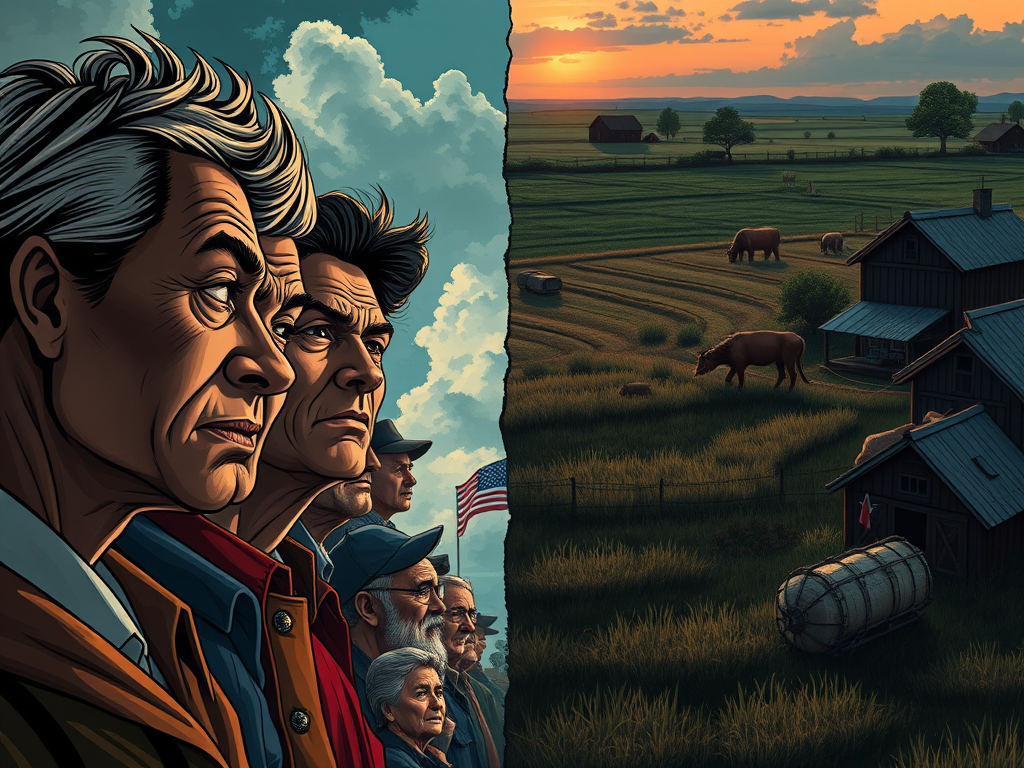
The 2024 presidential election was a battle not just between candidates but between two competing realities. The vote for Donald Trump wasn’t a simple political decision; it was a deeply emotional and often a defiant act by a coalition of voters, many of whom felt their world was being taken away. This paper will argue that the vote was driven by a powerful mix of economic despair, a fierce defense of a specific, traditional American identity, and a profound frustration with a political system they felt had failed them. We will also look at how the current days of his second term are playing out, and what these results mean for the voters who put him in office.
The Elephant in the Room: Character vs. Country
While voters have a history of overlooking a candidate’s moral failings—as seen in the infamous 1884 election between Grover Cleveland and James G. Blaine, where personal scandals were a central theme—the moral issues surrounding Donald Trump were of a different nature and scale. Critics pointed to his rhetoric, which was often described as divisive and inflammatory, his challenges to democratic institutions, and numerous legal indictments related to his business practices and actions in office. These were not just personal character flaws but were seen by many as a threat to the stability of the American political system itself. The intense scrutiny and polarized reactions to these issues made the 2024 election a unique case study in how voters weigh a candidate’s perceived moral fitness against their political and economic promises.
The Shift from Character-Based to Policy-Based Voting
A key factor in understanding the election outcome is the shift in how some voters prioritize their political decisions. Traditionally, a candidate’s personal character, honesty, and integrity were paramount. However, for a significant portion of the electorate, the 2024 election was dominated by a more pragmatic, policy-based approach.
This shift can be explained by two key concepts:
- The “Moral Project” Framework: For some voters, especially in the religious right, the election was not about selecting a moral exemplar but about advancing a larger “moral project.” For them, issues like abortion, religious freedom, and the appointment of conservative judges were the ultimate moral imperatives. They saw Donald Trump as a pragmatic leader—a “fighter”—who, despite his personal flaws, was the most effective vehicle for achieving these goals. In this view, a candidate’s private life or public rhetoric, while perhaps distasteful, was a secondary consideration to the political outcomes he could deliver.
- Economic Pragmatism: A vast number of voters were driven by immediate, tangible concerns that directly impacted their daily lives. For these individuals, a candidate’s ability to lower inflation, reduce the cost of living, and create jobs was far more important than their personal conduct. They were willing to overlook moral deficiencies if they believed the candidate was better equipped to improve their economic situation.
The Price of Progress: Economic Anxiety and Competing Narratives of Blame

Let’s talk about money. At the heart of the Trump vote was a feeling of economic betrayal. For a huge part of the country, the economy felt like it was working for everyone but them. The high prices of gas, groceries, and housing were daily, painful reminders that even if the unemployment rate was low, their personal buying power was shrinking.
This economic despair had a clear villain, but the blame game was a story with two completely different scripts.
The Tale of Two Economies: Trump vs. Biden-Harris
To understand the economic mood of the country, we have to look at the records of the two administrations. When Donald Trump was president from 2017 to 2020, his first three years were marked by a continuation of the economic expansion that began under his predecessor, Barack Obama. The unemployment rate hit a 50-year low, and GDP growth was steady. His supporters often point to this period as proof of his economic prowess, arguing that his tax cuts and deregulation policies were responsible for a booming stock market and a strong job market. His opponents, however saw his tax cuts as disproportionately benefiting corporations and the wealthy more than the middle and working class; exacerbating wealth inequality. Perception is reality though and his supporters take is that Trump took a good economy and made it great. Their vote reflected that.
The final year of his term however, was dominated by the economic shock of the COVID-19 pandemic, which led to a historic surge in unemployment and a deep, albeit short, recession. This set the stage for the next administration.
When the Biden-Harris administration took over, they inherited an economy in the midst of a pandemic recovery. Because of Biden’s policies, many key economic indicators were quite strong. Job growth was historically robust, with millions of jobs created. Unemployment reached near-record lows. GDP growth was solid, outperforming other major economies around the world. Biden’s administration’s policies, such as the Inflation Reduction Act and the CHIPS Act, were credited with stimulating manufacturing and clean energy investments.
However, for a vast number of voters, these numbers didn’t match their lived experience. This is where the core debate of economic success and failure lies. For supporters of the Biden-Harris administration, the strength of the economy was undeniable proof of their policies’ effectiveness. They would point to the job creation numbers, the low unemployment rate, and the fact that the nation had successfully navigated a post-pandemic recovery without falling into a deep recession.
For a vast number of voters, however, the economic pain was real. The disconnect between a “strong economy” and their personal financial struggles was the most important issue of the election.
Competing Narratives on Inflation: Who’s to Blame?

This disconnect led to two competing narratives about the cause of inflation, the most pressing economic concern for voters.
- The Trump Supporter’s Narrative: In this story, the government’s handling of the COVID-19 pandemic was the root of the problem. However, it wasn’t Trump’s government that they blamed. Instead, his supporters saw Trump’s CARES Act, which pumped trillions of dollars into the economy of which his detractors say is the cause of the inflation, as a necessary, one-time measure to save the country from a total economic collapse. They separate this emergency spending from the later, the more sustained spending of the subsequent administration. In this view, it was the later policies that truly overheated the economy and caused the massive, lasting inflation. The economic pain wasn’t an accident; it was a consequence of a system they felt was out of control.
- The Opponent’s Narrative: On the other side, Trump’s opponents had a different story. They argue that the economic chaos and the prolonged suffering of the pandemic were a direct result of Trump’s own initial mismanagement. They point to his downplaying of the virus’s severity, the slow response to supply shortages, and the inconsistent messaging as factors that prolonged the pandemic, and in turn, worsened the economic fallout. In this view, a more serious and coordinated response from the start could have mitigated a lot of the economic and human cost.
These two competing narratives show that voters weren’t just looking at economic facts; they were looking for a story that made sense of their pain, and they found a story that either excused their chosen leader or condemned his opponent.
The Real Fight: Defending a “Traditional American Identity”
This election was also a battle over the very soul of the country. The vote for Trump was, for many, a fierce defense of a specific, traditional American identity they believe is under existential threat. This identity is a nostalgic vision of America, rooted in the mid-20th century, and it is built on several key pillars:
- Cultural Homogeneity and Social Order: This vision is of a nation where a specific cultural and racial group is at the top of the social hierarchy, and traditional family structures are the norm. It is a direct response to the rise of what they see as “woke” culture, LGBTQ+ rights, and progressive social movements that challenge these established norms. For those on the other side, this viewpoint is an exclusionary one that is a direct threat to the diversity and inclusion that they believe makes the nation stronger. For them, there isn’t just one type of “family value” or Christian value.
- A Certain Cultural Heritage: The heritage they feel should be front and center is that of Western civilization, specifically its roots in Judeo-Christian values. For them, this heritage is the bedrock of American exceptionalism, the source of its strength and its place in the world. They feel that this heritage is being actively replaced or diminished in schools, media, and public life by a push for multiculturalism and what they see as revisionist history. This feeling is deeply rooted in a white-first agenda, where the interests and history of a specific racial group are seen as paramount.
- The “Old Order” of the Working Class: For poor white voters, the “old order” Trump promised to bring back was a time when a man with a high school education could get a stable, well-paying factory job that supported his family. It was a time when their communities felt strong, their cultural dominance was unquestioned, and they were the centerpiece of the American Dream. They feel this order was dismantled by global trade deals and political elites who didn’t care about them.
The Influence of the MAGA Movement
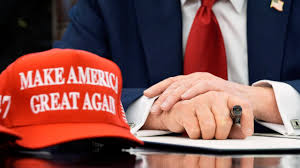
The MAGA (Make America Great Again) movement was not just a campaign slogan; it was a powerful populist and anti-establishment identity that fundamentally influenced the election.9 For supporters, the movement served as a rallying cry against what they perceived as a corrupt and out-of-touch political elite. Trump’s image as a disruptor and a “fighter” was a central tenet of the movement, and this persona appealed to voters who felt a deep sense of grievance and a desire for radical change.
Conversely, for those who voted against him, the MAGA movement was seen as a dangerous, authoritarian force that threatened democratic norms and social progress. The movement’s rhetoric on race, immigration, and its challenges to institutions created a strong counter-movement that mobilized voters concerned about the future of the nation’s democratic foundations.
A Moral Order in Danger: The Evangelical Vote

For white evangelicals, the vote for Trump was a direct, pragmatic act to protect a moral order they felt was on the brink of collapse. This moral order is a framework based on a strict interpretation of biblical law. In this view, the family unit is under attack, and religious freedom is being eroded by secular forces. They see the expansion of abortion rights, gay marriage, and the influence of a non-Christian worldview in schools as a direct threat to their faith and their way of life. They were willing to overlook Trump’s personal moral failings because they saw him as a powerful, flawed, but ultimately effective tool to appoint conservative judges and fight for the political goals that would protect their moral order.
Fear of a New America: Demographics and Cultural Change
The anxieties driving the vote were also deeply connected to a massive demographic and cultural change happening in the United States. They are worried about a future where the white majority is shrinking, and the nation is becoming more multicultural, urban, and secular. This change, for them, is not just a statistical fact; it is a sign of a new America that they don’t recognize and feel alienated from. The rhetoric around immigration and “replacement theory” tapped into this deep-seated fear, framing it as an intentional effort to erase their identity.
Who Voted and Why: A Blend of Race and Money
Looking at who voted how shows just how tied together these worries were:
- Poor White Voters: This group was a huge part of Trump’s base. Their economic anxiety was often intertwined with a sense of racial grievance. They felt left behind by globalization and saw Trump as a champion for the working class who would restore a perceived old order. They were willing to overlook his moral failures because they believed he was the only one who would fight for their economic interests and cultural identity.
- Black Voters: The Black vote in 2024 was a powerful statement that reflected a long, difficult history. This community voted overwhelmingly against Donald Trump, and their reasons were deeply personal and historical. The political alignment of Black voters with the Democratic Party isn’t a new trend; it’s a legacy of the Civil Rights Movement. Starting with Franklin D. Roosevelt’s New Deal and solidified by Lyndon B. Johnson’s Civil Rights Act in the 1960s, Black voters have largely seen the Democratic Party as the most reliable ally in the fight against systemic racism and for social justice. For the Black community, the vote is often a moral act, a way to protect the hard-won gains of past generations. Trump’s rhetoric and his policies were seen as a direct threat to that progress. His comments on racial justice protests, his approach to civil rights, and his rhetoric on immigration were all seen as undermining the very values that the Civil Rights Movement fought for. For Black voters, casting a ballot for Kamala Harris wasn’t just a political choice; it was a vote to protect the community, to honor history, and to push for a more just and equal future. It was a rejection of a vision of America that they felt was built on exclusion.
- White Evangelicals: This group provided a clear example of the “moral project” framework in action. Despite Trump’s personal conduct, which many would traditionally condemn, a significant majority of white evangelicals supported him. Their primary motivation was his commitment to appointing conservative judges and his stance on issues like abortion and religious freedom. For them, the vote was a pragmatic choice to secure their moral and political goals, viewing Trump as a strategic ally rather than a moral leader.
- Educated vs. Non-Educated Voters: This divide highlighted the contrast between character- and policy-based voting. Voters with a college degree were more likely to prioritize concerns about a candidate’s temperament, respect for democratic institutions, and moral character. They overwhelmingly voted for Kamala Harris. In contrast, voters without a college degree were more focused on tangible issues like the economy and immigration. They were more likely to be swayed by a candidate’s promises of economic disruption and a new approach to national policy, and were more willing to overlook his moral failings.
What’s Happening Now: Promises vs. Reality, Revisited
The early months of Trump’s current term have been a test of whether his disruptive approach can deliver on the promises that won him the election.
- The Economy and Tariffs: He has followed through on his promise of sweeping tariffs. While his supporters see this as a victory for American manufacturing, early data suggests a more complex reality. Economists report that these tariffs are acting as a tax on American consumers, potentially contributing to the very inflation his voters were so angry about. For people who voted for him to fix their money problems, this could be a difficult reality to swallow.
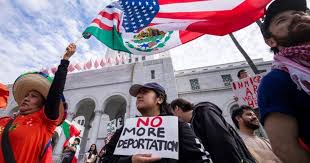
- Immigration and the Border: On immigration, he has been tough, resuming border wall construction and pursuing large-scale deportations. For his base, this is a clear win and a sign that he is serious about protecting the “old order.” However, a majority of the general public now views his policies as “too harsh,” showing a deep divide between his supporters and the rest of the country on this issue.
- Foreign Policy: His “America First” foreign policy has led to friction with traditional allies, with critics arguing it is weakening the U.S.’s standing on the world stage. His supporters, however, see this as a necessary step to put domestic interests first, fulfilling another key promise of his campaign.
Conclusion
In conclusion, the 2024 election was a result of a powerful synergy between economic fears and racial anxieties. The vote was a choice between two competing visions of America; one where the moral issues, economic concerns, and questions of identity all served as central elements of the debate. As Trump’s second term unfolds, the initial outcomes of his policies will be the ultimate test of whether his disruptive approach can deliver on the promises that so many voters felt were essential to their future.
Edward Odom

