
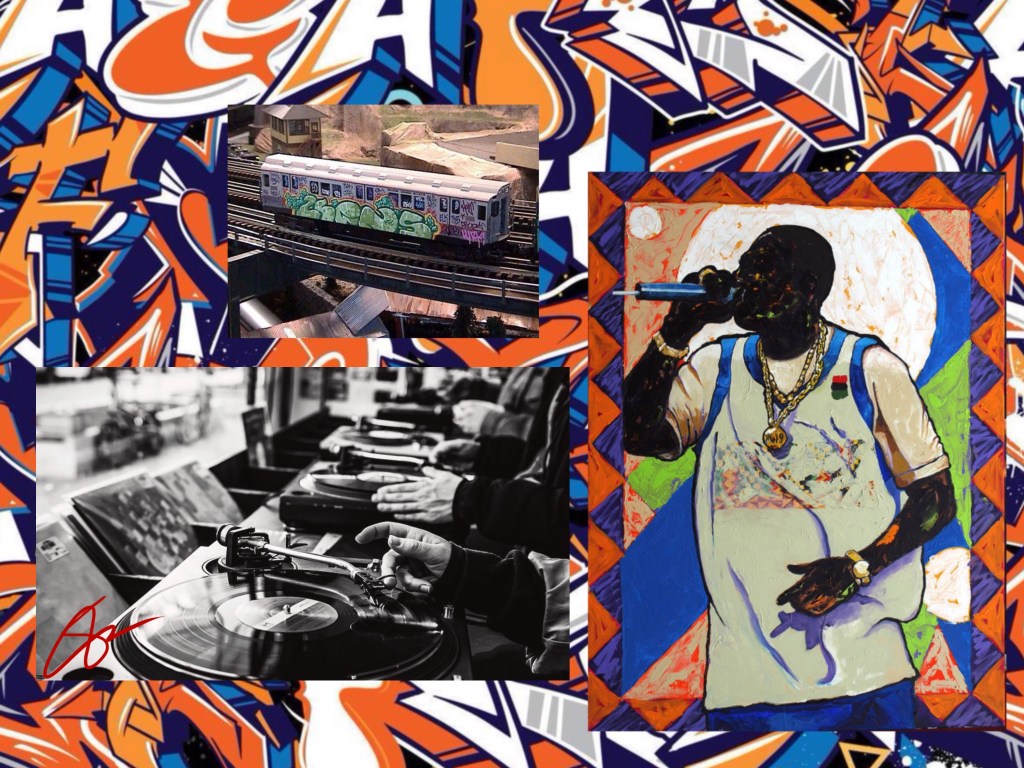
Artwork by Stephen Odom
The hip hop debate has historical parallels in the entertainment industry
My son and I have had some spirited discussions over hip hop and its effect on culture. We are not the only ones. There are podcasts and articles all dedicated to this debate. When I think of the hip hop debate and the different factions in hip hop and why they exist, I think of the African-American movie stars of the 1920s. Note these names, Hattie McDaniel, Lincoln “Stepin Fetchit” Perry, Amos ‘n’ Andy. These were all African-American entertainers from the 1920s and 30s who were trailblazers in the industry for the African-American community. In a 2006 NPR article, writer Roy Hurst described Lincoln Perry’s character Stepin Fetchit as “a befuddled, mumbling, shiftless fool.” The tagline for his character was “the laziest man in the world.” Perry created that character when he was vying for a role in a 1927 film called Old Kentucky. Perry was nothing like the character.
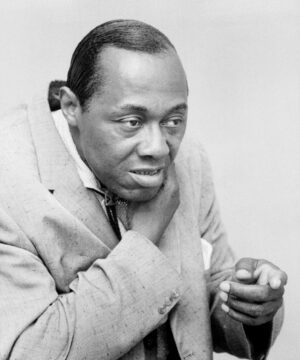
Lincoln Perry (Stepin Fetchit 1959)
Lincoln Perry was described as a very intelligent man, but many African-Americans at that time felt he was cashing in on portraying the negative stereotype of the African-American community. He became a millionaire from the portrayal of that character, but in the 1930s, at the peak of his success, African-American leaders were putting pressure on Hollywood to rid the screen of the stereotype Perry was responsible for creating. They believed the Stepin Fetchit character was keeping white America from viewing African-Americans as capable of joining the mainstream.
Modern Reflections: Gangsta, Drill, and Trap Hip Hop
I think (the following links lead to explicit material) Gangsta, Drill, and Trap are the current versions of artists perpetuating stereotypes for money. With the incentive of making millions of dollars, African-American people have been portrayed as the worst stereotypes of themselves.
Hip hop is a genre of music that originated in New York City in the 1970s as a cultural exchange among African-American, Latino, and Caribbean youth and has grown into one of the most consumed genres of music in the United States. It has also grown into a culture that has influenced the youth around the globe. It has influenced how they dress and how they speak. Some styles of it have also unfortunately helped to perpetuate an image of young African-Americans that has been projected since the 1970s — that of crime, drugs, promiscuousness, and self-denigration using the n and b words.
Diverse Styles and Perspectives in Hip Hop
I’m not saying that all hip hop promotes these images. There is conscious rap, sometimes called message rap, where there is heavy political and societal messaging focused on educating and uplifting, but then there is gangsta rap where heavy beats and bass lines are layered over with sexually suggestive and violent lyrics; drill rap based on the concept of fighting and retaliating with gun violence, and trap rap centered around drug dealing. There are those, and I am among them, that believe there should be no place for these genres of hip hop, and there are those that feel the youth that create these forms should have the freedom to express their own reality and truth. I think to understand the different points of view, the divide if you will, is to understand the history of hip hop. I’ll tell it from my perspective so that you will have a better understanding of my point of view.
My Personal Journey with Music
I have been a musician most of my life. I absolutely love music. Listening to music is one of my favorite things to do. I love all kinds of music. Gospel and jazz are probably my favorites, but R&B and hip hop are right up there, and depending on the songs, I can get into pop and country. To put this discussion in the proper context, you need to know I am a 62-year-old man.
My first real exposure to music was as a child, dancing in my grandparents’ living room in South Carolina with my cousin Jackie to my Uncle Clyde’s vinyl that he left behind when he went to college. We listened and danced to Marvin Gaye, The O’Jays, The Isley Brothers, Teddy Pendergrass, and so on. While in middle school in South Carolina, I played trumpet in the high school marching band — we played songs like BT Express, and Rock the Boat. In 1976, I moved to Astoria, Queens, New York, started high school, and was turned on to Earth, Wind, and Fire, and Stevie Wonder. From that point in time, my musical world was changed.
My Introduction to Hip Hop
I am taking the time to take you through my musical journey, because I think it is important for you to understand my point of view when it comes to hip hop. I didn’t grow up listening to it. I started college in 1980, and I was probably more inclined to take a date to a jazz club than a dance club.
I was introduced to hip hop around 1985 through movies. Breakin’ was my first, then Krush Groove, Beat Street, and Electric Boogaloo. Because of those movies, I began my hip hop journey listening to the now classics —Children’s Story by Slick Rick, The Breaks by Kurtis Blow, The Message by Grandmaster Flash, South Bronx by Boogie Down Productions, Push It by Salt-and-Pepa, Rapper’s Delight by the Sugarhill Gang, and Me Myself and I by De la Soul

Grandmaster Flash
The Hip Hop Divide: My Personal Experience
That was my hip hop beginning. I still like hip hop, but it has become increasingly difficult to listen to, so I still lean more towards gospel, jazz, and R&B. To begin my discussion on the hip hop debate, I will tell a story of a time I was playing music for a good friend’s backyard barbecue. It was probably the third year in a row that I played, and I was trying out a new playlist that had a lot of newer hip hop in it.
A friend of mine who was a little younger than me became increasingly frustrated with my updated playlist. Finally, he just asked me what happened to the set that I played before. He was tired of this newer hip hop I was playing. He wanted 80s, 90s hip hop, and I was playing 2010s – 2020s hip hop. As a music lover who wasn’t an avid hip hop listener, I learned a very important lesson that day. Hip hoppers are very serious about their music, and there are strong factions in the hip hop culture
Criticism and Perspectives on Modern Hip Hop
I asked my friend what his issue was with the new music and he expressed the negative nature of it, the number of n-words and b—–s in it. Even though all the music I played were the “clean” versions, I understood his point. Just the fact that there is a clean version is an indication of where the music industry has evolved. I especially understood since he is an educator. He sees the effect of this music on young people every day..
There are those in the industry that agree with him. Dee-1 is a hip-hop artist who has spoken out about the genre’s history, its role in social activism, and its commercialization. Dee-1 says that hip hop was born out of rebellion and social activism, and that it was meant to be a soundtrack for a movement. He also says that African-American music has always been used to express oppression and structural conditions, and to cope with anti-blackness, and believes that hip hop’s growth in popularity led to a shift from a genre of rebellion to one that was more easily commodified. He says that at some point, hip hop became more about the money than the message.
Personal Reflection on Hip Hop’s Evolution
I agree with Dee-1. My first experience with this was when one of the young singers from my band got her first break singing background for a popular rapper, who by then had been popular for a few years, named J. Cole. Being excited for her and wanting to support her, I bought his popular album at the time, Cole World: The Sideline Story. Just a comment on my listening ears, I am a trumpet player and to a lesser degree, a drummer; I tend to get caught up in the music and beat of songs and can entirely miss the lyrics. But this was 2011 and my ears hadn’t gotten desensitized yet, so when I heard Work Out with its banging beats and familiar music, I was jammin’ until close to the end of the song when these lyrics caught my attention:
Work Out
by J. Cole
“Carolina Blue kicks, fresh on the scene
Hottest nig-a on the block, damn, girl you’re mean
They be starting sh-t, but it’s your world
On my Martin sh-t, “You go, girl!”
She bad and she know it
Some nig–s save ho-s, I’m not that heroic
Could you be my escort?”
I know this is relatively mild based on today’s standards but remember this is 2011. I hadn’t developed hip hop ears yet. Then there is the opening verse of “Nobody’s Perfect:
Nobody’s Perfect
by J. Cole
This is for all the fans that waited, the bit-h nig–s that hated
Old ho-s we dated, look mama, we made it
Your son out in Barbados, cheese eggs and potatoes
Smokin’ weed on the beach as my mind workin’ like Plato’s
Analyzin’ the world, fantasizin’ ’bout girls
I’m handin’ diamonds and pearls and vandalizin’ her curls
Sweating her weave out, moans as she breathes out
Fu-k I’m doin’ in parties with Hova and Steve Stoute
I step over piranha, death over dishonor
They killin’ nig–s for J’s, that’s death over designer
Hey Cole heatin’ up like that left-over lasagna
Remember when I used to be stressed over D’wana
Now a nig-a only text and get stressed over Rihannas
I’m talkin’ tens and better, hood bitc–s in Timbs and sweaters
And we always argue about the same thing
Tell me why we gotta argue ’bout the same thing?
The Generational Divide in Hip Hop
At that time, I couldn’t get beyond these two songs. But remember this was 2011. That was mild compared to where we are now. Though I’m not spelling the words out, I preface my next lyrics with an apology because of course you know what it’s saying. It’s important for you to know, to understand my point. Here are the lyrics to a popular 2024 song called “Like That” by Future, Metro Boomin, and Kendrich Lamar:
Like That
by Future, Metro Boomin, and Kendrick Lamar
Gotta fire my joint up on this bi–h
Young Metro, Metro, young Metro, three times
Yeah
Stickin’ to the code, all these ho-s for the streets
I put it in her nose, it’s gon’ make her pu–y leak
Pu–y nig–s told, ain’t gon’ wake up out they sleep
You can’t hear that switch, but you can hear them nig–s scream
All my ho-s do shrooms, nig-a, all my ho-s do coke
20-carat ring, I put my fingers down her throat (uh, uh, uh)
If I lose a carat, she might choke (uh, uh, uh)
I know she gon’ swallow, she a G.O.A.T. (uh, uh, uh)
Even with my hip hop ears, this song makes me cringe. These aren’t songs from outlier artists. These are the top artists of the day, Jay Cole and Kendrick Lamar. Sorry Kendrick for putting you and J. Cole in the same sentence. I don’t want to start another beef (industry joke). But to my point, our kids listen to and sing these songs!! I hear 10-year-olds rapping these lyrics!
Impact of Lyrics on Youth and Society
My 22-year-old son takes offense when I get on this soap box, though at the end of our discussions I think he understands my point. I think he feels the need to defend his generation, and he is hung up on the concept of “freedom of expression.” To his point, these artists just express themselves in the language that is spoken today. But that is exactly my point. Today’s hip hop has desensitized society to the point that this vulgarity has become normal. Let me take you to the early hip-hop Lyrics. I’ll start with a few of the songs that started my journey of hip hop.
These are the Breaks
by Kurtis Blow
If your woman steps out with another man
(That’s the breaks, that’s the breaks)
And she runs off with him to Japan
(That’s the breaks, that’s the breaks)
And the IRS says they wanna chat
(That’s the breaks, that’s the breaks)
And you can’t explain why you claimed your cat
(That’s the breaks, that’s the breaks)
And Ma Bell sends you a whoppin’ bill
(That’s the breaks, that’s the breaks)
With eighteen phone calls to Brazil
(That’s the breaks, that’s the breaks)
And you borrowed money from the mob
(That’s the breaks, that’s the breaks)
And yesterday you lost your job
(That’s the breaks, that’s the breaks)
Well, these are the breaks
Break it up, break it up, break it up
The Message
by Grandmaster Flash
It’s like a jungle sometimes
It makes me wonder how I keep from goin’ under Broken glass everywhere
People pis–n’ on the stairs, you know they just don’t care
I can’t take the smell, can’t take the noise
Got no money to move out, I guess I got no choice
Rats in the front room, roaches in the back
Junkies in the alley with a baseball bat
I tried to get away but I couldn’t get far
Cause a man with a tow truck repossessed my car
Early Hip Hop and Its Social Narrative
These are not happy songs. To the contrary, they are expressing the misery of African-Americans of that time. It is a narrative of their everyday life. They are expressing the sordid conditions of their lives, but notice, not once did they demean each other. They didn’t call themselves the n-word or called their women the b-word. I’m not naive. I am not saying that expletives weren’t spoken in everyday life then, nor am I saying that there wasn’t an artist then who didn’t specialize in the vulgar then. 2 Live Crew, for example who released, As Nasty As They Wanna Be, was an outlier and was banned at one point. Kurtis Blow, Grandmaster Flash and others were the popular artists in African-American culture at the time, and they didn’t encourage our young people, the primary listeners of hip hop music, to normalize the act of demeaning and debasing each other.
Music as a Reflection of Social Struggles
Kurtis Blow and Grandmaster Flash’s music was the blues of their time. It expressed their tough times the same as the blues singers of the Jim Crow era. Blues eventually evolved into R&B which was the soundtrack to the Civil Rights movement. Songs like Marvin Gaye’s, What’s Goin’ On, and, Wake Up Everybody, along with James Brown’s, I’m Black and I’m Proud, motivated and uplifted African-Americans at a time when uplifting and motivating was needed. My point here is that no one is asking today’s artists not to express their displeasure or suffering of their everyday life. But why do they have to demean the community to do it?
The Evolution of Hip-Hop
How did hip hop get here from where it started? It went through a progression to get here. This link will take you to a timeline of African American music. Though this is a Carnegie Hall site and not a typical hip-hop site, it does a good job of creating the timeline with the progression of the various styles of hip hop. It defines hip hop music culture as a product of African American, Afro-Caribbean and Latino inner-city communities plagued by poverty, the proliferation of drugs, and gang violence in the 1960s and early 1970s. Some MCs and DJs were members or former members of gangs who used DJing, dancing, and MCing as an alternative to gang warfare. I will add that early rap was about storytelling.
Hip Hop’s Transition to Mainstream
As the timeline progresses, you’ll see that new school rap emerged with a pop flavor and playfulness to it. There were artist like Fat Boys, DJ Jazzy Jeff and the Fresh Prince. There were even rock collaborations when Run DMC did Walk This Way with Aerosmith. Women Rappers also shared their perspectives, artists like Queen Latifah, MC Lyte, Roxanne Shante, and Salt-and-Pepa. There were hardcore but conscious, message orientated rappers like KRS-One, Public Enemy, and Boogie Down Productions. Finally, there were hardcore, “gangsta” rappers like Biggie Smalls, N.W.A., Ice T, Ice Cube, and Easy E. Tupac started as a conscious rapper but changed after his association with Suge Knight. All these styles proliferated through the 90’s, adding a new style of rap which fused R&B, artists like Heavy D, Kid & Play, MC Hammer, and Sean Puffy Combs.
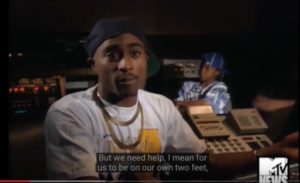
Tupac
Gangsta Rap’s Influence and Dominance
There were even a new set of conscious rappers introduced in the 90s, Lauryn Hill, De La Soul, A Tribe Called Quest, and Gang Starr, all made their mark. Here’s what is important to note though. Even with all of these other styles, gangsta rap dominated. This is the style that influenced the new artists into the 2000s. That influenced artists like Master P, 50 Cent, T.I. and Young Jeezy. There still is conscious rap. There are successful artists like Common, Black Thought, and Mos Def who still have very successful careers spitting positive lyrics, but they do not come close to equaling the careers of Kendrick Lamar, Drake, J. Cole, Jay-Z, or Kanye West.
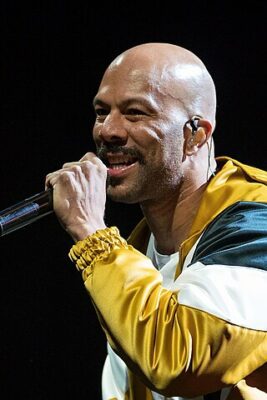
Common
Defending hip hop: Perspectives from artists
Gangsta rap has its defenders. 50 Cent defended gangsta rap by saying that people who judge hip hop don’t understand it as an art form. He also said that his mother was a cocaine dealer and that he knows what it’s like to live that kind of life.
Ice Cube defended N.W.A.’s refusal to apologize or compromise on their lyrical subject matter, saying that their raps are a documentary. He also said that anything you want to know about the 1992 Los Angeles riots was in the records before the riots. Even U.S. Representative Maxine Waters, who I respect greatly, defended gangsta rap by saying that it gave a platform for talented people to speak their minds. She also said that it’s a social movement, not just free speech. Hip hop executive Russel Simmons said, “Some people would like to build a wall around the ghetto to keep the rappers quiet.”
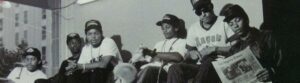
N.W.A. lineup in 1988 (left to right) Arabian Prince, MC Ren, Ice Cube, Eazy-E, DJ Yella, Dr. Dre.
The Societal Impact of Music
The primary question that I debate regarding this issue is did society, being more open and less measured in how it expresses itself today, influence the evolution of music to where it is now, or did music influence the evolution of society? I think that it goes both ways to some degree, but in my opinion the stronger influence is by the music industry on society. More specifically music is a tool used by the dominant influencers in society to promote a narrative. It is typically for financial gain but also for the acquisition of power.
Capitalism and Class Structures
We live in a capitalistic society, so power is gained through the acquisition of money. Those with the most of it have the most power and wield the most influence. They use this influence to acquire tools and use these tools to guarantee the existence of class structures. African-Americans have historically been the lower class in America. There have been various tools, throughout history, to ensure that this position in class was maintained. Why are we talking about class? Class is a central feature of capitalism.
In capitalism, class is defined by economic factors such as ownership of property, the means of production, and the relationship between work and labor. The relationships between classes shape the production of wealth, the spread of ideas, and the nature of politics. Class struggle is a necessary aspect of society, with the economically powerful struggling to defend their privileges, and ordinary people struggling to improve their conditions.
Some believe that capitalism requires a permanent lower class in order to increase profits due to low labor costs. The early American settlers fled Europe and the restrictive class structure of feudalism where individuals remained in the classes that they were born into. They had no mechanism to rise out of that class. The promise of America was that an individual had the opportunity to work their way out of their economic class and prosper. The irony though is that while America provided mobility to its citizens, it created a permanent lower class through slavery. It was a perfect capitalistic society, and America prospered and became one of the richest countries on the globe. When slavery was abolished, America used Jim Crow to keep African-Americans in the lower class, and then, after the Civil Rights laws abolished Jim Crow, more creative means needed to be implemented.
Civil Rights Movement and Its Aftermath
The Civil Rights Laws of the 1960s took the shackles off the African-American community and the community took advantage of it. In the 1970’s, over 700,000 African-American students enrolled in colleges and universities. They pursued career majors in the areas of communications, teaching, business administration, and medicine. The total number of African-American students enrolled in U.S. colleges and universities increased from 282,000 in 1966 to 1,062,000 in 1976. In 1977, there were 58,515 African American graduates with a bachelor’s degree and 1,273 African-American graduates with a Doctorate degree. In 1960, 11% of African-American workers were in professional, technical and craft worker positions; by 1980, their proportion had almost doubled to 21%. This newly acquired access was a big threat to the class structure. Something needed to be done.
Continued Struggles with Class Structure
The Civil Rights movement exposed too much. The global reputation of the United States, as the home of the free and the brave, could no longer sustain the overt methods of discrimination that Jim Crow provided to keep African-Americans in the lower class. So more covert methods needed to be used. The discrimination of the past created segregated communities in most of United States. Most African-Americans in the 70s were, and still are, concentrated in low-income communities.
I cannot say this as fact, but there have been many reports that governmental agencies distributed drugs and guns to these neighborhoods through local gangs. As drugs and violence ran rampant through the African-American community, severe drug laws were passed ballooning the U.S. prison population to over 2 million by the 1990s with 90% of that population being African-Americans.
How do you maintain the lower class? You keep the occupants from access to wealth. What are the rungs on the ladder to wealth? Voting, education, employment, property, and healthcare are the primary ones. Though discrimination still existed after the implementation of Civil Rights Laws, African-Americans were still making progress. What do you do if you can’t successfully keep the resources from the people? You influence the people not to care about the resources. You distract them. You convince them that no matter how hard they work, they will never rise out of their situation. You create an environment of hopelessness and despair. To finish it off, you give them drugs and guns. Then the tragedy of it all, you incentivize them to do it to themselves. How do you do that? You reward those who value profit over community. You recruit the drug dealers, supply the guns and let them operate. Do you really think that the police do not know who the drug dealers are in the African-American communities? Somehow, they are able to perpetually operate in these communities. Somehow there seems to be an endless supply of guns in African-American communities no matter how many buy-back programs are implemented.
The Role of Economic Incentives in Community Dynamics
Drug dealers and gang members were not unique in being used in harming its own community. Reward has always been the method to incentivize individuals in the African-American community to target their own. Many of the overseers on the slave plantations were African-Americans. They were offered better treatment to whip and kill their own. Lincoln Perry was paid handsomely by the movie industry to promote the demeaning character of Stepin Fetchit, and in my opinion, the hip hop artists who make millions by writing lyrics demeaning the African-American community are one and the same.
A Balanced Perspective: The Complexities of Hip Hop
I know that I have come off strong but, let me be clear, I am not one of those who thinks hip hop should be banned or that rappers should be silenced. Nothing is ever that clear cut. Some say you never know what you will do until you are in a situation. I admit that I never grew up in the environments that the rappers are writing about.
My examples start with my grandfather and grandmother. Born in 1913 and 1916 respectively, they lived in a very small Jim Crow town in South Carolina. My maternal grandfather never had the opportunity to go to school; he had to take care of his mom and two younger brothers from the age of 14. My grandfather worked where he could, eventually got married, and, had a family. He eventually worked at a bomb plant during the war, and afterward, he got a job as a janitor at the local high school. My grandmother worked as a cook and together they raised 9 children. Three of their children died before the age of 7 because of a lack of adequate healthcare, but the other 6 lived to have families of their own, and the youngest attended and graduated college.
My Dad grew up with his 7 brothers and 5 sisters in another small Jim Crow town — his father was a sharecropper. My father and his brothers couldn’t go to school on sunny days, because they had to help my grandfather in the fields. That’s how the family was fed.
Later on, my dad moved to Brooklyn, New York and got married; he worked three jobs at one point to feed my two siblings and me. Eventually, he settled in a job as a truck driver for UPS and managed to send all three of us to college.
I am an engineer, my brother is a lawyer, and my sister owns her own business. That’s my example. They had it hard, the hardest of hards, yet never did they do anything to hurt the community. I know, neither did they make a million dollars. But they set the table.
One of my dad’s brothers has a grandson that is now a celebrity. He is an award-winning actor and singer. It may take longer this way, but the family can still get there. I say all this to explain my point of view. They were in no less dire a situation than what the rappers write about. Yet, they took a different path. As a matter of fact, my dad lived in Queensbridge projects at one point, a home to some famous rappers.
People choose how they live, and people choose what they consume, whether its drugs, alcohol, cigarettes, unhealthy foods, or music with words that demean them. So in no way am I putting all the blame on those who write and promote these songs. I just ask that people realize when they are being used and consider the cost. I love hip hop music and it’s beats. I think it can be just as successful without the misogyny, violence and demeaning words. Context matters, so if the story contains violence, I understand. No one is asking that the stories not be told but there should be some responsibility in how it is told.
Edward Odom

