
16-Aminomethyl-17-Alkyltestosterone Derivatives (1964)
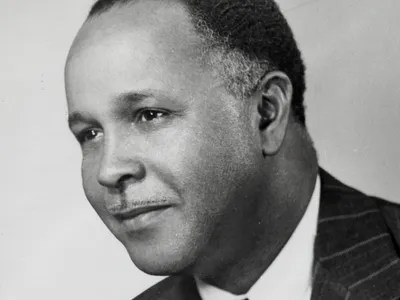
U.S. Patent No. 3,149,132, granted on September 15, 1964, to legendary chemist Percy L. Julian and co-inventor Arthur Magnani, details the synthesis and chemical profile of a novel class of modified steroid molecules. Assigned to Smith Kline & French Laboratories, this invention describes the introduction of a Mannich base (aminomethyl) functional group at the carbon-16 (C_16) position of a 17-alkyltestosterone steroid nucleus.
The resulting compounds exhibited highly unique biomedical utility: they inverted the traditional physiological properties of testosterone, acting instead as potent anti-androgens.
The Medical Context: Modifying Hormone Activity
In the early 1960s, scientists were heavily investigating steroid structures to isolate specific biological effects. While standard testosterone derivatives were synthesized to promote muscle growth (anabolic effects) or male characteristics (androgenic effects), Julian and Magnani targeted the exact opposite.
By strategically anchoring a nitrogen-containing aminomethyl branch onto the backbone of the molecule, they successfully altered how the steroid binds to biological receptors.
- Target Conditions: Because these compounds act as anti-androgens—meaning they bind to and block androgen receptors, counteracting testosterone—they were designed to treat clinical conditions caused by hormone imbalances.
- Prostate Disorders: Used to slow or combat abnormal prostate cell growth stimulated by natural testosterone.
- Stein-Leventhal Syndrome (PCOS): Used to treat endocrine disorders in females characterized by elevated androgen production, helping manage clinical symptoms like hirsutism (excessive, male-pattern hair growth).
Chemical Structure Architecture
The core discovery centers on merging a specific functional group with a modified testosterone core, represented by the primary patent formula:
16-(Amine variant)-CH_2–[17-Alkyltestosterone Nucleus]
Structural Substitutions specified in Formula 1:
- Position 17 (C_17): Modified with a lower alkyl group (R), typically a methyl or ethyl branch, positioned right next to a hydroxyl (-OH) group. This modification protects the steroid from being rapidly degraded by the liver during oral administration.
- Position 16 (C_16): The key differentiator of the invention. It holds an aminomethyl moiety (-CH_2-N(R_1R_2). The amine tail can be configured as:
- Dialkylamines: Such as dimethylamine or diethylamine.
- Heterocyclic Rings: The nitrogen atom can be integrated directly into standard ring structures like piperidinyl, morpholinyl, pyrrolidinyl, N-methylpiperazinyl, or thiomorpholinyl groups.
The Multi-Step Synthesis Process
The inventors engineered a synthetic pathway utilizing known Mannich derivatives of dehydroisoandrosterone as the initial starting material.
[16-Aminomethyl-dehydroisoandrosterone] │ ▼ (Step 1: Grignard Reagent / THF)[16-Aminomethyl-17-alkyl-5-androsten-3β,17-diol] <-- Isomeric separation occurs here │ ▼ (Step 2: Oppenauer Oxidation / Aluminum Isopropoxide)[Final 16-Aminomethyl-17-alkyltestosterone Base]
Step 1: The Grignard Addition (Alkyl Insertion)
The starting steroid material, 16-dimethylaminomethyl-5-androsten-3β-ol-17-one, is dissolved in tetrahydrofuran (THF) and reacted with a Grignard reagent—such as methyl magnesium bromide (CH_3MgBr) or ethyl magnesium chloride.
- This nucleophilic addition attacks the ketone carbonyl at C_17, transforming it into an alcohol and installing the protecting 17-alkyl group.
- This reaction naturally yields an isomeric mixture at the 17 position (generating both alpha-methyl and beta-methyl configurations), which the inventors resolved via fractional crystallization using ethyl acetate, validating the structures via infrared curve comparisons.
Step 2: Oppenauer Oxidation (Core Conversion)
To convert the intermediate diol into the active testosterone nucleus, the isolated isomer is heated to a reflux in toluene and cyclohexanone in the presence of aluminum isopropoxide (Al(O-i-Pr)_3). This selective oxidation transforms the 3beta-hydroxyl group into a 3-ketone while simultaneously shifting the double bond from the Delta^5 position to the Delta^4 position, completing the classic alpha,beta-unsaturated ketone system characteristic of testosterone.
Salt Formulations and Bioavailability
Because pure steroid bases often display poor solubility in water, making them difficult for the body to absorb, Julian and Magnani built out pathways to generate highly stable, non-toxic pharmaceutical salts:
- Acid Addition Salts: By saturating the free Mannich base with dry gases or organic acids (such as hydrochloric, sulfuric, phosphoric, maleic, or ethanedisulfonic acids) within an inert solvent like ether or chloroform, the tertiary nitrogen protonates, forming a water-soluble salt (e.g., a hydrochloride salt).
- Quaternary Ammonium Salts: The base can be treated with standard alkylating agents (such as methyl iodide, ethyl bromide, or methyl sulfate) at a reflux to quaternize the amine amine tail into a permanently charged ion, modifying its overall metabolic pathways and interaction timeline within the body.
Percy L. Julian’s Chemistry Legacy
This patent underscores the sophisticated steroidal engineering methodologies championed by Percy L. Julian, a foundational pioneer in the industrial synthesis of human hormones from abundant plant sterols. By fine-tuning the peripheral carbons of the cyclopentanophenanthrene core with complex amine groups, Julian and Magnani advanced the functional boundaries of medicinal chemistry, creating structural precedents for modern hormonal blockers and endocrine therapies.
